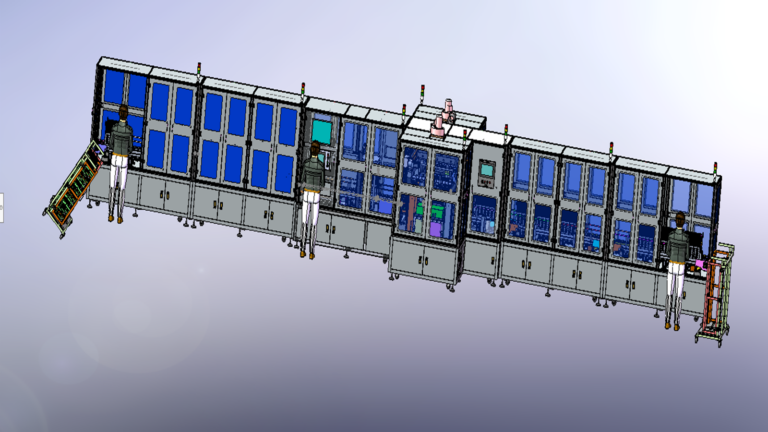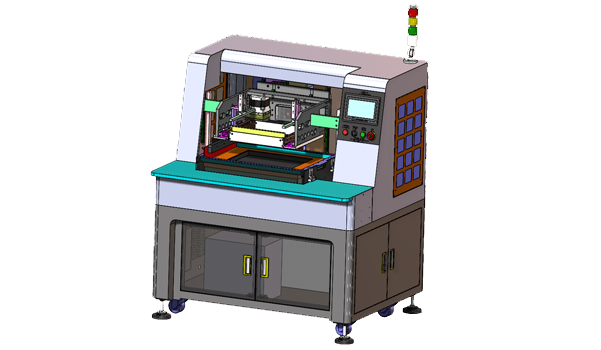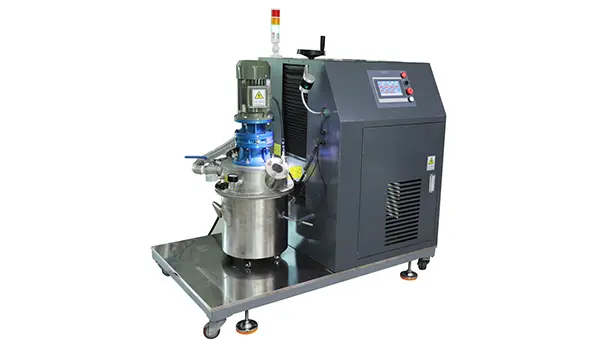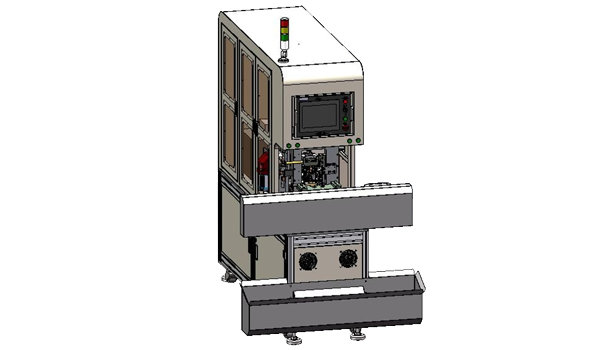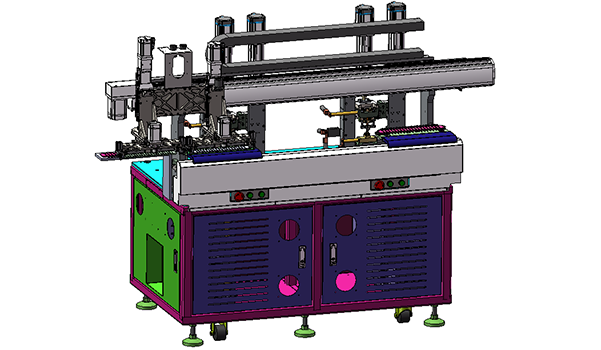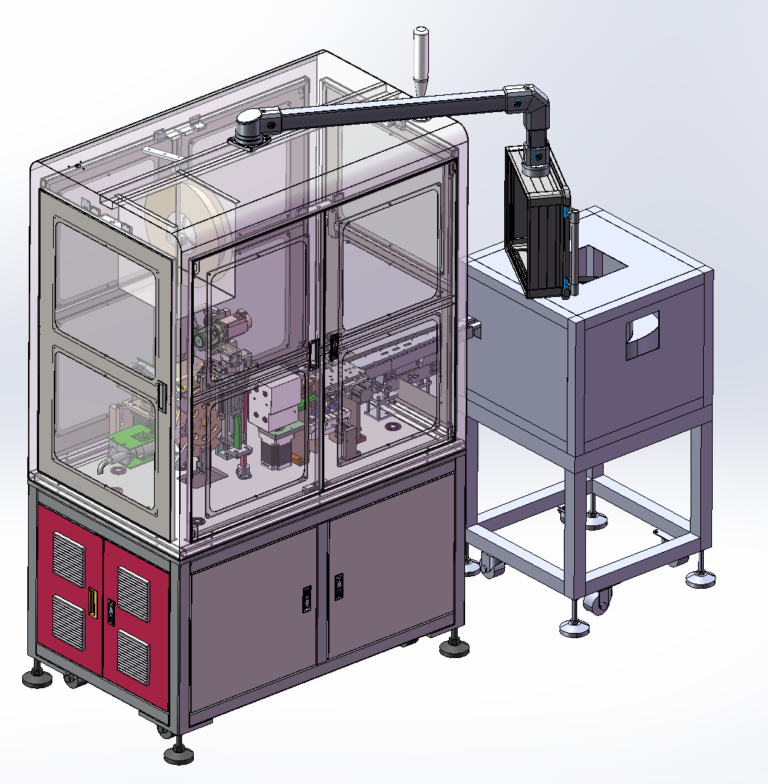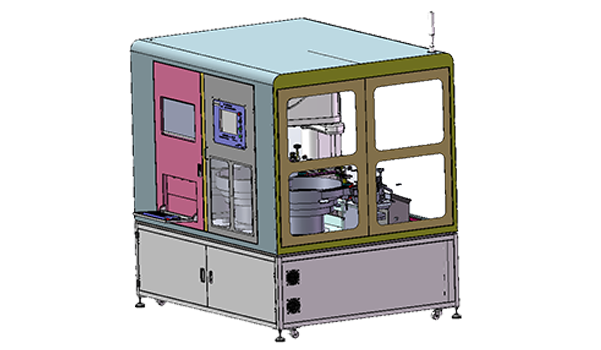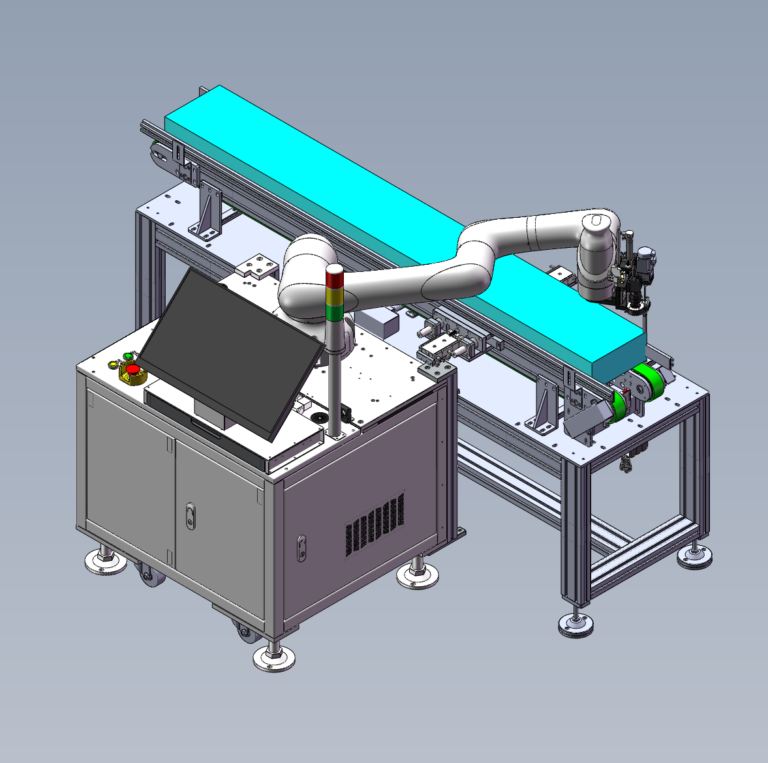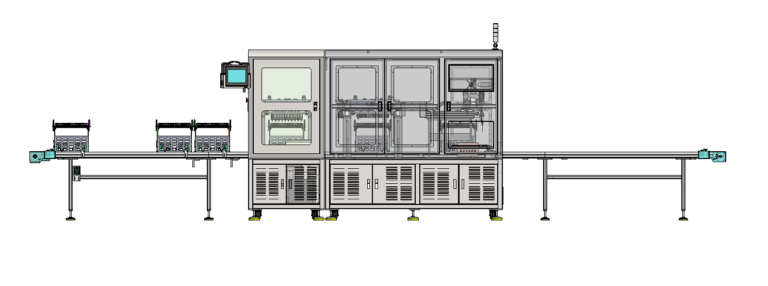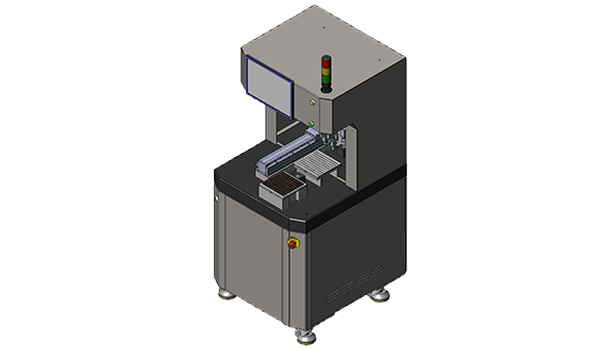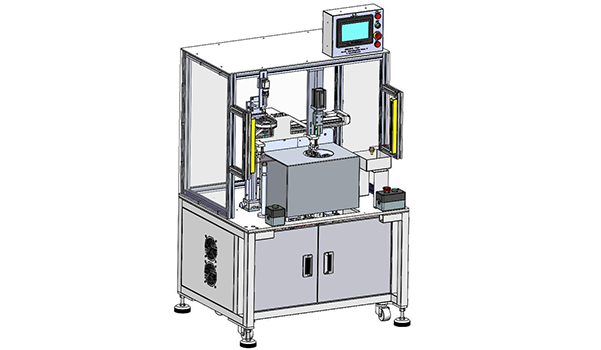
In sensor assembly, the quality control logic of riveting equipment often needs to begin before the actual riveting operation. This Vision-Guided Riveting Press Cell case uses a semi-automated configuration: the equipment handles automatic feeding, the operator loads the product into the fixture and confirms the cycle, and the CCD then checks whether the Seal Ring is present and correctly positioned. Only after the vision check passes does the product proceed to Pressing, Rotary Riveting, and Discharge. The planned cell capacity is 400–600 pcs/hour, with 1 operator and PLC control.
This sequence defines the core logic of the project. If the Seal Ring is already missing or out of position before pressing, continuing with Pressing and Rotary Riveting only locks the incorrect condition further into the product. The CCD therefore serves as a release decision before mechanical assembly, rather than as an additional appearance check after the product is finished.
Robotlyne’s Electronics Assembly Automation covers semi-automated workstations, operator-managed stations, multi-process integration, and automated or manual loading methods, making it relevant to projects that combine manual fixture loading, vision verification, and automated mechanical assembly within one cell.
Why Seal Ring Inspection Must Happen Before Pressing
The confirmed process sequence in this cell is:
Automatic Feeding -> Manual Fixture Loading -> CCD Inspection -> Pressing -> Rotary Riveting -> Discharge
After the product enters the station, the operator first completes Fixture Loading.
The operator is not directly involved in the later pressing or riveting actions. Instead, the product and related parts are placed into a defined assembly position. A Safety Light Curtain and Confirmation Button are arranged around the operating area. Once loading and confirmation are complete, the inspection and mechanical sequence proceeds automatically.
The CCD then checks the Seal Ring.
The purpose here is not to inspect the riveting result. It is to determine whether the current product already satisfies the conditions required to enter Pressing.
If the Seal Ring is missing, the process should stop at this point.
If the Seal Ring is clearly out of position, the product should also be prevented from continuing into pressing.
Placing this check before Pressing is more practical than discovering the problem after riveting, because the product has not yet gone through the later mechanical locking steps.
If the inspection were moved to the end of the process, the equipment might still identify an NG part, but that part would already have completed Pressing and Rotary Riveting. Additional processing time would have been consumed, and the incorrect assembly could also be more difficult to disassemble or rework.
The CCD station therefore does more than add a vision function. It turns the condition of a critical small component into a prerequisite for the downstream mechanical sequence.
This is especially relevant for Seal Rings, O-rings, Washers, Spacers, and other small assembly parts. They may represent only a small portion of the product, but if one is missing or incorrectly positioned, even a perfectly executed Pressing and Riveting cycle cannot turn an incorrect assembly into a conforming product.
Once Pressing Starts, the Upstream Assembly Condition Begins to Be Locked In
After the CCD inspection passes, the product enters Pressing and then Rotary Riveting. In the case, these two operations form a continuous mechanical assembly stage.
From the product-state perspective, this is a new phase of the process.
The Fixture first keeps the product in the required position.
The CCD verifies the Seal Ring condition.
Pressing begins to establish the assembly relationship between the components.
Rotary Riveting then locks that relationship further.
The sequence can be understood as:
Fixture establishes position -> CCD authorizes the product -> Pressing establishes assembly position -> Rotary Riveting locks the assembly
If the first two conditions are not properly established, the same downstream mechanical parameters can still produce different final assembly states.
For example, the Pressing mechanism may repeat the same Stroke every cycle, but it does not know whether the Seal Ring was omitted before pressing.
Rotary Riveting can also execute its own process consistently, but it cannot determine whether a critical part was already missing inside the assembly.
Vision inspection and Riveting Process Control therefore perform different functions.
The CCD answers whether the current product state is acceptable.
Pressing and Rotary Riveting control whether the mechanical operations are executed as intended.
Placing these controls in the correct order creates the complete process chain.
The case does not disclose the specific CCD camera configuration, inspection accuracy, Press Force, Press Stroke, or Riveting parameters. The available information therefore does not support further conclusions about the smallest detectable Seal Ring deviation or the required pressing and riveting forces.
What can be confirmed is that Seal Ring Verification is explicitly positioned before Pressing and Rotary Riveting. This is the most important process sequence in the cell design.
What 400–600 pcs/hour Tells Us - and What It Does Not
The planned project capacity is 400–600 pcs/hour with 1 operator.
At the upper end, a simple calculation gives:
600 pcs/hour ≈ 6 seconds per piece
But this should not be rewritten as:
Riveting Cycle = 6 seconds
A single product has already passed through Automatic Feeding, Manual Fixture Loading, Operator Confirmation, CCD Inspection, Pressing, Rotary Riveting, and Discharge.
The case does not provide the individual time consumed by each of these actions.
There is no published data for manual loading time.
There is no published data for CCD image acquisition and judgment time.
There is no published information on whether Pressing includes a Dwell Time.
The single Rotary Riveting processing time is also not disclosed.
The case also does not state whether manual loading can overlap with the automatic cycle of the previous product.
For this reason, 400–600 pcs/hour should be treated as the planned capacity of the complete cell rather than as an unsupported cycle time for one individual mechanism.
For a new riveting equipment project, if the goal is to determine whether one operator can consistently keep up with the machine, or whether a dual-station layout, automatic loading, or a Buffer is necessary, the next step is to break down the complete Cycle.
For example:
How long does one Fixture Loading operation take?
Is Confirmation a separate action, or is it included in the loading time?
How long does the CCD need to make a decision?
Does Pressing require a hold time?
How long does one Rotary Riveting operation take?
Can Discharge overlap with preparation of the next product?
Once these questions are answered, the equipment takt can be optimized more meaningfully.
Before those calculations, however, there is an earlier question to define:
Which components must never be allowed to enter Pressing and Riveting if they are missing or out of position?
In this case, the Seal Ring clearly belongs to that category.
For a new sensor product, O-rings, Seal Rings, Spacers, Washers, and other critical small parts can be listed first, then divided into conditions that can be guaranteed by the Fixture and conditions that require Vision verification before Riveting.
Once those conditions are defined, Pressing, Rotary Riveting, and Discharge can be combined into a more stable work cell.
If this kind of pre-riveting verification logic needs to be translated into a specific Riveting Cell, contact Robotlyne to discuss fixture design, vision release criteria, and the downstream mechanical sequence.