Operating a cold storage warehouse generally costs more than running a conventional warehouse. Refrigeration is required around the clock, and goods must be handled, stored, and shipped under specified temperature conditions. In large frozen storage facilities, employees spending long hours in the cold, forklift aisles taking up storage space, and heat gain from frequent goods movements are all practical operating concerns.
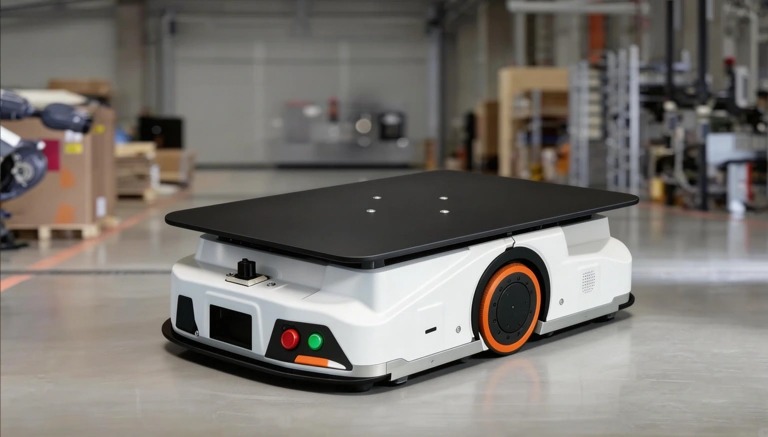
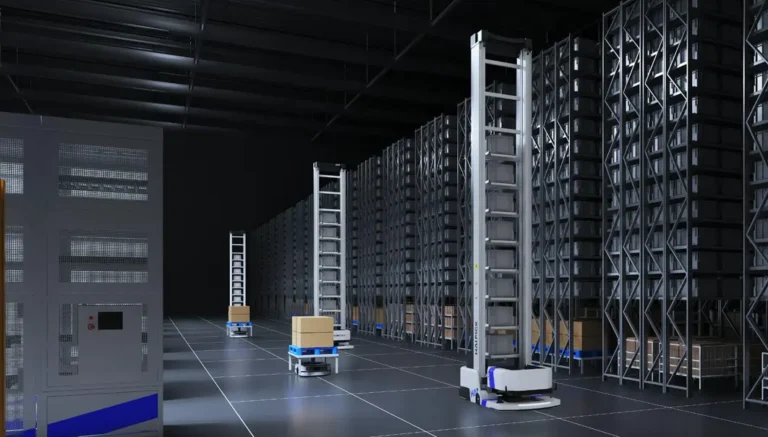
Automation offers different ways to address these issues. Automated storage and retrieval systems (AS/RS) can store large numbers of pallets in a compact area. AGVs and AMRs can take over repetitive transport tasks, while conveyors and sortation equipment connect different operating areas. Low temperatures, however, place additional demands on the equipment. Not all standard warehouse automation equipment can be used in cold storage without suitable design or modifications.
What Is an Automated Cold Storage Warehouse?
An automated cold storage warehouse uses AS/RS, robots, conveyors, and warehouse management software to handle storage, transport, picking, and outbound operations in a temperature-controlled environment, reducing the need for manual work.
These facilities include refrigerated warehouses for fresh foods, dairy products, and certain pharmaceuticals, as well as frozen food warehouses that commonly operate at −18°C (0°F) or below.
Take pallet storage as an example. In a conventional cold storage warehouse, forklift operators move pallets into the racking area, then locate and retrieve the required loads when orders are released. With an AS/RS, pallets can enter the storage area on conveyors and be placed into assigned locations by stacker cranes or shuttle systems. When an outbound order arrives, the system retrieves the relevant pallet and sends it to the shipping area.
Not every part of a cold storage facility has to be automated to the same degree. Some warehouses automate pallet storage while retaining manual operations elsewhere. Others connect transport, storage, sortation, and outbound handling into a more integrated workflow.
What Technical Challenges Does Cold Storage Automation Face?
Low temperatures change how some mechanical and electronic components perform. Lubricants may thicken, usable battery capacity may fall, and certain plastics, rubber parts, and cables may be affected.
When planning a cold storage automation project, we look beyond payload capacity, travel speed, and throughput. We also need to know the actual operating temperature and whether equipment will regularly move between temperature zones. Those conditions affect robot selection and technical specifications.
How Do Robots Adapt to Low Temperatures?
Low temperatures mainly affect a robot’s mechanical drive components, batteries, and electronics.
For example, conventional grease can create more resistance in gears and bearings as temperatures fall. When designing a cold storage automation solution, we assess whether low-temperature lubricants, cables, and seals are required. We also consider insulation or local heating for electronic components that are sensitive to the cold.
Batteries present another challenge for mobile robots. Lithium-ion batteries lose usable capacity and face charging limitations at low temperatures. When designing cold storage AGV and AMR systems, we therefore consider battery heating or thermal management based on the equipment’s operating temperature. We also assess whether charging stations should be placed in warmer areas, taking into account robot routes and the battery’s permitted charging temperature range, so charging takes place only when the battery is within that range.
Water Protection and Condensation Control for Cold Storage Robots
Moisture problems in cold storage often arise from changes in temperature.
When a robot travels from a freezer into a warm, humid area, water vapor may condense on its cold surfaces. If moisture enters electrical components, or freezes when the equipment returns to the freezer, malfunctions can result.
For robots that need to operate across temperature zones, we pay particular attention to the protection of electrical enclosures, connectors, and sensors. Depending on the conditions, sealing, localized heating, or anti-fog measures may help reduce moisture ingress and frost formation on sensor lenses.
We also consider vestibules, control of air exchange between temperature zones, and ways to avoid unnecessary cross-zone travel to reduce the risk of condensation and icing.
Key Components of Cold Storage Automation
Choosing equipment for cold storage differs from planning a conventional warehouse. Alongside product types, storage capacity, and inbound and outbound volumes, the design must account for temperature zones, refrigerated space, and the time employees spend working in the cold.
1. Automated Storage and Retrieval Systems (AS/RS)
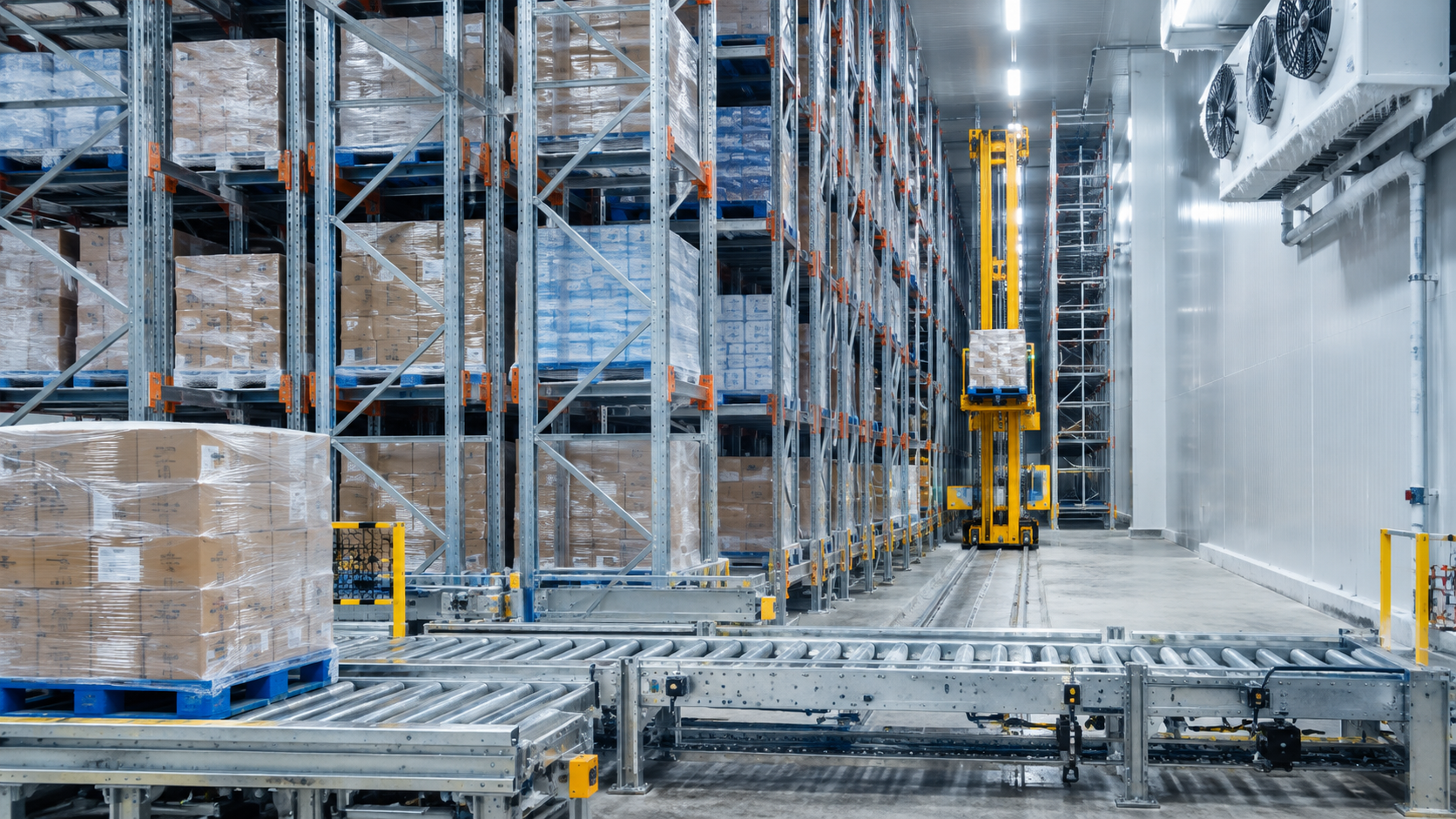
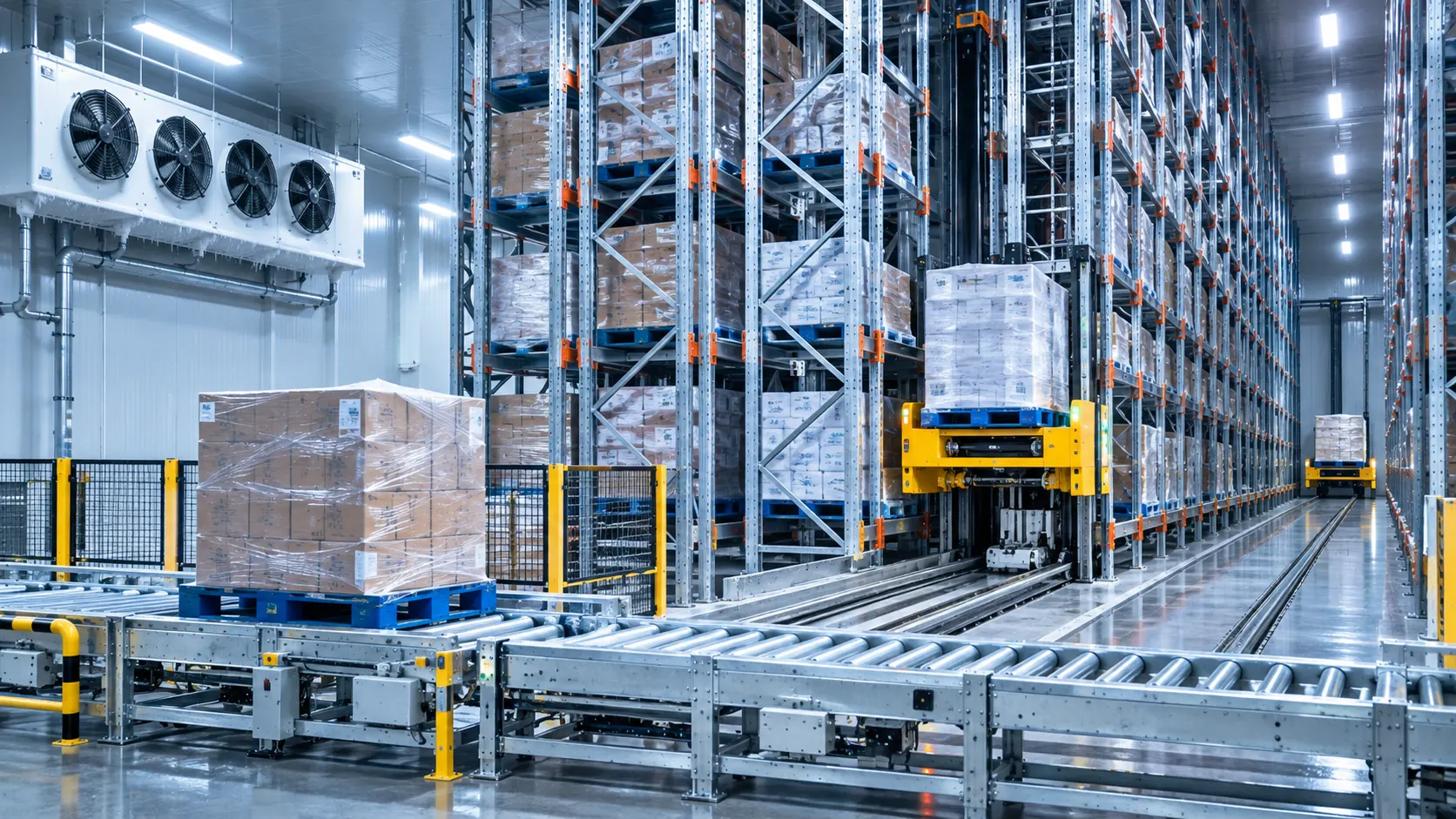
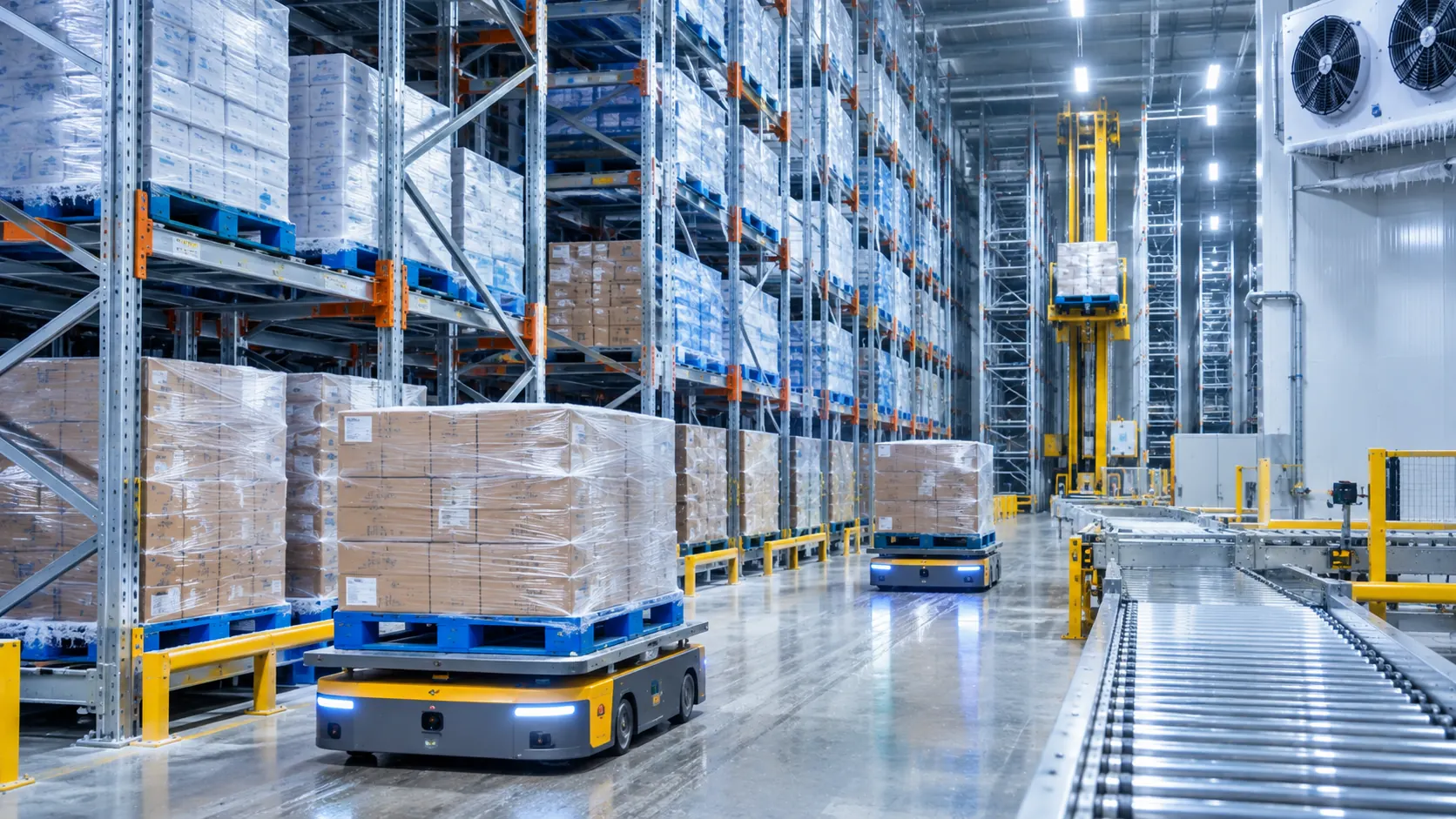
Cold storage facilities require continuous refrigeration, which makes storage capacity per unit of refrigerated space particularly important. AS/RS uses stacker cranes or shuttles to store and retrieve pallets and totes automatically. By reducing the need for wide forklift aisles and using high-bay racking or dense storage layouts, these systems can increase storage capacity.
In large frozen warehouses, AS/RS can also keep much of the storage and retrieval work within the automated racking area, reducing how often employees need to enter low-temperature storage zones.
2. Automated Guided Vehicles (AGVs) and Autonomous Mobile Robots (AMRs)
Cold storage facilities often have receiving, chilled, frozen, picking, and loading zones with different temperature conditions. AGVs and AMRs can transport pallets and totes between these areas.
When planning robotic transport for cold storage, we consider operating temperatures, travel distances, and task frequency to determine whether the robots need to enter the low-temperature storage area. In some projects, it may be more practical to operate mobile robots in buffer or loading areas while other automated equipment handles storage and retrieval inside the freezer.
3. Automated Conveying and Sortation Systems
Frequent movement of goods into and out of cold rooms can lead to more door openings, warm and humid air infiltration, higher refrigeration loads, and icing risks.
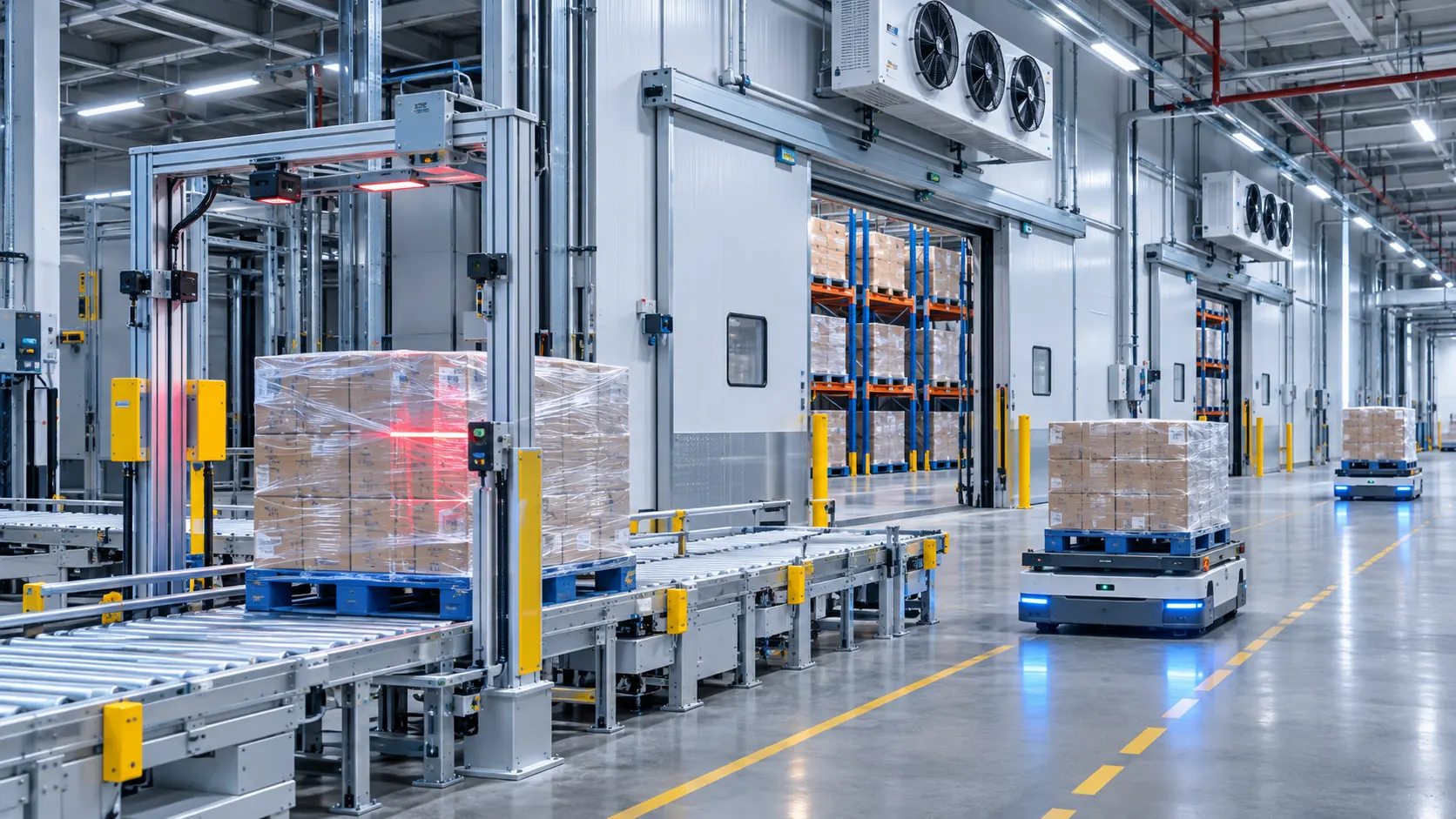
Conveyors can connect operating areas and work with automated doors and vestibules to manage the flow of goods and reduce unnecessary door openings. In cold-chain distribution centers handling a broad range of orders, sortation equipment can also direct goods according to orders or shipping destinations.
4. Automated Palletizing and Depalletizing Systems
Frozen foods, dairy products, and other cold-chain goods are often shipped in cartons or reusable containers, making palletizing and depalletizing common steps in receiving and outbound operations.
Automated palletizers and depalletizers reduce repetitive manual lifting. Depending on the process layout, we can also consider placing these systems outside the cold room or in a warmer buffer area, reducing the need for both people and equipment to work in low temperatures.
5. Warehouse Management and Equipment Control Software
Cold-chain products often have specific storage temperatures and shelf-life requirements. Inventory management therefore needs to account for batch numbers, expiration dates, and storage conditions, not just quantities and locations.
A warehouse management system (WMS) can apply FEFO (first-expired, first-out) rules when selecting inventory, while a warehouse control system (WCS) coordinates the equipment carrying out the tasks. When integrated with temperature monitoring, inventory records can also be linked to relevant temperature data to support cold-chain traceability.
Benefits of Cold Storage Automation
Reducing the time employees spend working in low temperatures is one of the most direct benefits of cold storage automation.
Automated pallet handling, conveyors, and mobile robots can take over some of the repetitive material handling work. Employees can perform more inspections, equipment operations, and exception handling in relatively warmer areas instead of spending long periods inside freezers.
Space utilization is another important consideration. A cold storage facility must refrigerate the space used to hold its inventory. With high-density AS/RS, companies can store more pallets within the same footprint. For new facilities, that can also influence decisions about building size and the volume of space that needs refrigeration.
When building or renovating a cold storage warehouse, high-density storage may reduce the building and refrigerated space required for a given inventory volume. Well-designed automated inbound and outbound flows can also reduce some heat gain. Actual energy savings, however, depend on the warehouse layout, refrigeration system, and operating conditions.
In cold-chain distribution centers with frequent inbound and outbound movements, automation can also improve material flow. Systems direct storage, transport, and retrieval tasks, reducing the time spent searching for locations and repeatedly moving goods. Barcode or RFID identification can further reduce misplaced loads, incorrect picks, and shipping errors.
On the inventory side, automation can keep a record of product locations, batches, and movements. For frozen foods and other products with shelf-life requirements, this information supports appropriate stock rotation and product traceability.
If you are planning a new automated cold storage facility or upgrading an existing warehouse, Robotlyne can help assess an automation approach based on your layout, product types, and operating requirements. Contact us to discuss your project.