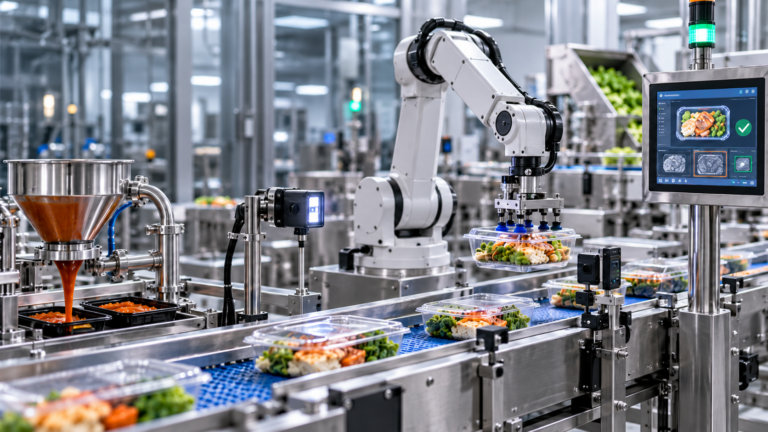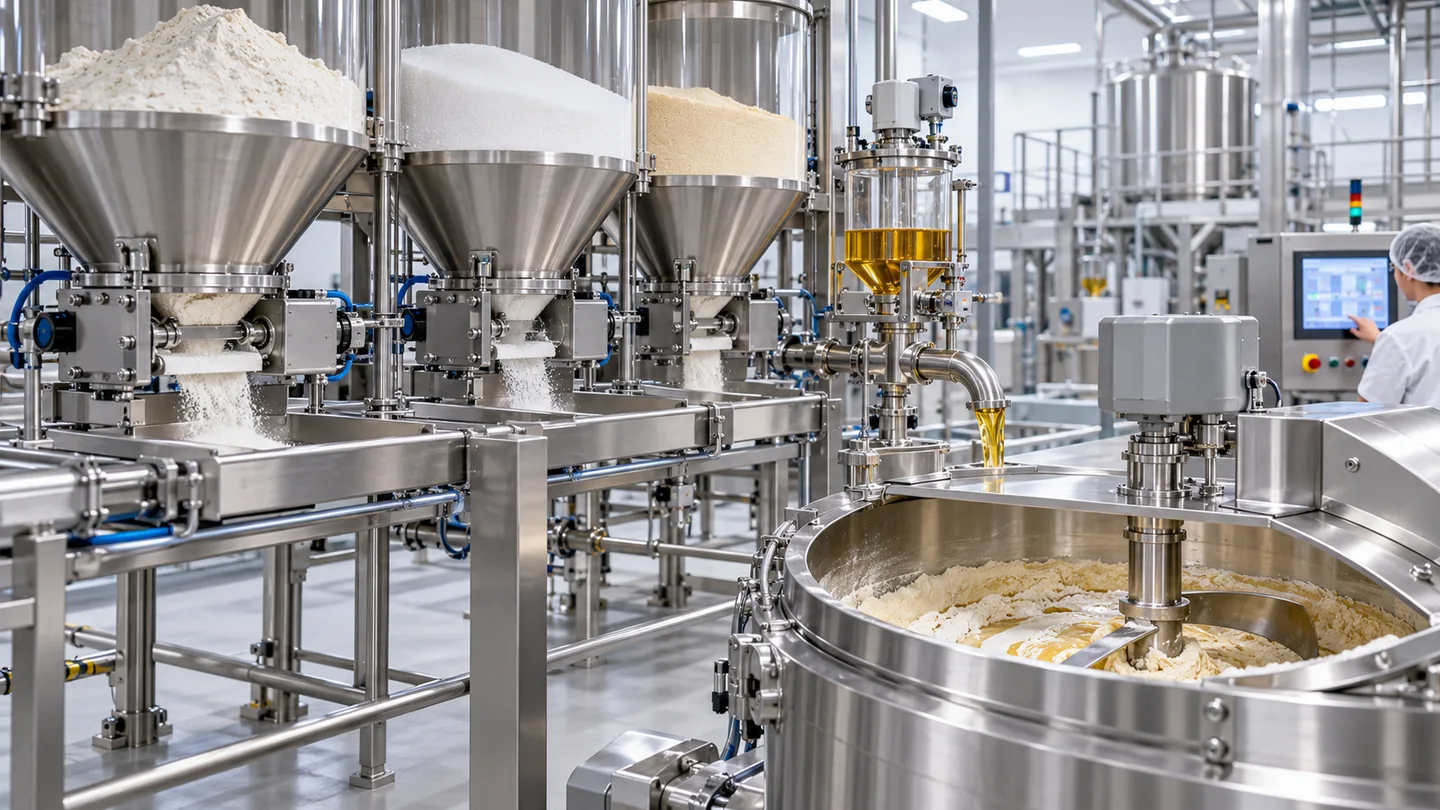
Food production relies on recipes that specify how much of each ingredient to use. On the production floor, those requirements have to be carried out through repeated weighing and dosing. A batch may call for tens of kilograms of flour or sugar but only a small amount of salt or flavoring, and different ingredients may need to be added in different ways and in a particular order.
Manual weighing and dosing are often convenient when a factory runs only a few batches. But if the same product is made dozens of times a day, workers have to keep weighing ingredients, checking recipes, and adding ingredients for each batch. This is one application of food processing automation in ingredient handling: automated weighing and dosing systems can take over suitable repetitive tasks, control ingredient quantities according to the recipe, and record actual weights.
How to Automate Ingredient Weighing and Dosing in Food Processing
Before automating ingredient weighing and dosing, a factory needs to understand how much of each ingredient is used per batch, how often it is added, and what level of measurement accuracy is required.
For ingredients such as flour and sugar that are used in large quantities every day, automated storage, weighing, and dosing may make sense. Ingredients used in small amounts or frequently changing recipes may not need dedicated automated equipment. Once the scope of automation is clear, the appropriate system can be selected around the existing processing equipment and dosing requirements.
An automated weighing and dosing system typically has three main parts: weighing equipment, feeding equipment, and a recipe control system.
The weighing equipment measures the actual quantity. The feeder controls how much ingredient is added, while the recipe control system manages the required amount of each ingredient.
Take flour, for example. Instead of weighing it repeatedly in containers by hand, an operator can use a system that feeds flour automatically from a storage hopper into a weighing hopper. Once the set weight is reached, the feeder stops.
In practice, the feeder usually slows down as the weight approaches the target. A small amount of flour may still fall into the hopper after feeding stops. If that extra material is not accounted for, the final weight can exceed the target.
Liquid ingredients are handled differently. Cooking oil and syrup, for example, can be dosed using pumps and suitable measuring devices.
A control system coordinates these components, turning the recipe requirements into actual weighing and dosing operations.
How Automated Ingredient Weighing and Dosing Works
Consider a bakery producing a batch that requires flour, sugar, salt, cooking oil, and a few other ingredients.
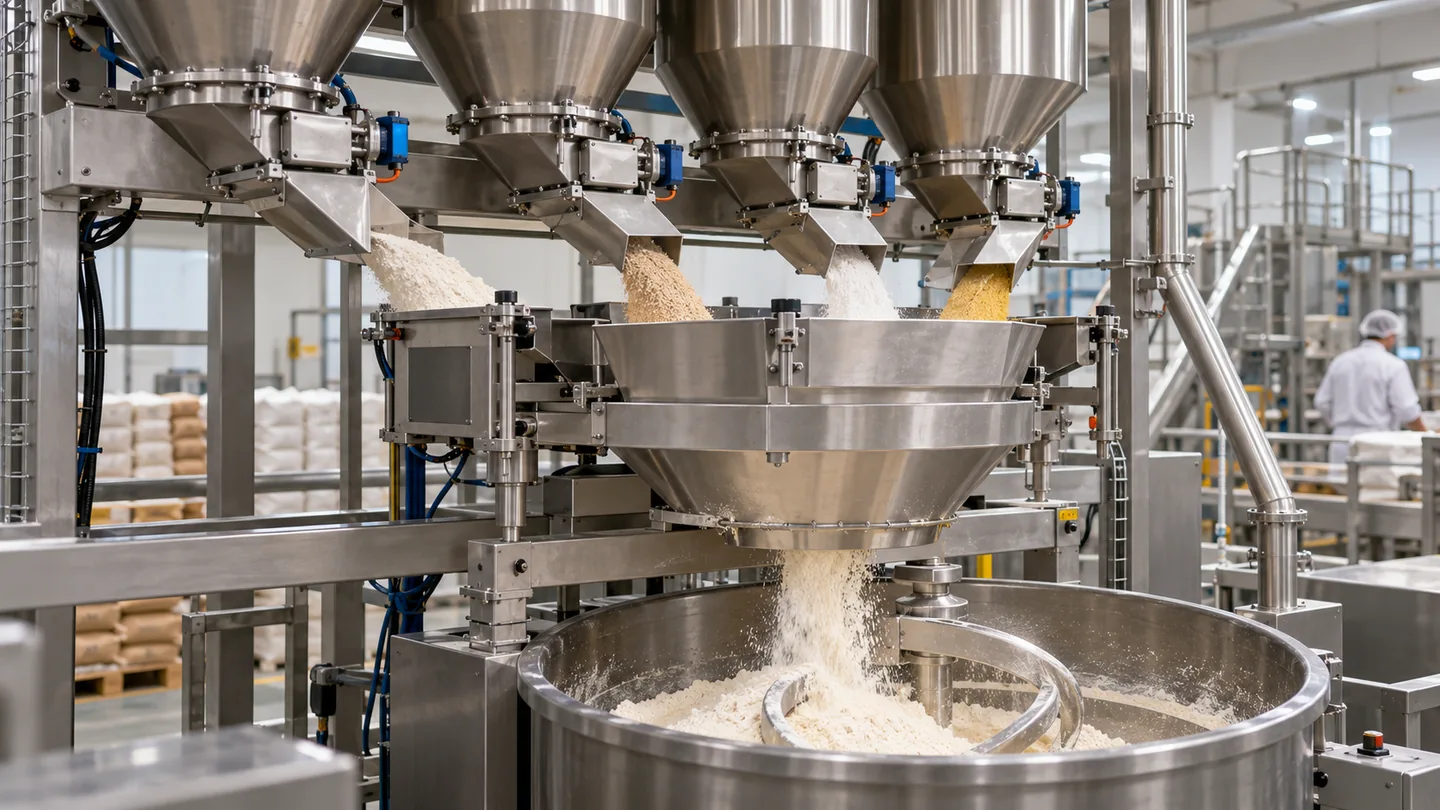
Before production begins, an operator selects the relevant recipe. The system reads the required quantities and starts the weighing equipment. Main ingredients such as flour and sugar are weighed separately, and feeding stops when each target weight is reached.
The weighed ingredients do not necessarily go straight into the mixer all at once.
Some baking recipes call for dry ingredients to be mixed first, with liquids added later. Others require ingredients to be added in stages. An automated system can follow the established process without requiring workers to check the dosing sequence manually every time.
For ingredients used in small amounts, a factory can install a separate minor-ingredient weighing unit or retain a manual addition station.
During batching, the system records the actual weight of each ingredient. If a quantity falls outside the permitted tolerance or an ingredient runs low, the system can pause dosing and alert an operator to investigate.
By the end of the batch, the production record has also been saved. The next time the same product is made, the recipe can be called up again without resetting the quantity of every ingredient.
This is especially convenient for food factories that repeatedly produce the same recipes. Workers still handle ingredient replenishment, inspections, and exceptions, but they do not need to be involved in every weighing and dosing operation.
Manual vs. Automated Ingredient Handling
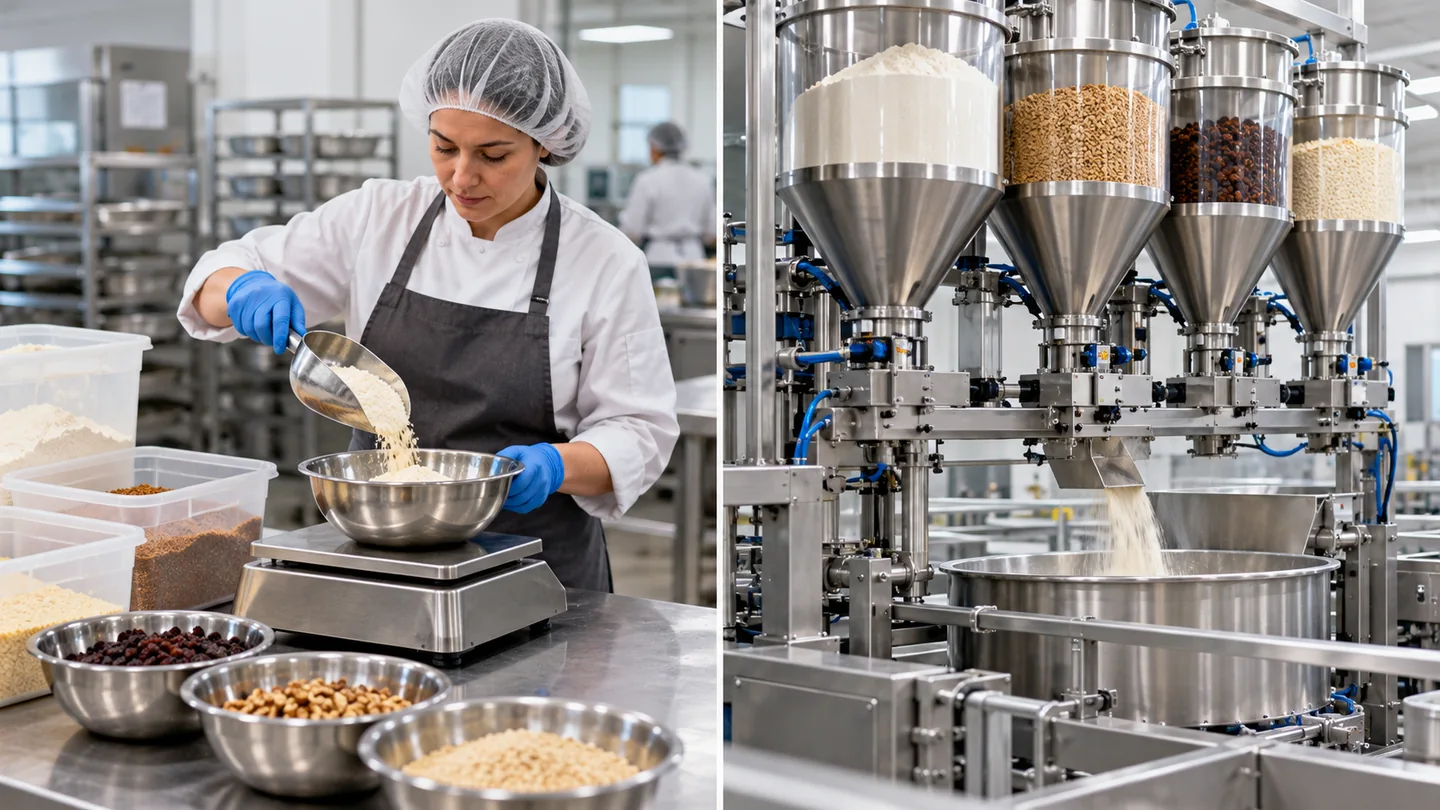
Manual batching is not an outdated production method. For food factories producing small batches across many product varieties, it may still be the more convenient option.
A bakery making small quantities of several flavors each day can weigh ingredients on a digital scale and adjust recipes easily, without investing much in equipment.
But when the same product is made in many batches every day, workers must repeatedly weigh ingredients, check recipes, and add materials. As production volume grows, those tasks take up more and more time.
This is an important distinction when comparing automated vs manual ingredient handling.
| Comparison | Manual Ingredient Handling | Automated Ingredient Handling |
|---|---|---|
| Weighing and Dosing | Workers weigh and add ingredients one by one | Equipment weighs and doses ingredients according to the recipe |
| Production Efficiency | Suitable for small batches and frequently changing production tasks | Better suited to large numbers of repeated batching tasks |
| Weighing Consistency | Affected by operating methods and manual weighing errors | Can repeatedly follow set weighing requirements |
| Labor Involvement | Workers must continually weigh, check, and add ingredients | Reduces repetitive work, but still requires replenishment and monitoring |
| Initial Investment | Usually lower | Requires equipment purchases and system integration |
| Recipe Changeovers | Workers change ingredients and adjust quantities manually | Stored recipes can be recalled, though cleaning or ingredient changes may still be needed |
One of the main benefits of automation is that equipment can take over weighing tasks that workers would otherwise repeat throughout the day.
That does not mean a batching station can operate without any staff. Ingredient replenishment, equipment cleaning, recipe changes, and troubleshooting still need to be managed.
And food factories do not necessarily have to choose between a fully manual and a fully automated process.
If large quantities of flour and sugar are used every day, automating their weighing may be the first priority. For specialty spices used only occasionally, keeping a manual weighing station may be more economical and make recipe adjustments easier.
Rather than automating the entire batching system from the outset, it makes sense to look first at how often each ingredient is used and how much weighing work it involves. Operations that take the most time or are most prone to mistakes are often the best places to start.
Automated Equipment for Different Food Ingredients
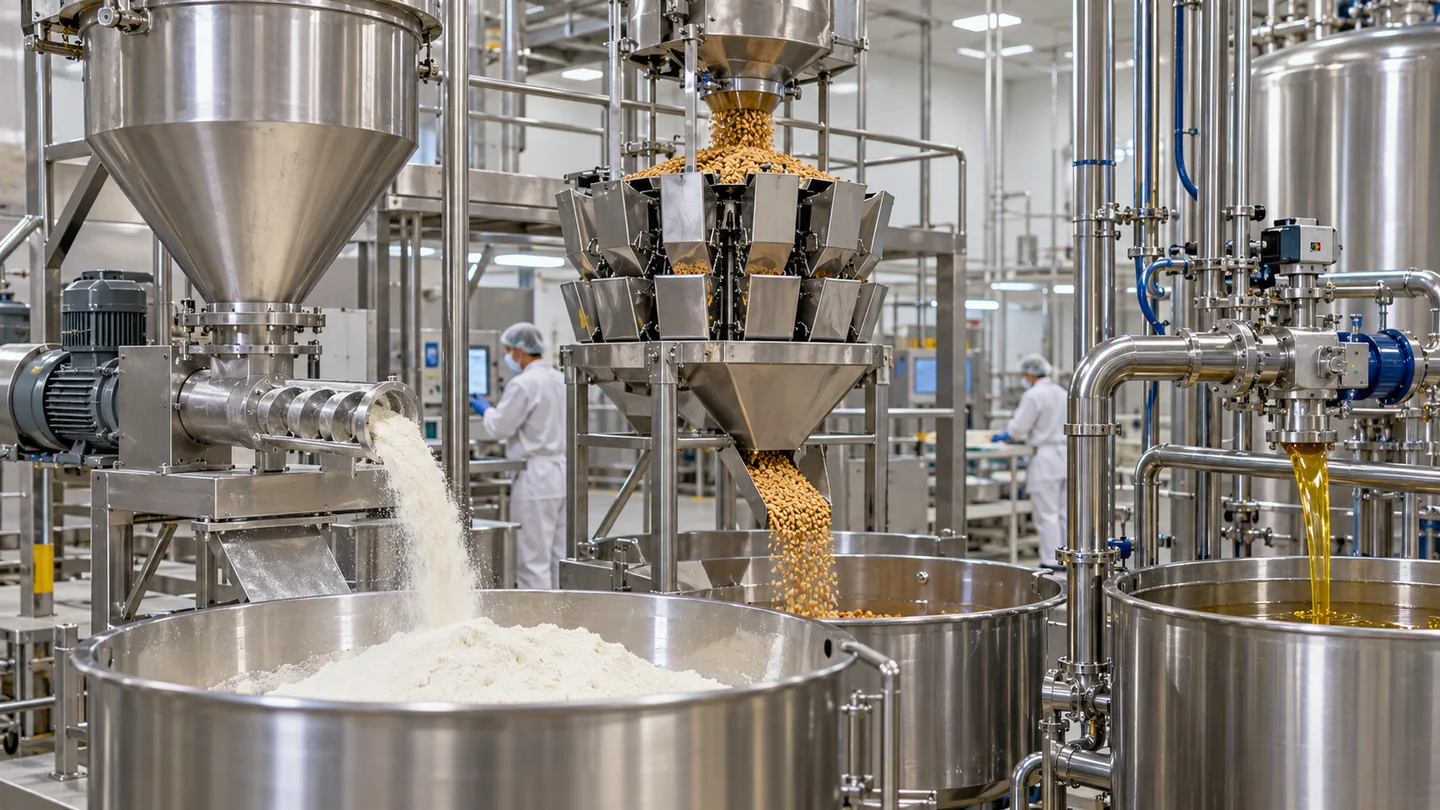
The characteristics of the ingredients matter when choosing automated weighing equipment. Flour, granulated sugar, and cooking oil may all need to be added in measured amounts, but they require different feeding methods.
Powder Ingredients
Flour, starch, milk powder, and cocoa powder can often be measured using screw feeders paired with an automated weighing system.
However, not all powders flow freely out of a hopper. Some tend to clump or stick to equipment surfaces, causing inconsistent feeding. Equipment for these materials needs to account for discharge performance and ease of cleaning.
Granular Ingredients
Granulated sugar, grains, and other granular ingredients can be handled with vibratory feeders or other suitable dosing equipment.
Larger particles may require a different discharge mechanism, while fragile food particles should be handled in ways that minimize crushing and impact during feeding.
Liquid Ingredients
Water, cooking oil, and liquid seasonings can usually be dosed using pumps and measuring equipment.
Thick syrup is a different matter. It flows more slowly, and the viscosity of some products changes with temperature. Equipment selection therefore needs to consider not only the target quantity but also pumping capability and any ingredient left in the piping.
Minor Additives and Micro-Ingredients
Flavorings, colorings, and some food additives may be used in very small quantities, but their dosage still needs to be controlled.
Ingredients used in larger quantities or added frequently may justify a dedicated minor-ingredient weighing unit. If an additive is used in only a few recipes, manual weighing with an electronic recipe check can also be a practical choice.
Robotlyne Food Automation Solutions
Automating ingredient weighing and dosing requires consideration of how the new equipment will connect with existing processing machinery and what the downstream production stages need.
Robotlyne provides food automation solutions, including metered filling, automated packaging, robotic handling, and related production-line integration. Automation upgrades can be evaluated based on the existing equipment layout and production requirements.
Robotlyne also offers a free project feasibility assessment and ROI analysis to help businesses understand equipment configurations, automation costs, and potential payback periods.