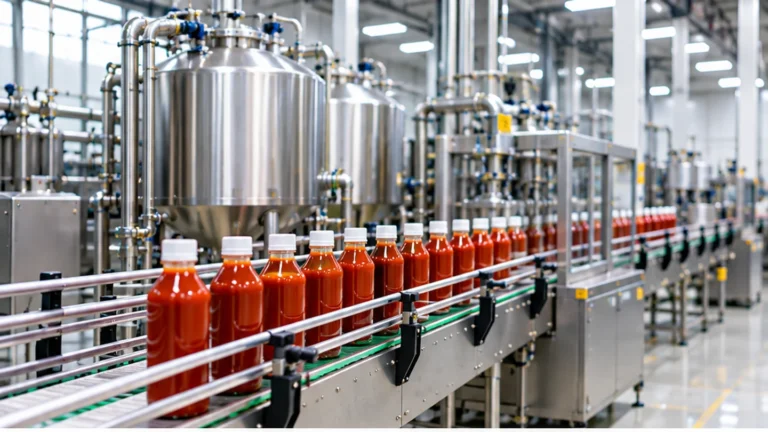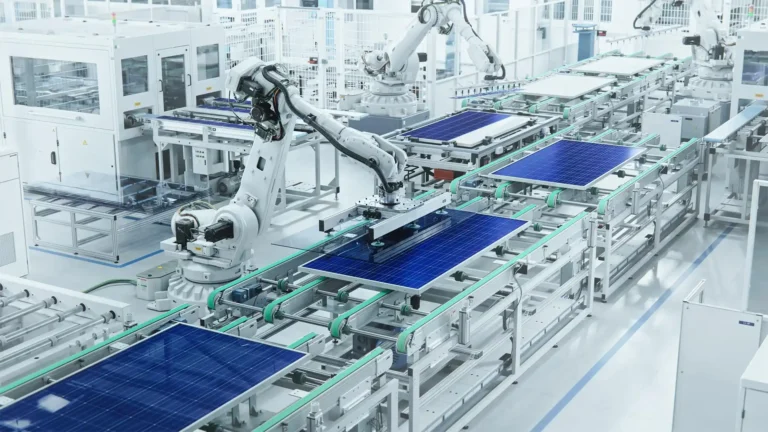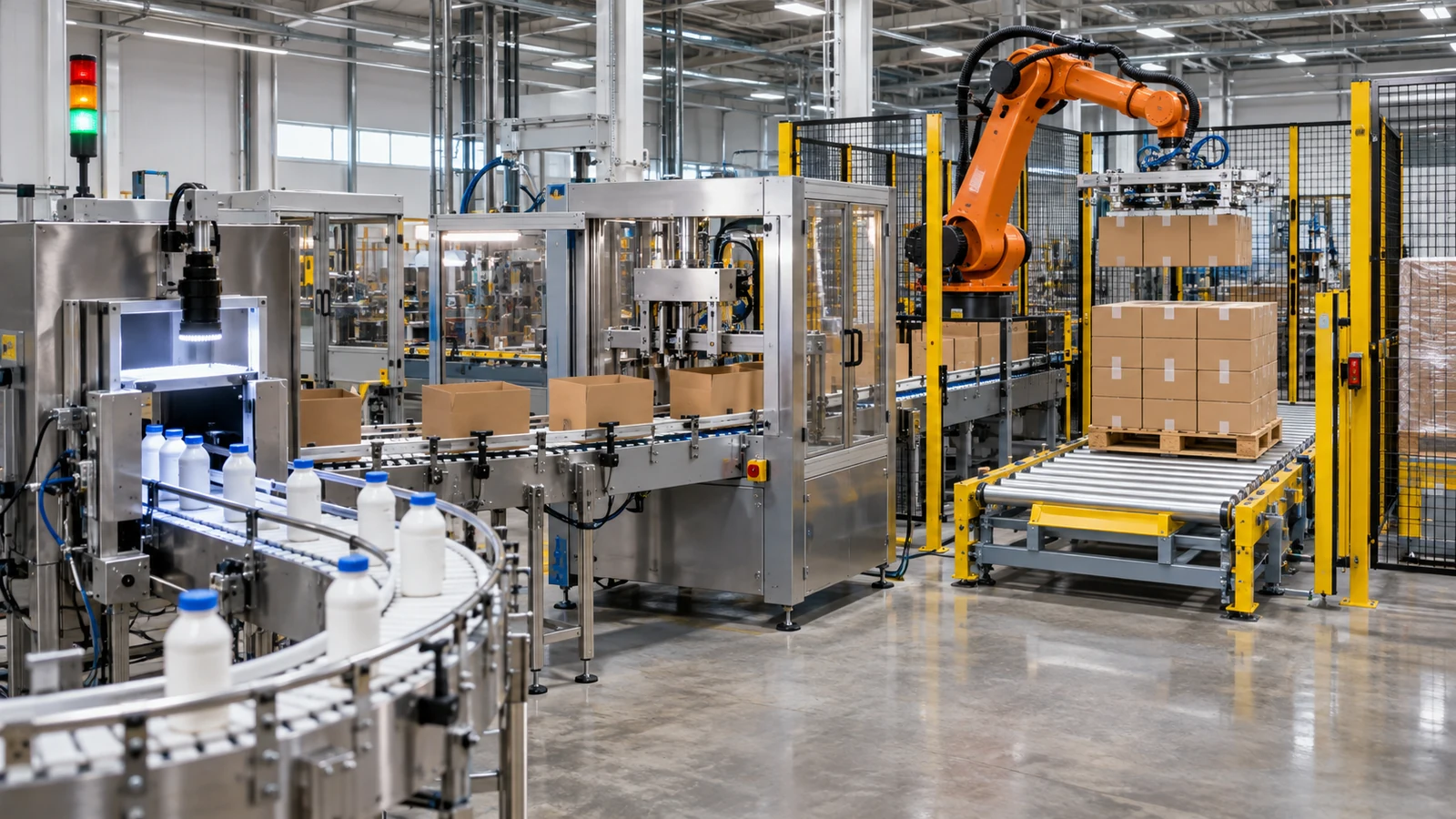
Once electronic products are assembled, they generally go through functional testing. For food and personal care products, case packing and palletizing often come after filling. The final stages vary by product, and so does the equipment used.
These operations can all be automated at the end of the line. Some factories only need an automated testing machine or a palletizing robot; others connect inspection, packaging and finished-goods transfer into one continuous process.
What Is End of Line Automation?
End of line automation refers to using automated equipment for the final stages of production, including inspection, sorting, packaging, palletizing and finished-goods transfer.
It can cover a single station or an entire end-of-line system. Where several stations are involved, the flow of products between them matters just as much as the equipment at each station.
Types of End of Line Automation Systems
Automated Inspection and Testing Systems
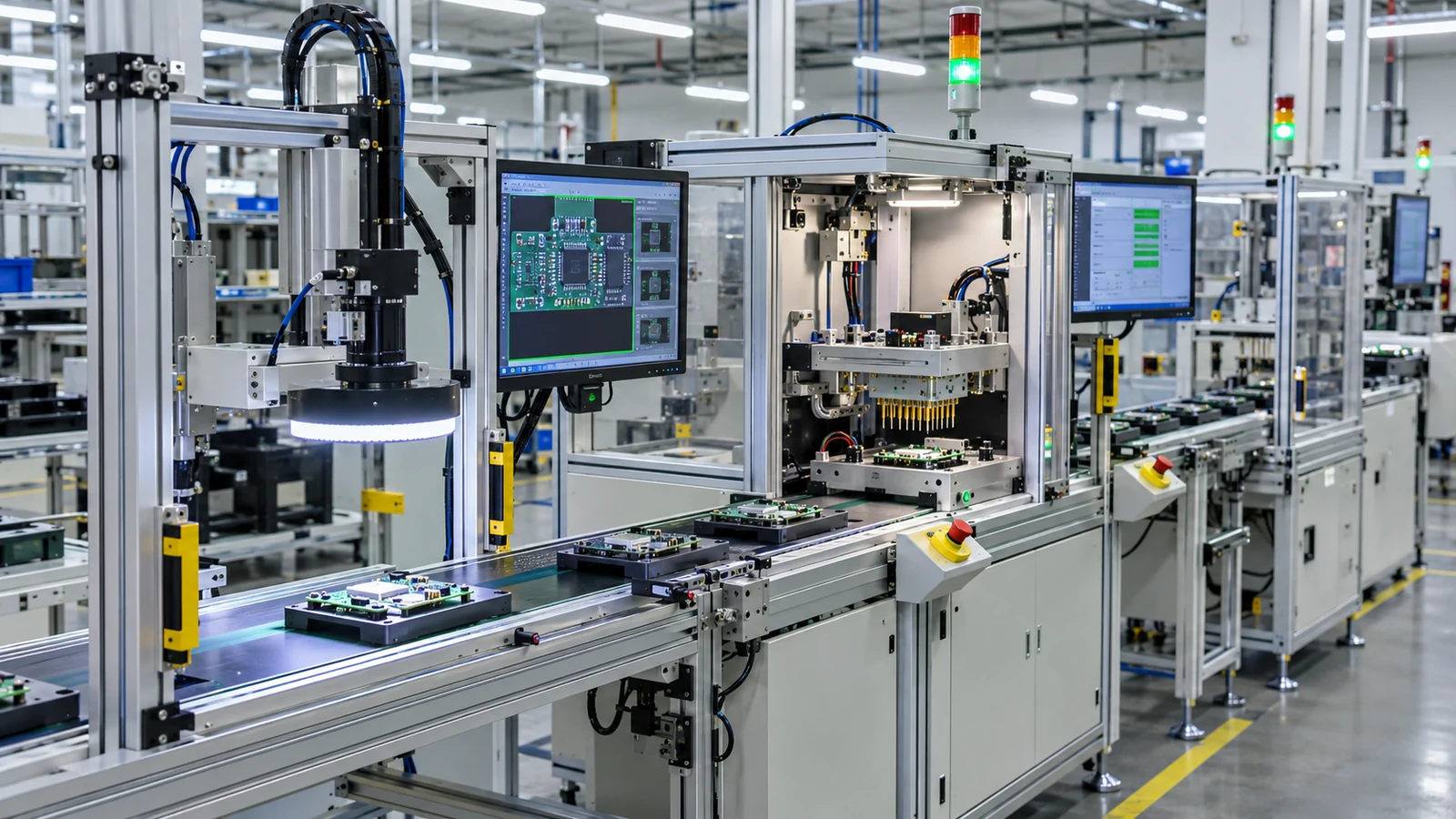
Products usually undergo a final quality check before leaving the line. Machine vision can inspect appearance, dimensions and assembly conditions, while sensors and dedicated test equipment handle other checks.
In electronics manufacturing, automated test equipment may also be used for power-on checks, electrical performance testing and functional verification. The system records results and automatically separates failed products.
Automated Sorting and Product Handling Systems
After inspection, products with different model numbers or test results may need to go to different stations.
Automated sorting systems can route them by barcode, model or inspection result. Robots can also turn, arrange or tray-load products when needed.
Automated Packaging and Case Packing Systems
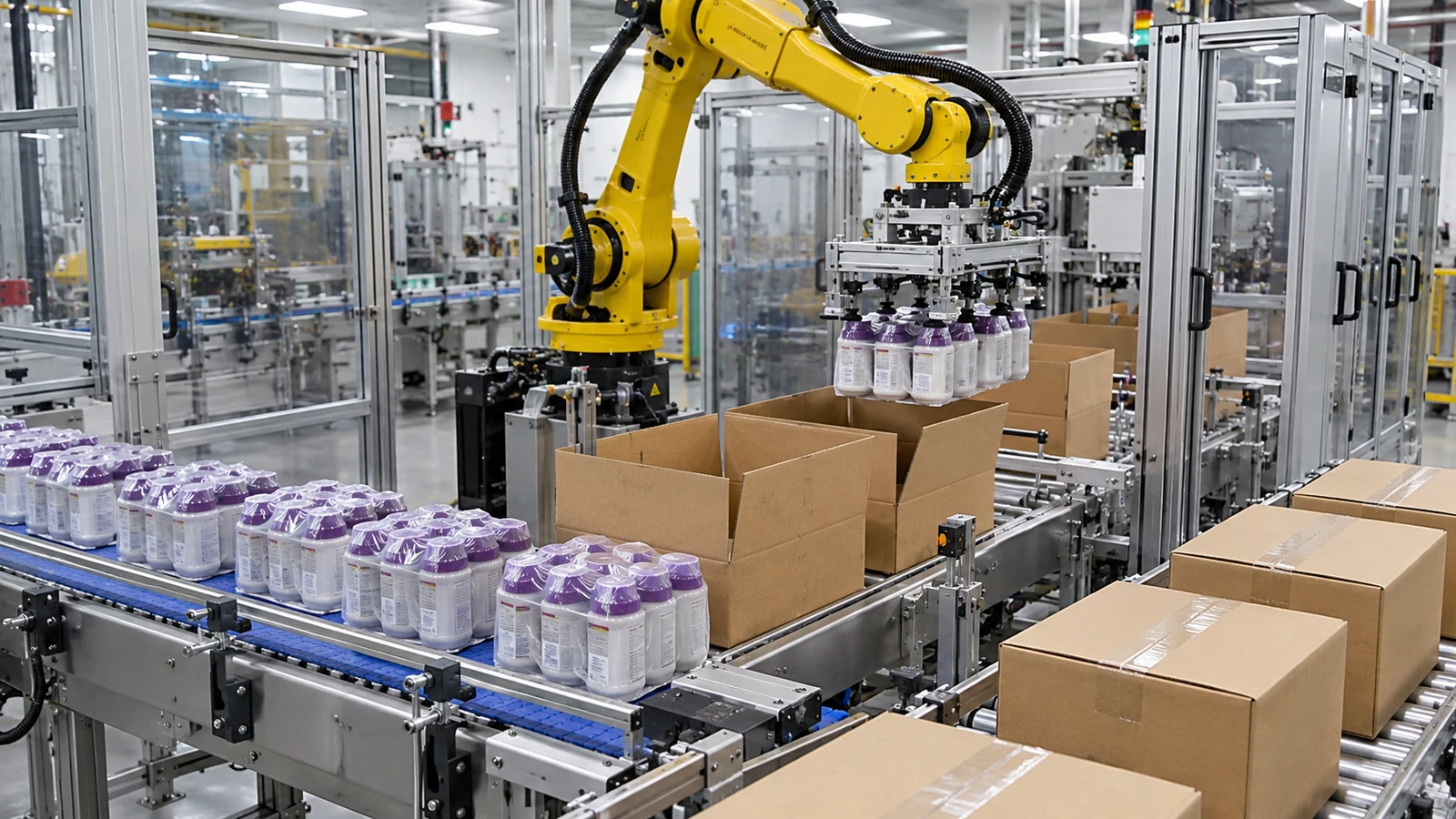
Automated packaging systems handle cartoning, case packing, case sealing and labeling. Typical equipment includes cartoners, case packers, case sealers, labelers and robotic case-packing cells.
When a line handles different products or packaging formats, a robotic case-packing system can be adapted by changing its program and gripper.
Automated Palletizing and Finished-Goods Transfer Systems
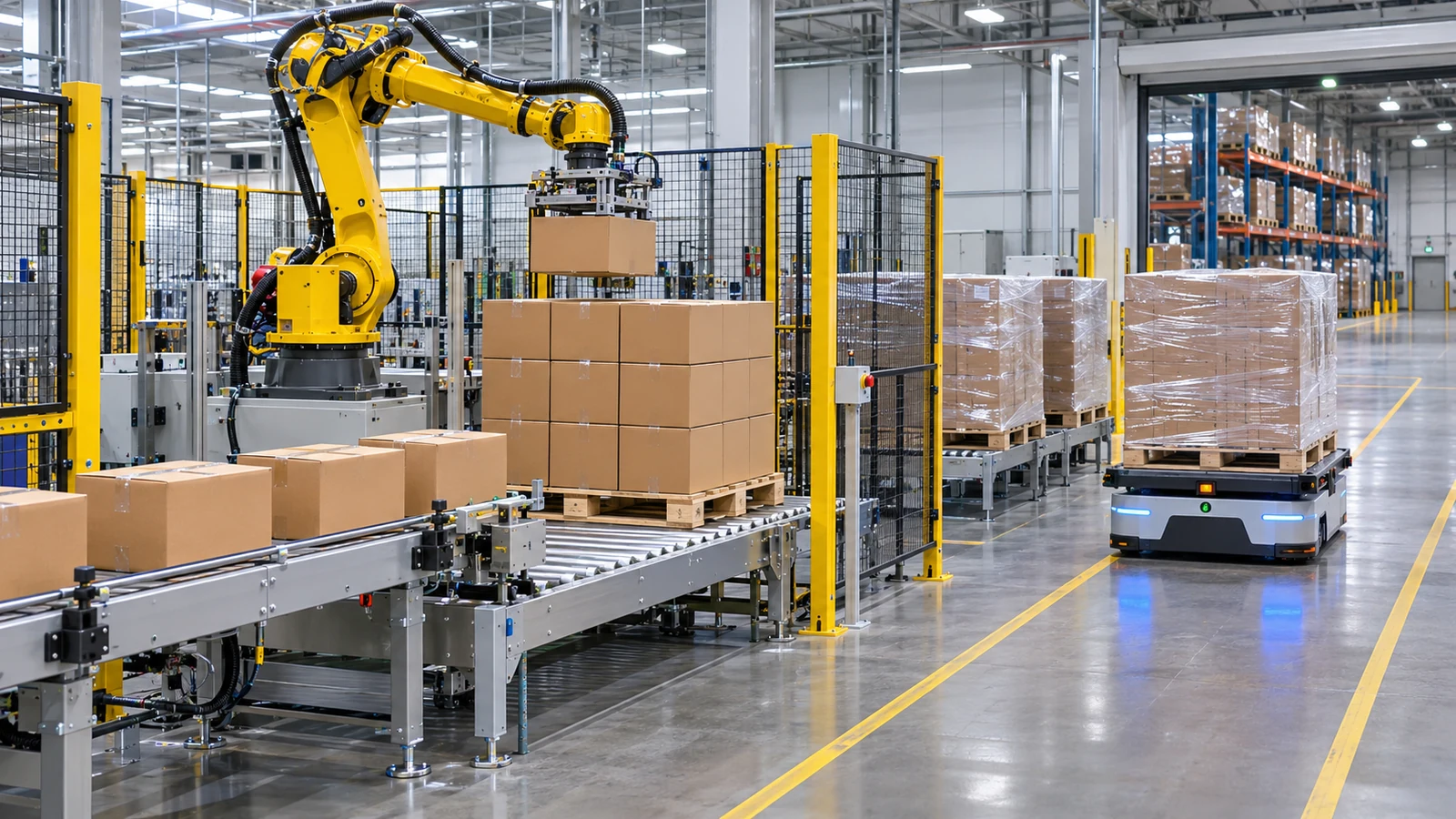
Once products have been packed into cases, they need to be stacked on pallets. Automated palletizing systems use dedicated palletizers or industrial robots to arrange and stack cases, removing much of the repetitive manual lifting.
After palletizing, conveyors, AGVs or AMRs can move the pallets to a staging area or warehouse.
Key Components of an End-of-Line Automation System
An end-of-line system typically includes inspection equipment, product-handling mechanisms, conveyors, controls and the packaging or palletizing machines required for the job. How these machines work together has a direct effect on line performance.
Take a line with inspection and packaging stations. The inspection unit identifies failed products; a sorting mechanism removes them, while accepted products travel by conveyor to the packaging station. Buffers can be added between stations to limit the impact of short stops.
The control system coordinates product release, machine starts and stops, alarms and fault recovery. In electronics manufacturing, test results can also be linked to product serial numbers and uploaded to an MES for traceability.
Connecting inspection, packaging, palletizing and transfer into a fully automated end-of-line system also requires coordinated control logic, appropriate guarding and safety interlocks.
Key Challenges and Considerations in End of Line Automation
Mismatched Production Rates
If upstream production turns out 60 units per minute but the end-of-line packaging machine can only handle 40, products will keep backing up. Eventually, upstream equipment may have to stop as well.
Line planning therefore needs to account for overall throughput and buffer capacity, not just each machine’s maximum speed.
Frequent Product Changeovers
Many factories make different models on the same line. Switching products may require changes to robot grippers, test fixtures or packaging equipment.
If changeovers happen several times a day, how quickly the machines can be adjusted may matter more than their top speed.
Integration with Existing Equipment
For an operating factory, retrofitting can be more complicated than building a new line. Existing control interfaces, available floor space and conveyor direction can all restrict where new equipment goes.
Machines from different suppliers also need to exchange operating and fault signals reliably.
Investment and Maintenance Costs
Beyond equipment purchase, end-of-line automation involves tooling, installation, commissioning, system integration and ongoing maintenance.
ROI should be assessed against actual output, labor savings, changeover frequency and operating costs, rather than the purchase price alone.
Why Is End of Line Automation Important?
Higher Overall Line Output
When final inspection, case packing or palletizing cannot keep up with upstream production, these stations limit the output of the whole line. Increasing their capacity can reduce product buildup and the need to stop upstream machines.
Consistent Final Quality Checks
Automated inspection checks products against the same criteria and saves the results. For electronics, functional test data helps trace defective products; for packaged goods, weight, label and barcode checks help reduce packing errors.
Less Manual Case Packing and Handling
Case packing and palletizing involve repetitive tasks, sometimes with heavy products. Robots can take over much of this handling while maintaining a consistent working pace.
A Direct Link Between Production and Warehousing
Finished products can move straight from packaging to automated palletizing and pallet transfer, then on to the warehouse or staging area. That reduces manual handoffs and repeated handling at the end of the line.
If you are planning to upgrade inspection, packaging or palletizing on an existing line, contact Robotlyne for a free project feasibility review and ROI analysis.