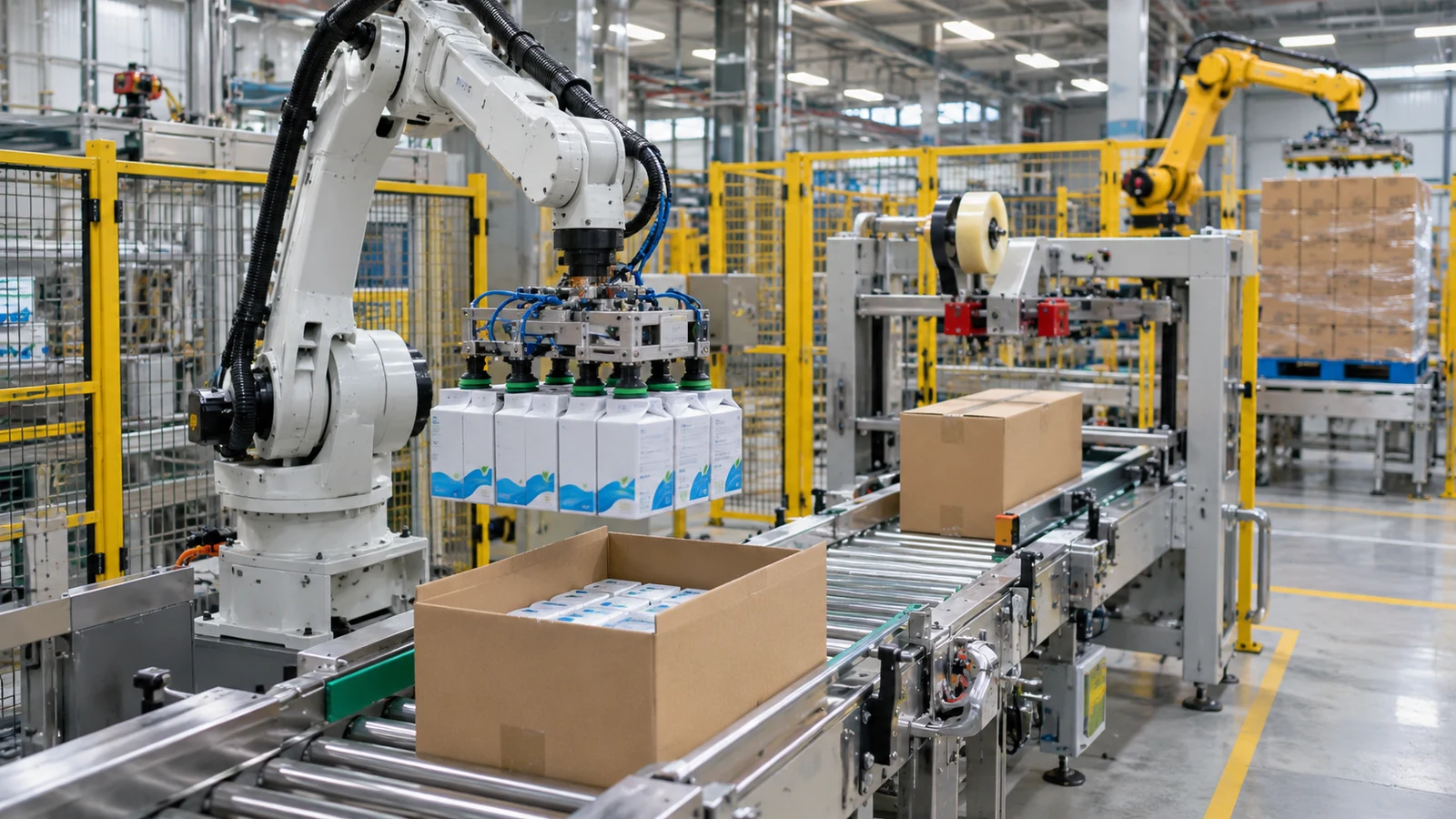
After bottled products have been filled and capped, or electronic products assembled and tested, there is usually still case packing, case sealing and palletizing to be done. Some factories have automated these tasks, while others still rely on workers to arrange and move products.
End-of-line packaging automation can cover a single station or connect several packaging machines. The right approach depends mainly on the product, packaging format and existing production line.
What Is End-of-Line Packaging Automation?
End-of-line packaging automation uses automated equipment to arrange products, pack them into cases, seal cases, apply labels and palletize finished goods after manufacturing or primary packaging is complete.
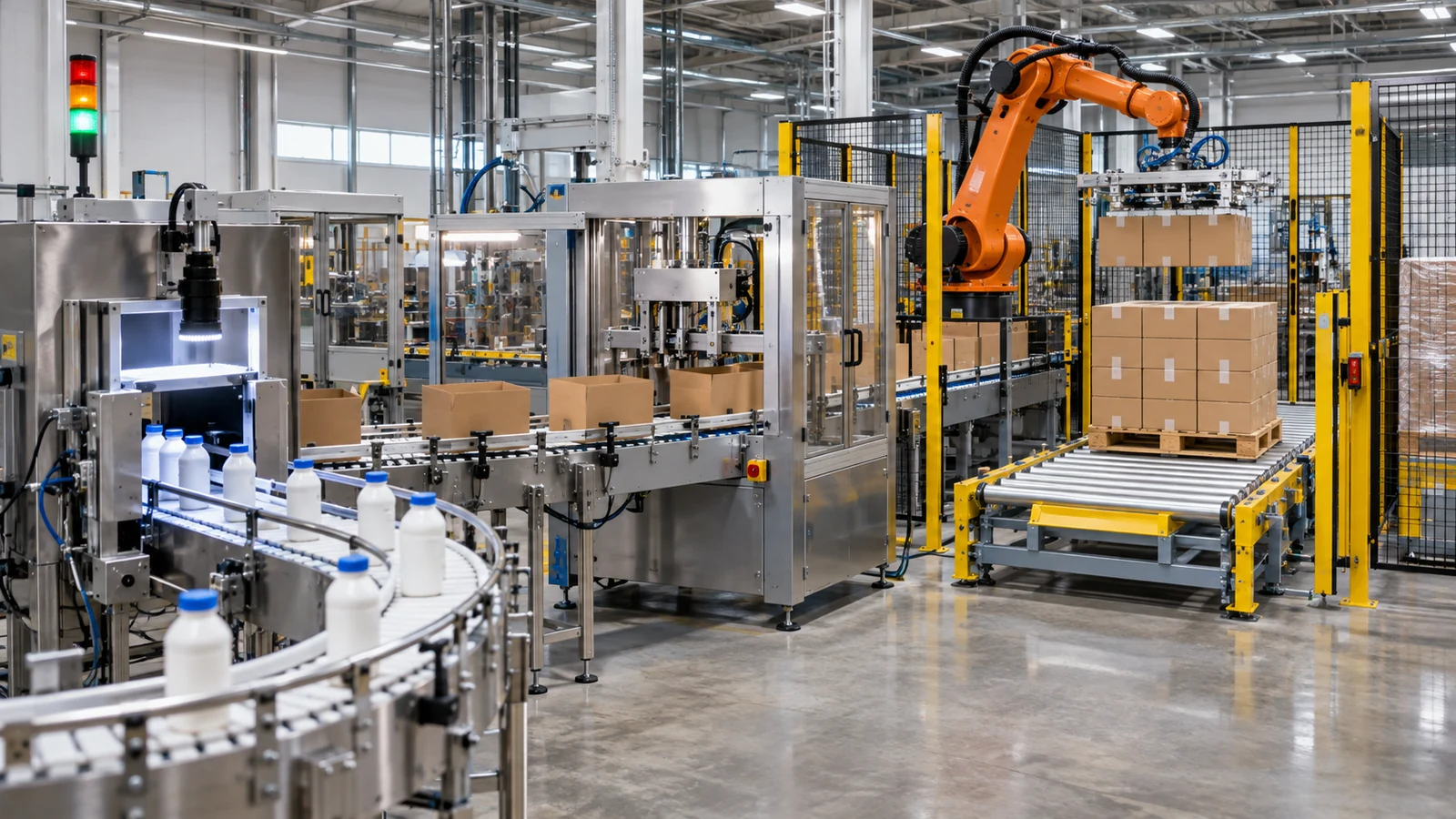
Take bottled beverages. Once the bottles are capped, a conveyor takes them into the packaging area, where they are grouped by the required number per case and loaded into cartons. The cases then move on to sealing, labeling and palletizing.
Common equipment includes case erectors, case packers, case sealers, conveyors and palletizing robots. A factory may use just one of these machines or link the operations into a continuous automated packaging line.
Key Benefits of Packaging Automation
Less Manual Handling
Manual case packing and palletizing involve repeatedly lifting, arranging and stacking products. Automated case packers and palletizing robots can take over these repetitive tasks, particularly on high-volume lines with relatively consistent packaging formats.
Consistent Packaging Speed
Automated packaging equipment runs at a set pace, reducing dependence on manual packing speed. When case packing, sealing and palletizing capacities are well matched, the packaging line can handle output from upstream production more consistently.
More Consistent Packaging
Automated case packers load the specified number of products in a consistent arrangement, helping reduce missing or extra items. Case sealing and labeling machines also use set parameters, reducing variation in packaging quality caused by manual operations.
Less Handling Damage
Consistent case packing and pallet stacking help keep cases neatly arranged and pallet loads stable, reducing the risk of damage during handling and transport.
Which Industries Benefit from End-of-Line Packaging Automation?
Food and Beverage
Bottled drinks, canned foods and bagged snacks often require continuous case packing and palletizing. Products with regular shapes can use mechanical case packers, while flexible pouches or fragile products may need specialized grippers and robotic case-packing systems.
Electronics and Home Appliances
After testing, electronics may need to be packed with protective inserts, manuals and accessories before cartoning or case packing.
For housings, displays and precision components that scratch easily, packaging equipment must control where and how firmly products are gripped.
Household and Personal Care Products
Shampoos, detergents and cosmetics commonly come in bottles or boxes, making them suitable for automated product arrangement, case packing and palletizing.
These lines may switch frequently between bottle types or case sizes, so equipment flexibility and changeover efficiency matter.
Pharmaceuticals and Medical Supplies
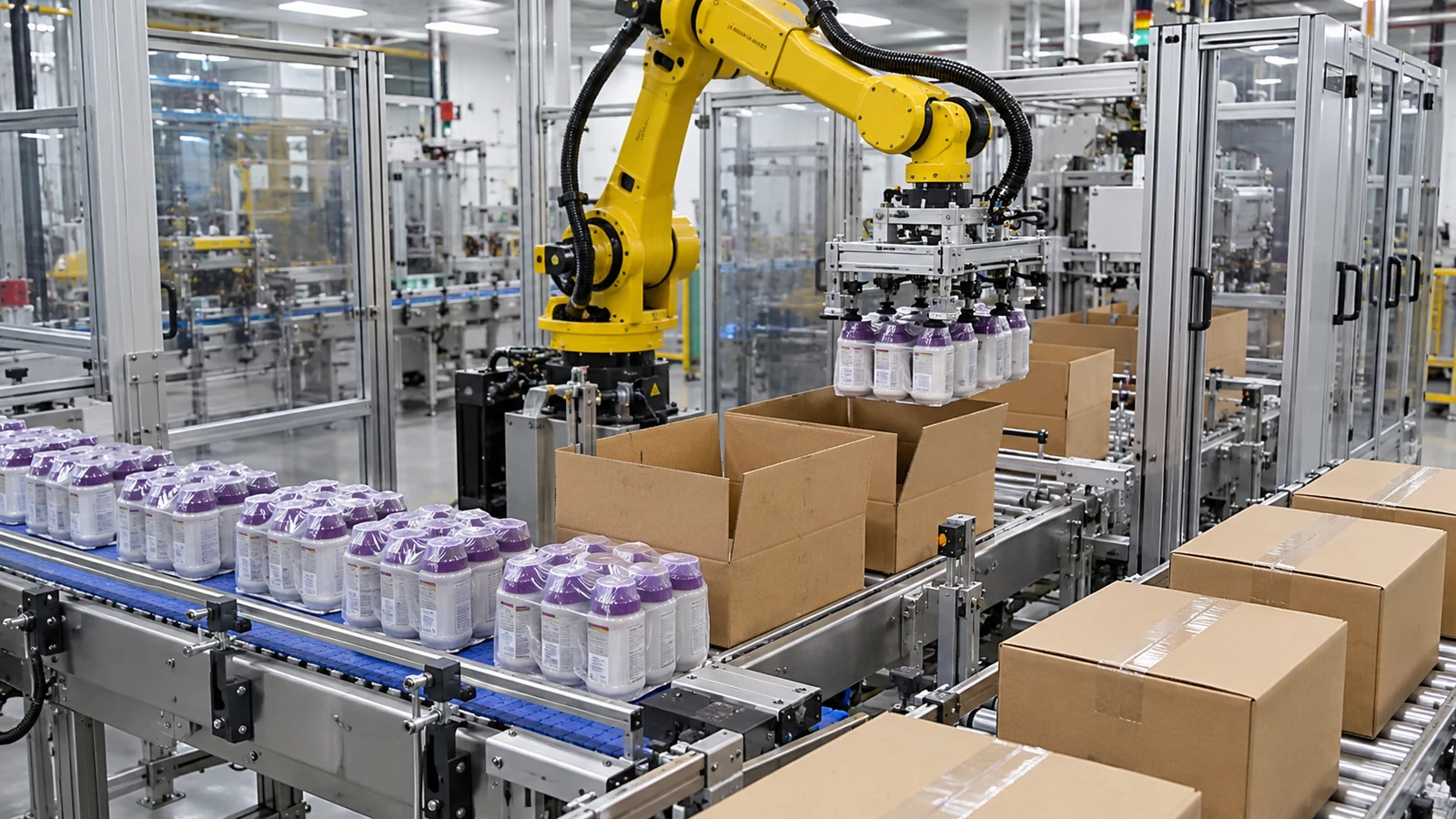
Cartoned medicines and medical consumables can be case-packed, sealed and labeled with automated equipment.
Depending on the product and regulatory requirements, the line may also include barcode verification, weight checks and rejection of nonconforming packs to help ensure correct quantities and labeling information.
How to Integrate Packaging Automation at the End of a Production Line
To automate end-of-line packaging in an operating factory, start by reviewing the current packaging process. Which stations are already automated? Which still depend on manual work? How do products arrive at the packaging area? The answers will shape the equipment configuration.
Select the Right Case-Packing Equipment
The product’s shape, weight, required arrangement and case format determine the choice of case packer.
Mechanical case packers can be considered for regularly shaped products such as bottles and boxes. Robotic case packing is generally more flexible when products need to be reoriented, several formats must be handled, or a special arrangement is required.
Match the Throughput of Each Station
If an upstream line produces 120 items per minute and each case holds 12 items, the case-packing station needs to handle an average of 10 cases per minute. Case sealing, labeling and palletizing equipment must have corresponding capacity.
Conveyors and buffer space between stations also need to be planned so that a brief stop at one machine does not cause products to keep piling up.
Account for Existing Equipment and Floor Space
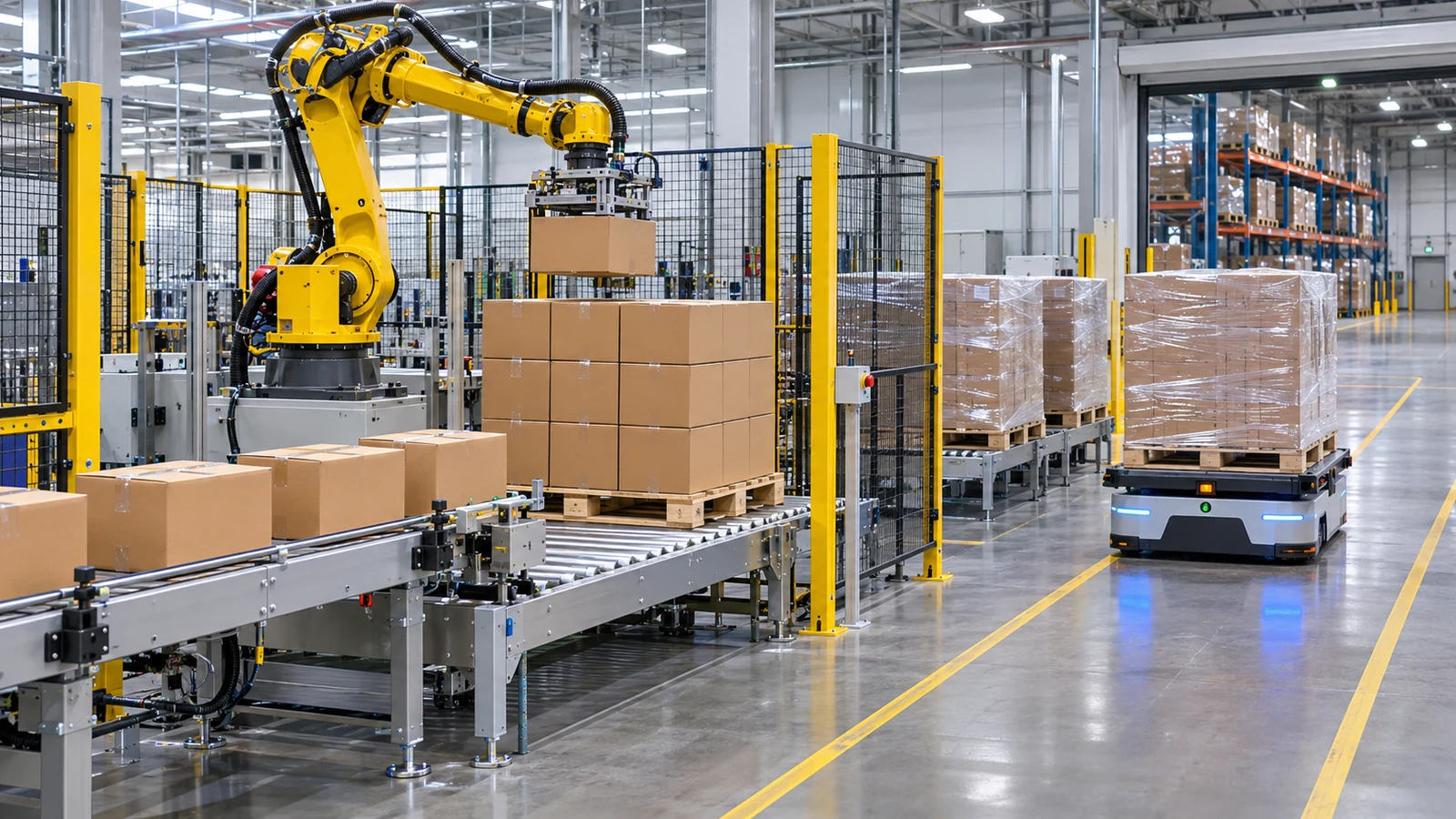
An existing packaging line does not necessarily need to be replaced. If its case packer works well but manual palletizing requires too much labor, a robotic palletizing system can be added instead.
The layout also needs room for packaging material replenishment, maintenance and safety guarding, as well as the time and space needed for product changeovers.
Commission and Test the Complete Line
After installation, the line should be tested with the actual products and packaging materials. Checks should cover pack counts, case sealing quality, label placement and pallet stability, as well as how the stations work together during continuous operation, stopping and restarting.
Robotlyne provides automated packaging systems and equipment integration solutions. Based on product characteristics, packaging specifications and existing line layout, we can configure case-packing, conveying, case-sealing and robotic palletizing equipment.
If you are planning to upgrade an existing packaging line, contact Robotlyne for a free project feasibility assessment and ROI analysis.