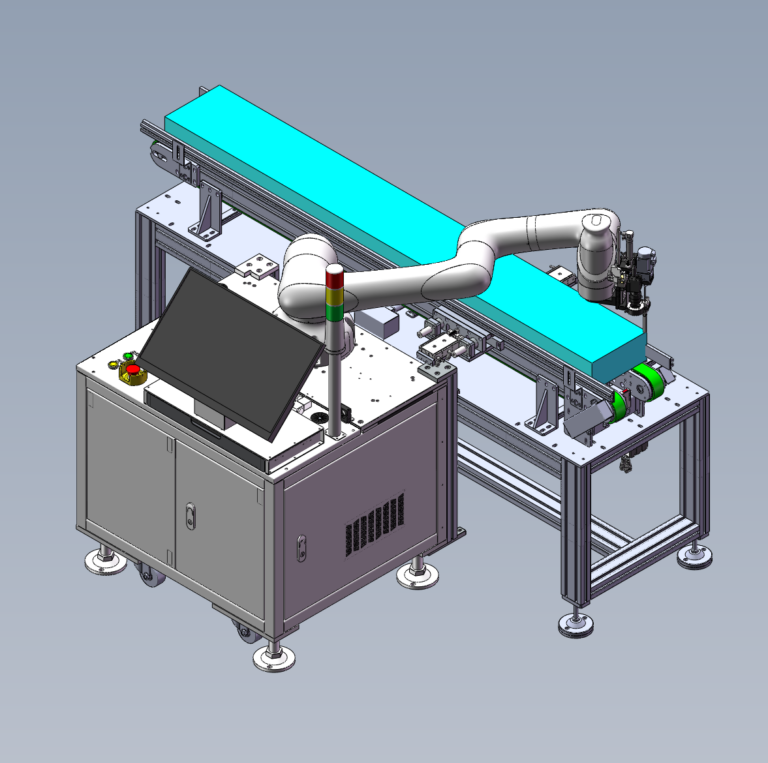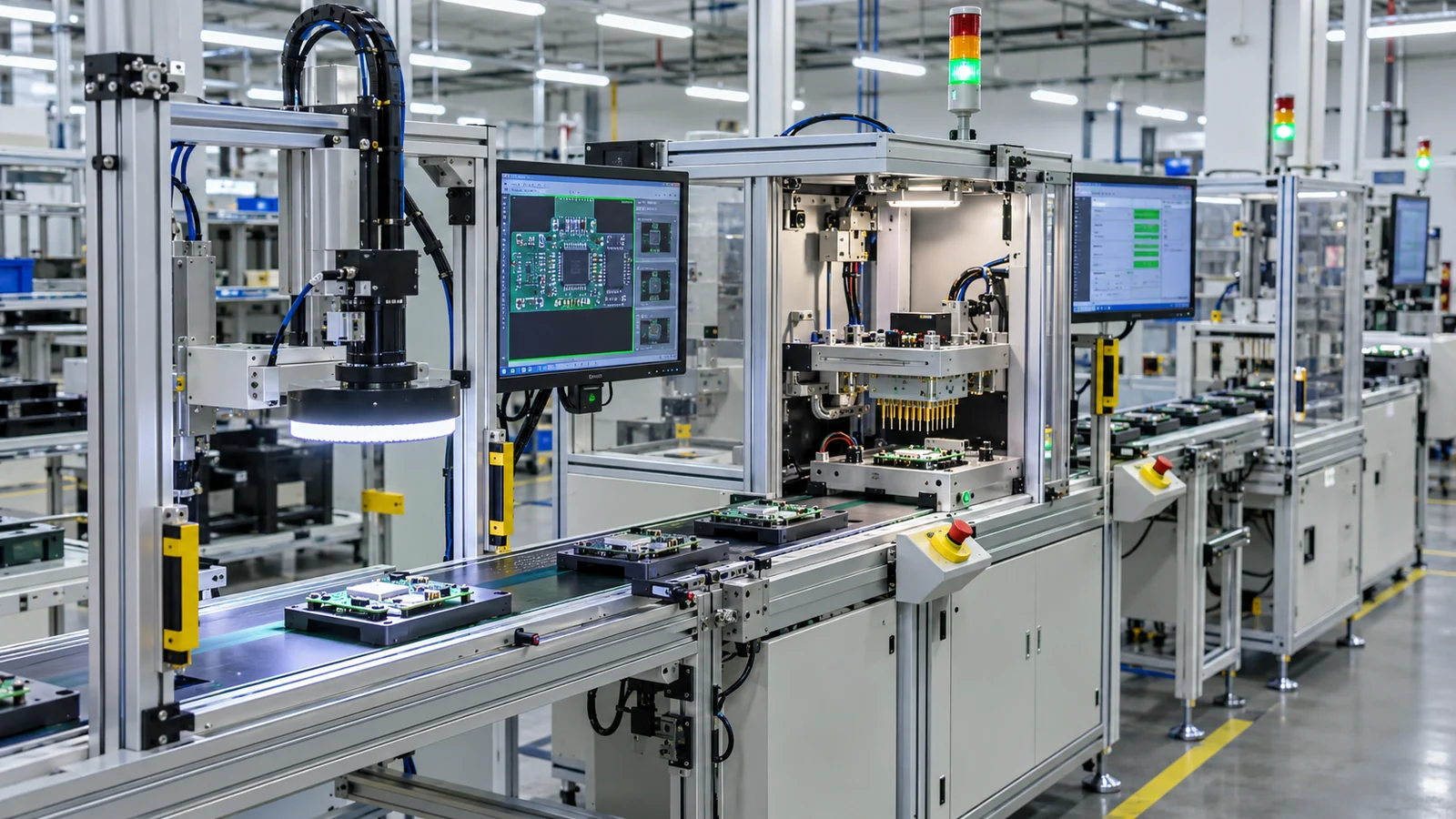
In a solar module factory, cell stringing, layup, lamination, and inspection can take place one after another along a production line. Wind turbine manufacturing is quite different. Blades are large and have complex curved surfaces, so much of the processing equipment has to be arranged around the workpiece. Battery energy storage systems and EV charging equipment, meanwhile, involve more electrical connections, precision assembly, and testing.
These differences mean that renewable energy automation calls for different equipment and production methods depending on what is being manufactured.
Automation in Renewable Energy Manufacturing
Solar Panel Manufacturing Automation
Making a solar module typically involves cell stringing, layup, lamination, framing, and inspection. Handling and positioning the cells takes particular care: the cells are thin and fragile, and even a small mishap can cause cracks or breakage.
On an automated line, a stringer first connects the cells into strings. A layup system then places them in the required positions. After lamination, the modules move on to trimming, framing, and junction box installation. Conveyors, robots, and automated positioning units can connect these stations.
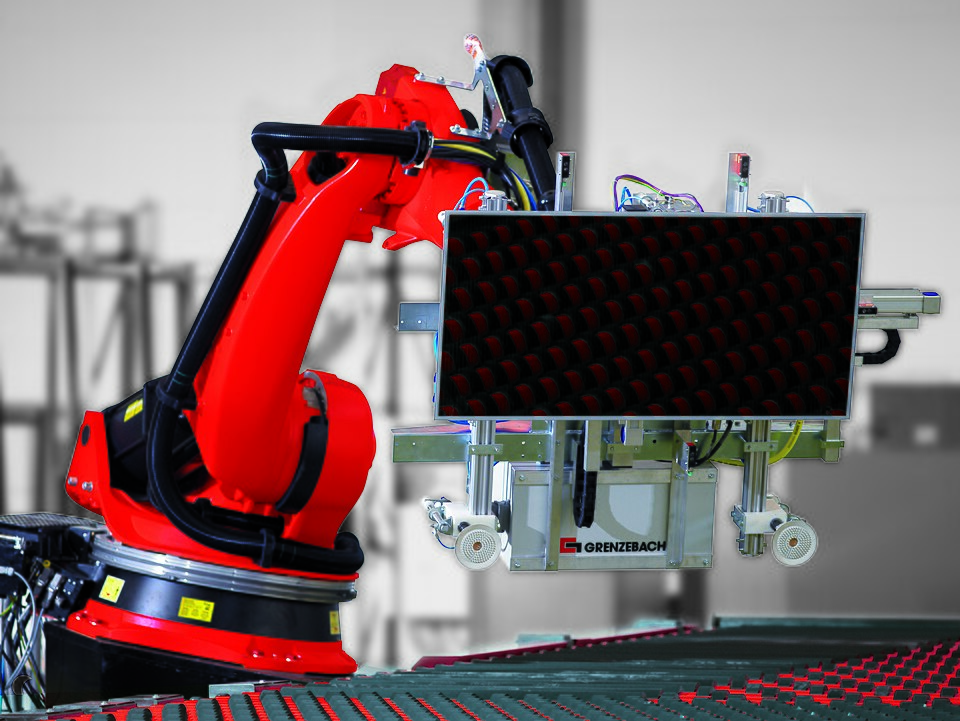
Modules also need testing before they leave the line. Electroluminescence (EL) inspection can help detect defects such as microcracks in solar cells, while electrical performance testing checks the module’s output. Results can be linked to a module ID to make quality issues easier to trace.
Automation makes a particularly noticeable difference in handling. With fewer manual transfers between stations, there is less risk of breaking cells. Automated layup also helps control the position and spacing of cell strings, reducing alignment problems further along the assembly process.
Wind Turbine Manufacturing Automation
Wind turbine blades are usually made from composite materials. After molding, they still need trimming, sanding, and surface finishing. With such long blades and irregular curved surfaces, this is demanding work.
Industrial robots can take on some of the trimming and sanding, but they cannot simply follow the same fixed path for every blade. In practice, a robot may use 3D scanning to capture the shape of the workpiece and adjust its path accordingly.
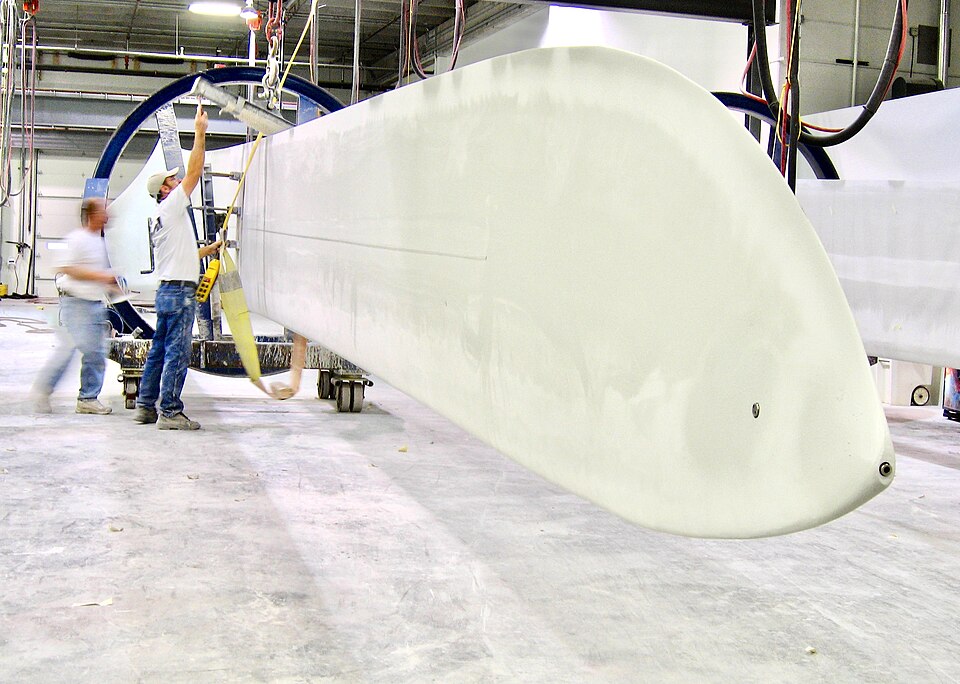
This can reduce the amount of manual sanding in dusty environments and the need for working at height. For large curved surfaces that require repeated processing, following a planned robotic path can also improve the consistency of the finished work.
Automation also has a role in nacelle assembly. Generators, bearings, drivetrain components, and electrical equipment are often large and heavy, so installation requires dedicated positioning fixtures and lifting equipment. Some bolt-fastening tasks can be handled by automated tightening systems.
Unlike the continuous production of solar modules, wind turbine manufacturing often calls for fixtures and automated workstations designed around particular components—especially when assembling large blades and nacelles.
Automation in Energy Storage and EV Charging Equipment Manufacturing
Battery Energy Storage System Manufacturing Automation
Manufacturing a battery energy storage system (BESS) involves battery module assembly, battery rack integration, electrical connections, and system testing. Many of these tasks are repeated numerous times.
Take a battery module, for example. Cells have to be arranged and secured in specified positions before electrical connections are made through busbars and other components. Depending on the module design, manufacturers can use robotic handling, automated positioning equipment, and laser welding or screwdriving systems. The connection method depends on the battery module’s construction.
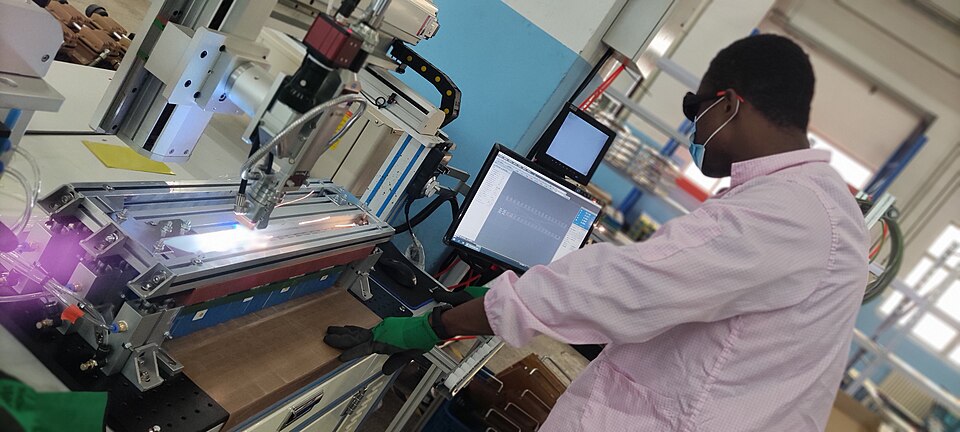
Once a module is assembled, the battery management system (BMS), wiring harnesses, and other components still need to be installed. Battery modules for large storage cabinets can be heavy, and space inside the cabinet is limited. Handling and installation equipment therefore needs to account for both module weight and assembly position.
The value of automation here goes beyond reducing manual work. Battery modules involve many repeated positioning and connection tasks, and machines can carry them out using set parameters, reducing variation between operators.
Electrical connection, insulation, and communication tests can also be integrated into the production system. When test results are linked to product IDs, it becomes easier to retrieve the relevant assembly and inspection records if a quality issue arises.
EV Charging Station Manufacturing Automation
EV charging equipment contains power modules, control circuits, connectors, wiring harnesses, and other components. Final assembly may still involve considerable manual work, but power module manufacturing includes many tasks well suited to automation.
For example, assembling a power module may involve applying thermal interface material and installing screws in several locations. Automated dispensing equipment can control the application path and amount, while a robot with vision positioning and automatic screw feeding can perform screwdriving at multiple positions.
Some products need components installed on both sides. Doing everything manually means repeatedly lifting and turning the product. An automatic flipping mechanism can instead connect the two assembly stations directly.
Dispensing position, material quantity, and screw-tightening parameters all affect the quality of a charging module assembly. Automated equipment can repeat these operations using set parameters and reduce variations in manual assembly.
Assembled modules still have to undergo electrical and functional testing. Connecting assembly, flipping, testing, and buffer stations reduces manual transfers between machines and makes it easier to record the test results for each module.
The Future of Renewable Energy Automation
For products made in large, repetitive volumes, such as solar modules and battery modules, more processes can be linked together on a single automated production line. Equipment can exchange process settings, inspection results, and operating status as well as move products between stations.
Not every type of renewable energy equipment is suited to that production model, though.
Wind turbine blades, for example, are large and complex in shape, and robots need to adjust their processing paths to match the actual workpieces. As 3D vision and robotic control continue to develop, more of the trimming, sanding, and surface finishing now performed manually may become automated.
Battery storage and charging equipment manufacturers face a different issue: product changes. A new battery module may have different dimensions and connection structures, while a charging module may need a revised assembly process when its power rating or design changes.
In these plants, robots with changeable tooling and adjustable programs, along with modular workstations, can be more practical. When a factory adds a new model, it may be able to keep much of its existing equipment instead of redesigning the entire line.
More automation is not necessarily better in every case. For a process that produces the same item over a long period, dedicated equipment is often easier to run at a stable output. When specifications change frequently, ease of adjustment and changeover time matter just as much to actual production efficiency.
If you are considering automating assembly, handling, or testing, you can start by telling us about your product and production requirements. Contact Robotlyne for a free assessment of possible automation options and an estimated ROI analysis.