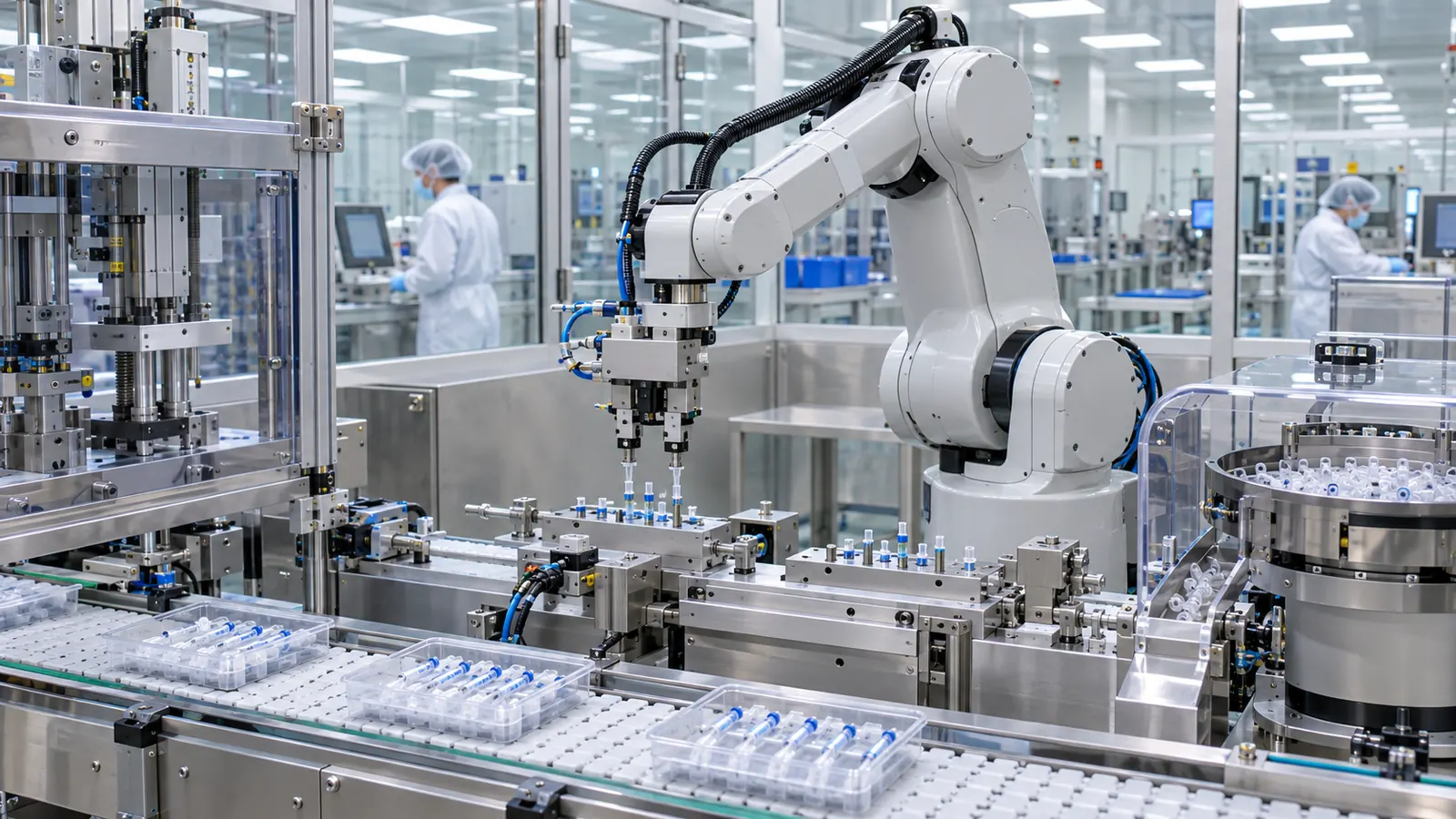
Medical device manufacturing covers multiple sectors, including single-use medical consumables, surgical instruments, diagnostic equipment, and medical electronics. Products vary widely in materials, structures, and functions, and the production process often includes component machining, material feeding, precision assembly, quality inspection, testing, and packaging. For products with miniature components, flexible tubing, or precision connection structures, assembly accuracy, process stability, and production consistency are especially important.
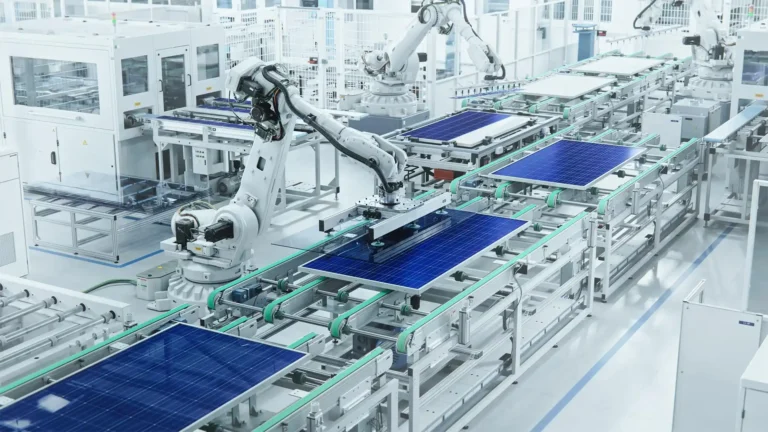
As product designs and manufacturing requirements become more diverse, industrial robots, dedicated assembly equipment, machine vision, and production control systems are being applied to different stages of medical device manufacturing. Depending on the process, automation can be used at a single workstation or integrated across multiple stages to form a complete automated production line.
What Is Medical Device Automation?
Medical device automation, also called medical device production automation, refers to the use of robots, specialized equipment, inspection devices, and production control systems in medical device manufacturing to perform operations that were previously done manually or required manual assistance.
A medical device automation system typically includes the following equipment and technologies:
- Industrial robots: for component picking, positioning, transfer, assembly, and machine tending.
- Precision assembly equipment: for press-fitting, screw fastening, dispensing, welding, and other joining operations.
- Machine vision systems: for checking component position, product appearance, dimensions, and assembly status.
- Sensors and motion control systems: for monitoring and controlling position, speed, force, and other process parameters.
- Production management and control software: for managing production tasks, equipment status, process parameters, and inspection data.
These elements usually work together on the production line. A robot may feed parts into an assembly station, dedicated equipment may complete the joining process, and a vision system may then verify the assembly result.
Benefits of Automation in Modern Medical Device Manufacturing
Higher Assembly Accuracy and Production Consistency
Many medical devices contain small, precision components, such as catheter connectors, syringe components, and miniature fittings. These parts often have strict requirements for positioning and assembly force. Dedicated fixtures and automated assembly equipment can repeat positioning, insertion, and press-fitting operations with preset parameters, reducing variation caused by manual work.
Greater Production Efficiency and Capacity
Part feeding, product transfer, and repetitive assembly typically require significant manual labor. Automating these tasks with robots and dedicated equipment helps reduce manual handling and waiting time between processes. For batch-produced medical consumables, multi-station operation can also increase overall line output.
Stronger Quality Control and Product Traceability
Medical device manufacturing requires process and inspection records. Automated systems can collect assembly parameters, inspection results, and equipment operating data, and link them to product serial numbers or production batches. If a problem occurs, manufacturers can trace it back to the relevant production stage.
Less Manual Handling in Controlled Cleanroom Environments
Some medical devices are produced in controlled cleanroom environments. Frequent manual handling and material transfer increase the burden on cleanroom management. Robots and automated handling equipment designed for the required cleanroom conditions can reduce direct product contact and unnecessary movement of personnel in production areas.
Greater Production Flexibility
Medical device manufacturers often need to run multiple product sizes or models. Equipment with interchangeable fixtures and adjustable programs can adapt to a range of product variations and reduce setup work during changeovers.
Applications of Medical Device Automation Systems
1. Medical Device Component Machining and Machine Tending
Many medical device parts, including metal and plastic components, need to go through processes such as CNC machining and injection molding. Robots can load parts into processing equipment, remove them after machining, and transfer them to the next station, reducing manual machine tending.
When a production line needs to connect multiple machining stations with downstream assembly processes, our custom assembly automation solutions can integrate different workstations and existing production equipment so that parts move more smoothly between operations.

2. Medical Equipment Assembly
Catheters, infusion sets, and diagnostic consumables usually consist of multiple small components. Assembly can involve feeding, positioning, insertion, and joining. Robots can handle part picking and positioning, while dedicated equipment performs press-fitting, dispensing, ultrasonic welding, and similar operations. For flexible tubing and precision connectors, gripping methods and assembly force need to be matched to the material and product structure to avoid damage.
3. Machine Vision and Automated Quality Inspection
Some medical device components are very small, and certain assembly points may be partly concealed, which makes defect detection difficult through manual inspection alone. Machine vision can check for missing parts, incorrect assembly orientation, surface defects, and the accuracy of labels and product markings.
Robotlyne’s automated optical inspection (AOI) systems can be configured according to product characteristics. For processes that also require monitoring of assembly force, insertion depth, or displacement, pressure and displacement sensors can be added to the inspection process.

4. Automated Testing for Medical Devices
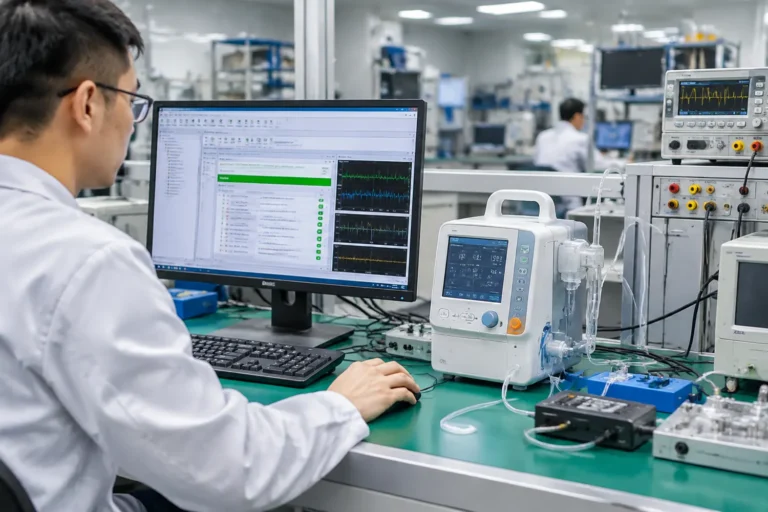
Medical devices require different tests depending on their function. Some infusion devices need flow-rate or pressure testing, catheters and connectors may need leak or burst testing, and medical electronic devices require electrical performance and functional checks.
Automated test equipment can execute test programs, collect data, and save results. Devices that contain embedded software may also require software functional verification, integration testing, and regression testing. These activities are part of test automation for medical devices and differ from functional and performance tests carried out on physical products on the production line.
5. Automated Packaging for Medical Devices
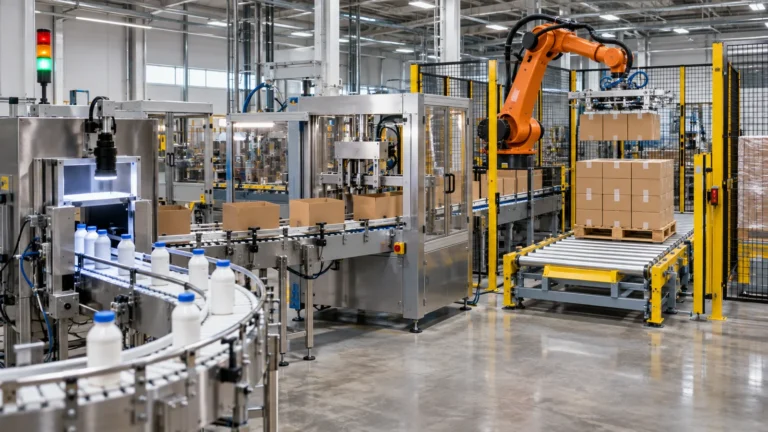
After assembly and inspection, medical devices must be packaged according to product requirements. Automated equipment can handle product loading, package sealing, label printing, barcode identification, and cartoning.
For products that require sterile barrier packaging, automated packaging lines for medical device preservation need to consider packaging materials, seal quality, and package integrity so that the packaged product can meet downstream sterilization, storage, and transportation requirements.

Using Automation to Strengthen Competitiveness in Medical Device Manufacturing
Medical device automation projects usually deliver the most value when they start with processes that consume time, limit line balance, or produce inconsistent results. Manual loading, precision assembly, and inspection are often good places to begin.
It is also important to look at how equipment connects across the line. If loading, assembly, inspection, and unloading are treated as separate tasks, efficiency gains may remain limited. Better integration usually leads to smoother material flow and more stable production.
For lines that handle multiple product models or may expand in the future, modular design makes later adjustments easier. At the same time, production data, inspection records, and batch information still need to fit within the manufacturer’s quality management and process validation requirements.
If you are planning to automate medical device assembly or upgrade an existing line, Robotlyne can help assess a suitable solution based on your product structure, manufacturing process, and output requirements.