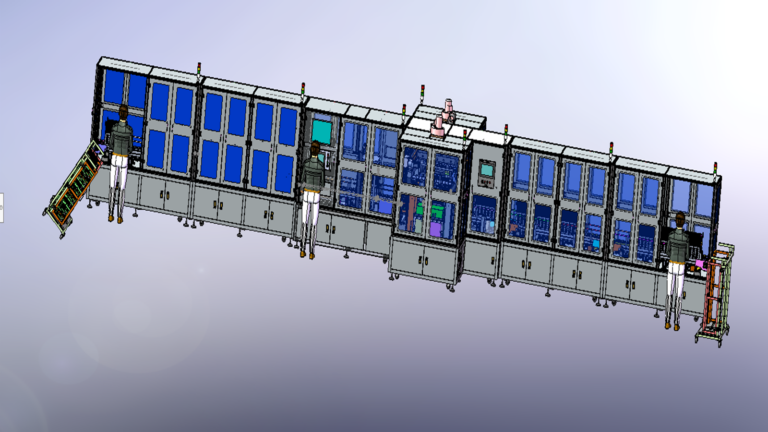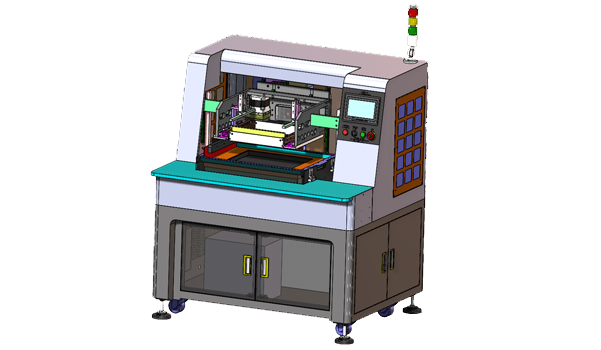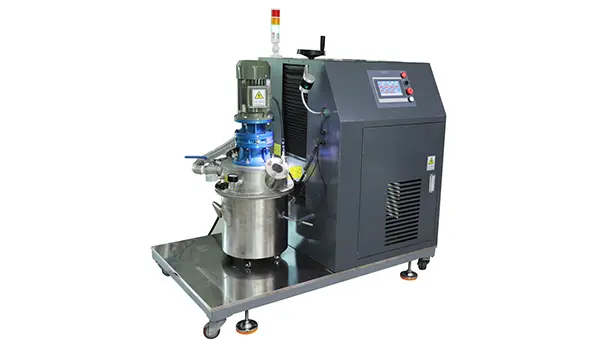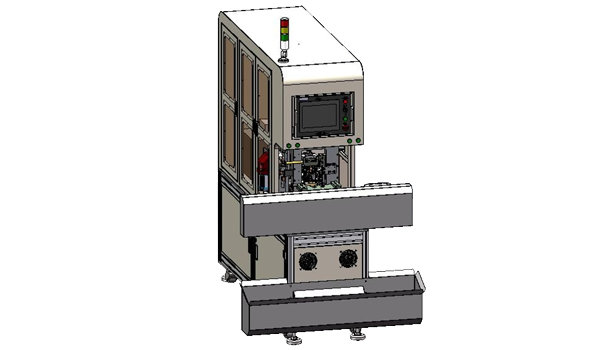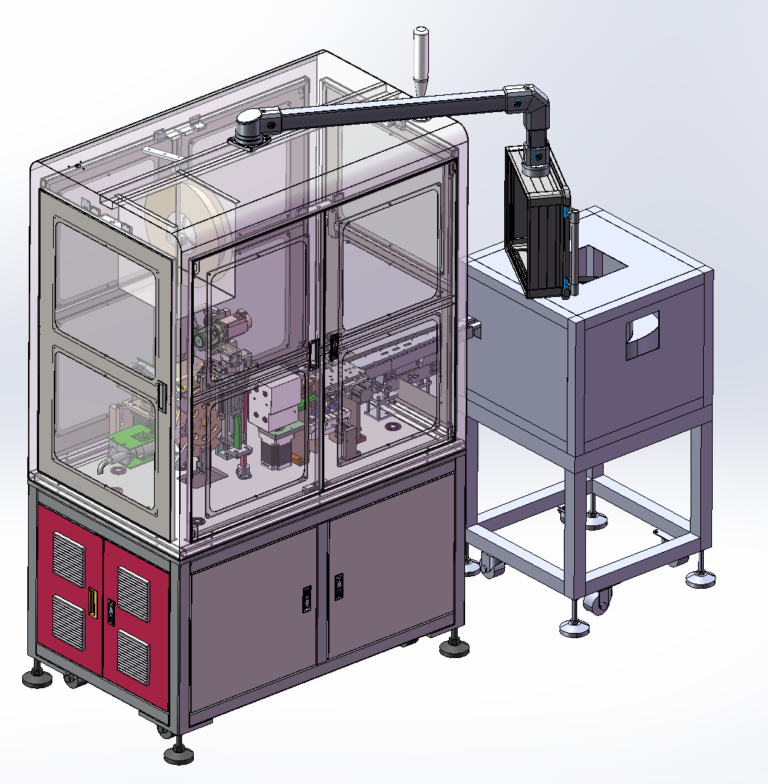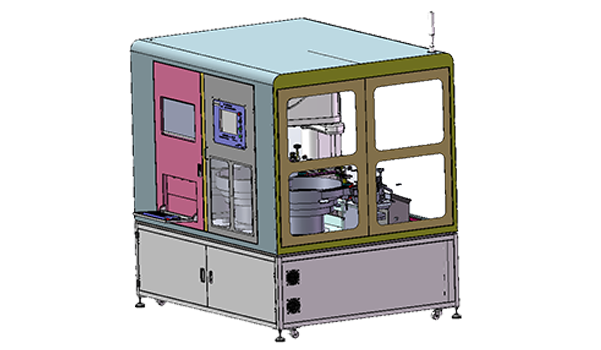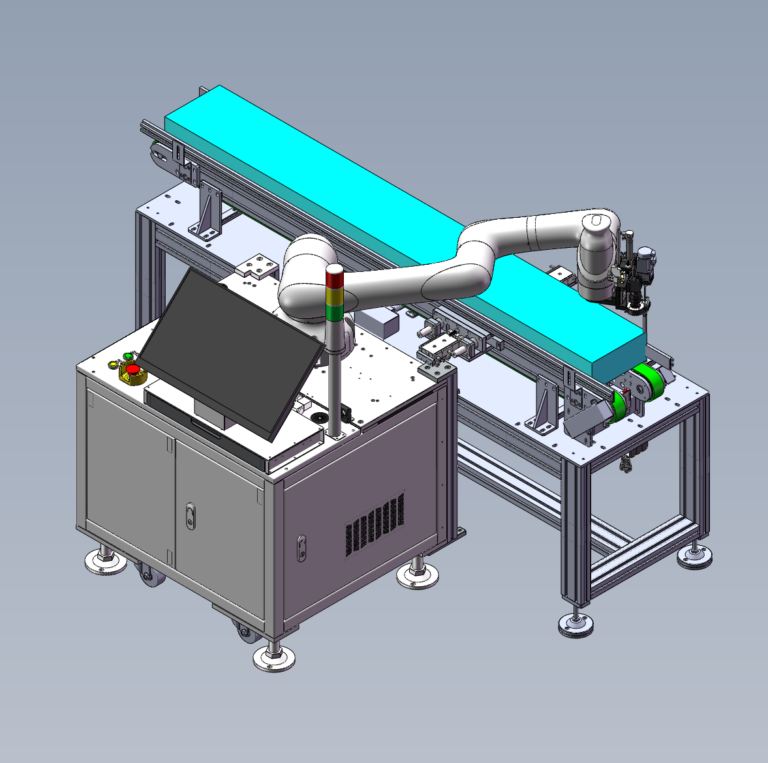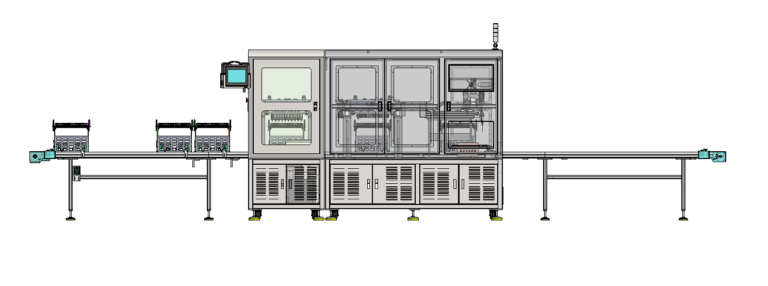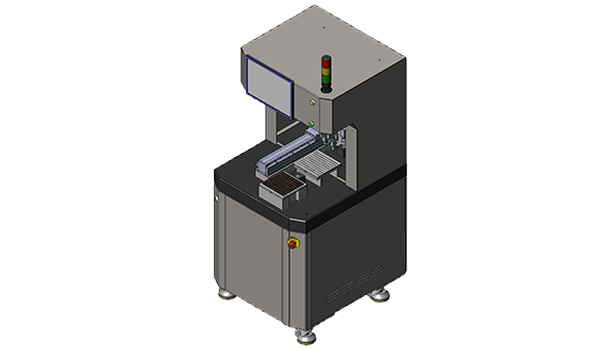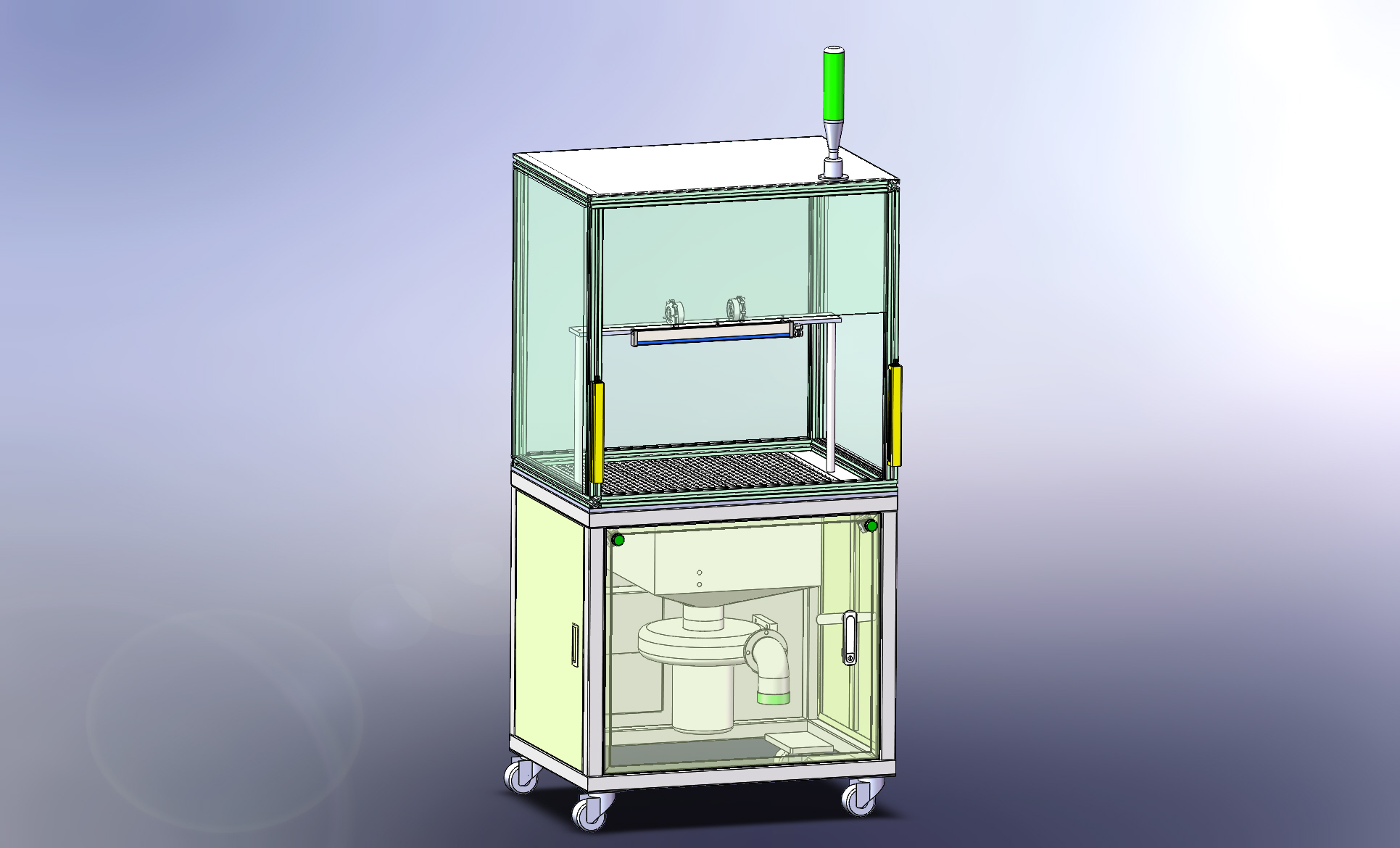
In PCB manufacturing, Automatic Dust Removal Equipment does not always require a complex conveyor, robot, or multi-station transfer system. In this PCB Automatic Dust-Removal Workbench project, Robotlyne designed a compact manually loaded workstation. The operator places the PCB in the work area and confirms the cycle. An Ion Bar and High-Efficiency Blower above the board remove dust from the PCB surface, while the Exhaust Chamber below immediately draws away the released particles and collects them in a Dust Bag. After the first side is cleaned, the operator flips the PCB and uses the same airflow and extraction process to clean the opposite side.
The design centers on a very short air path:
Upper airflow releases and carries away surface particles
↓
Lower extraction removes them immediately
↓
Particles are collected in the Dust Bag
Double-sided PCB cleaning is achieved without adding a second cleaning mechanism. Instead, the operator flips the PCB and repeats the same Cleaning Cycle. A workstation of approximately 800 × 600 × 1,900 mm can therefore handle both sides of the PCB while maintaining a one-operator workflow.
Robotlyne’s Electronics Assembly Automation covers Standalone Machines, Semi-Automated Workstations, Automated Handling, and Inspection, and can be applied to similar PCB Cleaning, Pre-Assembly Cleaning, and other independent electronics-manufacturing stations.
Once Dust Leaves the PCB, It Needs an Immediate Downward Path
If compressed air or a blower only lifts particles from the PCB surface, those particles have merely moved from the Board Surface into the surrounding air.
They are still inside the work area.
Robotlyne therefore placed Air Delivery and Dust Extraction on opposite sides of the PCB in this workstation.
The upper section includes:
Ion Bar
and:
High-Efficiency Blower
The lower section includes:
Exhaust Chamber
Exhaust Fan
and:
Dust-Bag Collection Position
After the operator confirms the cycle, the upper and lower systems run together.
High-speed airflow acts on the PCB surface and separates dust and particles from the board.
The Ion Bar simultaneously supports static control.
Once the particles leave the surface, they immediately enter the lower Exhaust Path and are carried by the Exhaust Fan into the Dust Bag.
The complete path can be represented as:
Ionized Air + High-Speed Airflow
↓
Particles Leave PCB Surface
↓
Lower Exhaust Chamber
↓
Dust Bag
This short path is important in PCB Cleaning because particles that remain suspended above the workstation can fall back onto the PCB, the work surface, or the operator area.
Robotlyne therefore did not treat blowing and extraction as two unrelated functions.
They act around the same work surface at the same time.
The upper system removes contamination from the Product Surface.
The lower system gives that contamination a defined exit path.
After the First Side Is Cleaned, Robotlyne Reuses the Same Cleaning Mechanism
The PCB requires cleaning on both sides.
One possible approach would be to add a transfer or flipping mechanism so the equipment can automatically turn the PCB and process both sides with additional cleaning hardware.
Robotlyne used a more compact operating method in this workstation.
After the first Cleaning Cycle:
Operator removes / flips the PCB
↓
PCB returns to the same work surface
↓
Operator confirms again
↓
The same blower + ion bar + exhaust path cleans the opposite side
The same Cleaning Zone is therefore reused for both sides.
The first cycle processes one side of the PCB.
After the board is flipped, the identical airflow path processes the opposite side.
This avoids adding a second Blower, Extraction Chamber, or large Automatic Flipping Mechanism specifically for the second surface.
Because this is a manually attended station, the operator already participates in loading and unloading, so PCB flipping becomes a natural manual step within the cycle.
The operating rhythm remains short:
Place PCB
→ Confirm
→ Blow + Ionize + Extract
→ Flip PCB
→ Confirm Again
→ Clean Opposite Side
→ Remove Product
This is the architectural difference between this Automatic Dust Removal Equipment and a fully automated conveyor line.
Automation is concentrated on the Cleaning Action and Dust Extraction.
Product loading, flipping, and removal remain operator tasks.
That allows Robotlyne to keep the entire PCB Cleaning Process within a workstation footprint of approximately 800 mm × 600 mm.
Because the Operator Remains in the Process, Confirmation and Light Curtains Become Part of the Cycle
When manual handling and automatic cleaning alternate inside the same workstation, the equipment has to distinguish clearly between two operating states:
Operator Handling
and:
Cleaning Cycle Running
Robotlyne equipped the work opening with a Safety Light Curtain and used a Confirmation Button as the operator’s explicit trigger for the Cleaning Cycle.
After placing the PCB, the operator does not rely on the equipment to infer that loading is complete.
Operator Confirmation becomes part of the process.
The Blower, Ion Bar, and Exhaust Fan then execute the defined Cleaning Action.
After the first side is finished, the operator re-enters the work area, flips the PCB, and confirms again before the second cycle starts.
This differs from a fully automatic workstation.
In a fully automated line, Product Sensors, Positioning Mechanisms, and Conveyor Transfer commonly confirm:
Product has arrived
and:
Product can leave
In this workstation, the operator is part of the Material Handling System.
Robotlyne therefore incorporates the manual steps directly into the cycle:
Manual Placement
→ Confirmation
→ Automatic Cleaning
→ Manual Flip
→ Confirmation
→ Automatic Cleaning
This gives a relatively simple machine a clearly defined operating boundary.
The workstation uses AC220V power, 0.5 MPa air supply, and Relay Control, and is planned for one operator.
In this project, the PCB Automatic Dust Removal Equipment is built around a small number of very specific actions.
Ionized air and high-speed airflow from above release particles from the surface.
The Exhaust Chamber below immediately removes those particles.
The Dust Bag provides the final collection point.
Manual flipping allows the same Cleaning Zone to process both sides of the PCB.
The Confirmation Button and Safety Light Curtain connect operator handling with the Automatic Cycle.
A compact workstation can therefore operate as an independent Surface Cleaning Station within a PCB Assembly or Electronics Manufacturing Flow.
If PCB, electronic boards, or other electronics products require a stable surface-cleaning station before Assembly, Inspection, or downstream Processing, contact Robotlyne to plan the corresponding Automatic Dust Removal Equipment around the actual PCB Size, Loading Method, Cleaning Area, Airflow, and Dust-Extraction Requirements.