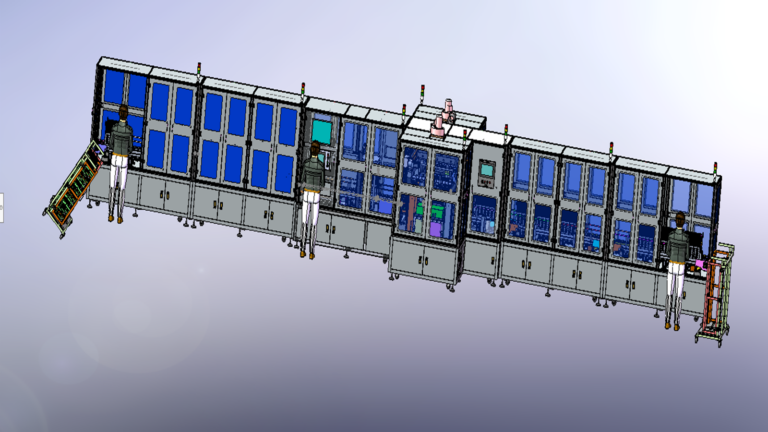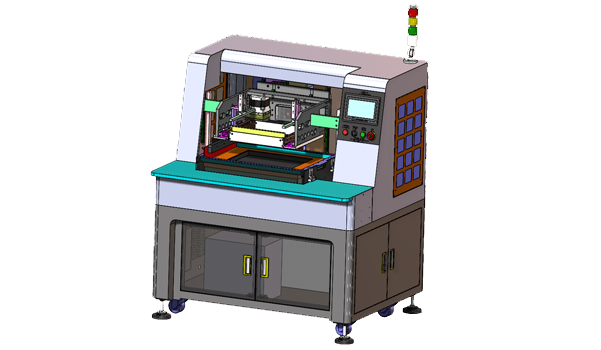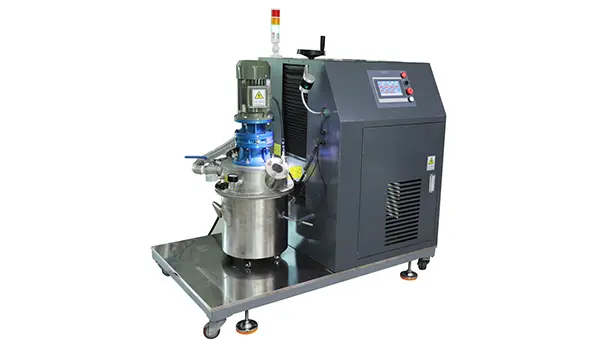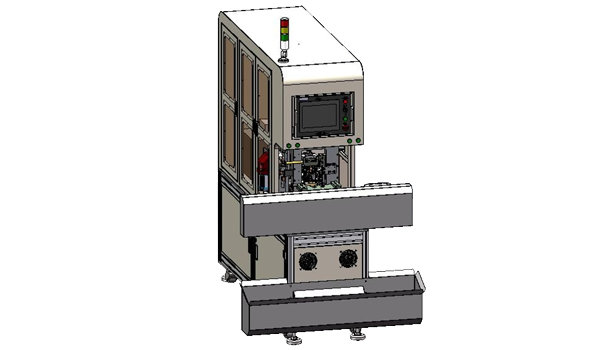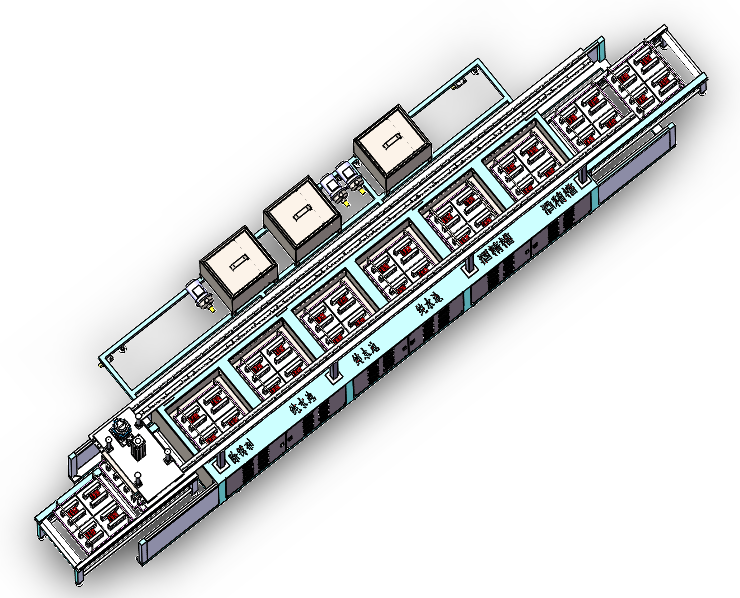
In Electronics manufacturing, the production capacity of an Automated Cleaning Line depends heavily on how products enter the cleaning process. In this Magnetic-Fixture Resistor Cleaning Line project, Robotlyne designed a six-station cleaning line for resistors after welding. The resistor leads are held magnetically in Magnetic Separating Fixtures. Each Fixture carries approximately 300–500 products, and four Fixtures are combined in one Hanging Basket, so each transfer moves approximately 1,200–2,000 products. The planned line efficiency reaches 10,200–15,000 pcs/hour.
This design turns large quantities of small resistors from single-piece handling into fixture-based batch handling. Rust-remover cleaning, three pure-water rinses, and two alcohol-cleaning stages all process the same batch, while a Transverse Pick-and-Place Module moves the Hanging Basket between liquid tanks.
Robotlyne’s Electronics Assembly Automation covers automated handling, loading / unloading, standalone machines, and multi-process production systems for electronics manufacturing, and can be integrated with similar post-welding cleaning, batch transfer, and upstream or downstream assembly equipment.
The First Question Is How Many Products Fit in One Basket
If film capacitors, resistors, or other small electronic components enter liquid tanks one by one, material handling can quickly become one of the most complex parts of the machine.
Robotlyne used a different production structure in this project.
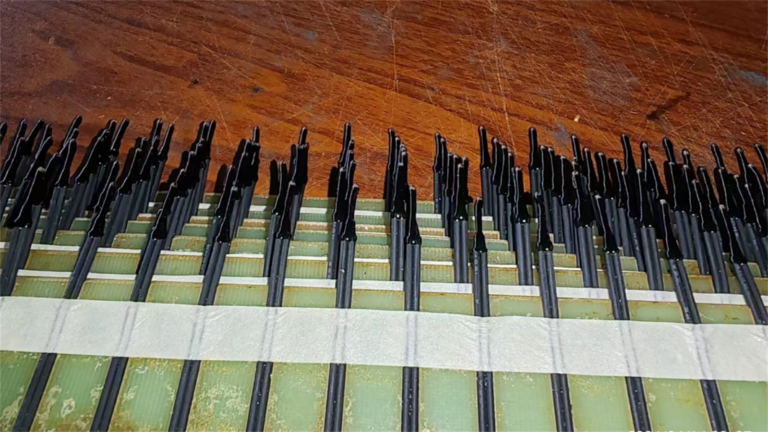
Magnetic Separating Fixtures first hold resistor leads that can be retained by magnetic force.
300–500 products per Fixture
Four Fixtures are then loaded into one Hanging Basket.
1,200–2,000 products per Basket
At this point, each movement of the Transverse Transfer Module no longer moves a single resistor. It moves an entire production batch.
This batch density directly changes the mechanical architecture of the cleaning line.
The Transfer Module handles the:
Hanging Basket
The liquid tanks process the:
Fixtures inside the Basket
And the Fixtures hold the:
individual resistor leads
The product therefore passes through three handling levels:
Resistor
↓
Magnetic Fixture
↓
Hanging Basket
The machine repeatedly performs its mechanical transfer at the Basket level.
This differs from automated cells in which a robot picks one product during each cycle. Here, one stable transfer action can carry a much larger number of already organized parts.
The planned line capacity of 10,200–15,000 pcs/hour is built around this fixture-based batch-cleaning structure.
The Same Batch Passes Through Six Liquid Stations
Once the Basket is formed, Robotlyne needs the same batch to pass through several different liquid environments without being reorganized between stations.
The six-station cleaning route is:
Rust-Remover Liquid Cleaning + Ultrasonic
↓
Pure-Water Rinse 1
↓
Pure-Water Rinse 2
↓
Pure-Water Rinse 3
↓
Alcohol Cleaning 1 + Ultrasonic
↓
Alcohol Cleaning 2 + Ultrasonic
The three pure-water rinse stations use automatic water replacement, while the alcohol section includes corresponding circulation / filtration and replenishment tanks.
The Fixture provides a direct advantage across these stages: the products do not have to be individually reorganized when moving from one tank to the next.
The resistor leads remain in the Magnetic Fixtures from the first cleaning stage onward, and the Fixtures remain in the Hanging Basket.
The Transverse Pick-and-Place Module can therefore move the complete Basket from one defined tank position to the next.
From the first rust-remover stage to the final alcohol-cleaning stage, the liquid and process environment change, but the fixture structure holding the products remains continuous.
For small electronic components produced in high quantities, that fixture continuity is part of the line design itself.
Moving 1,200–2,000 Products at Once Requires Stable Transfer
The high batch density created by the Fixtures also puts more responsibility on Basket transfer.
The project requires the Magnetic Fixtures to move laterally with:
stable transfer
without impact
without jamming
This is different from a pick-and-place action that moves one isolated component.
One Hanging Basket contains four Fixtures, representing approximately 1,200–2,000 products.
When the Basket moves laterally from one tank position to the next, the Transfer Module moves the complete batch at the same time.
Positioning and motion stability therefore act on all Fixtures simultaneously.
If the Basket experiences a strong impact during lateral travel, stopping, or entry into a tank position, the resistor leads already arranged in the Fixtures are exposed to the same disturbance.
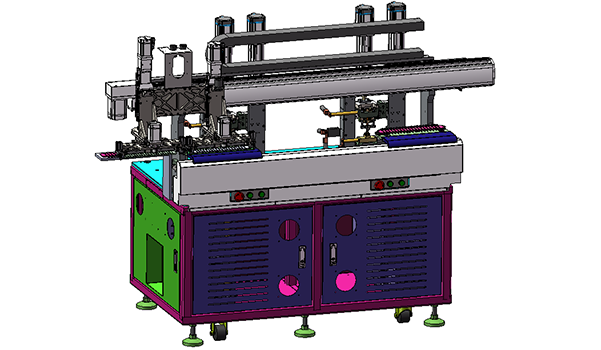
Robotlyne uses a Transverse Pick-and-Place Module to move the Basket between the six cleaning positions under controlled motion.
The high throughput of the line is therefore not created only by faster cleaning. It also depends on moving a large batch reliably between all six stations.
First, 300–500 products are organized in one Fixture.
Then four Fixtures are organized in one Basket.
The Transfer Module can finally repeat its motion around the Basket instead of handling individual resistors.
This is the basic mechanical structure that allows the Automated Cleaning Line to process large quantities of small resistors.
Six Cleaning Tanks Must Also Work with Different Liquid Environments
When one machine uses rust remover, pure water, and alcohol, the cleaning environment introduces another design condition: chemical exposure.
Robotlyne includes corrosion resistance in the design of the liquid tanks and the outer materials of the Fixtures. The cleaning area also includes pure-water replenishment and alcohol circulation / filtration tanks.
Because several liquid media appear continuously in the same machine, the tanks, fixture surfaces, piping / replenishment area, and cleaning-station layout all have to be arranged around the actual process media.
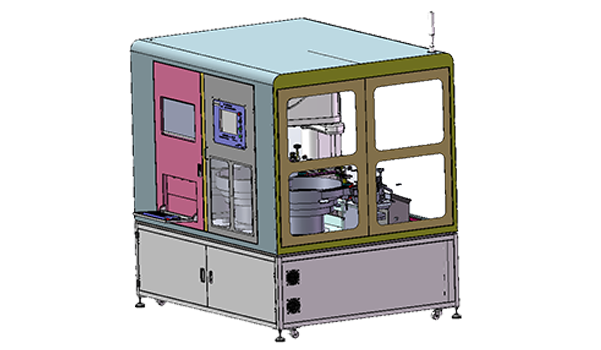
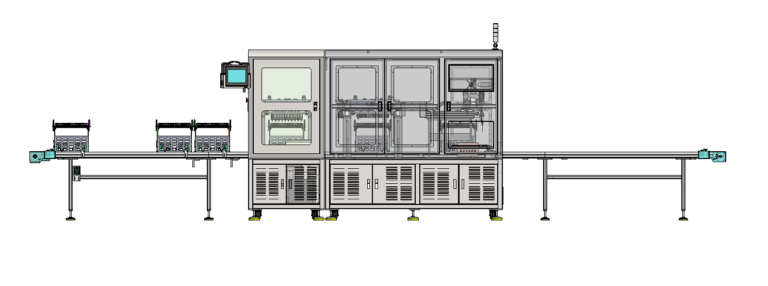
The reference line layout consists of a Feeding Conveyor, the main cleaning machine, and a Manual Unloading Conveyor. The overall reference line length is approximately 6,900 mm, with the main cleaning machine occupying about 4,200 mm and containing six consecutive cleaning positions.
Once products enter from the front end, they do not need to be picked and reorganized individually between all six tanks.
Magnetic Fixtures hold the products.
The Hanging Basket groups the Fixtures.
The Transverse Module moves the Basket.
The liquid tanks perform the different cleaning stages.
The products then move to the downstream area for manual unloading.
The production unit around which Robotlyne designed this Automated Cleaning Line is very specific:
one Hanging Basket containing four Magnetic Fixtures.
As long as this batch unit can be loaded, transferred, and positioned reliably in each cleaning tank, 1,200–2,000 resistors can move through rust removal, pure-water rinsing, and alcohol cleaning as the same production batch.
For high-volume cleaning of small electronic components, Fixture Capacity, Basket Structure, and Transfer Stability therefore enter the line design alongside Ultrasonic Cleaning and Liquid Circulation.
If an existing electronics production process still relies on manual batch cleaning after welding for resistors, leaded components, or other small parts, contact Robotlyne to plan an Automated Cleaning Line around the actual Product Geometry, Batch Quantity, Cleaning Chemistry, Fixture Design, and Transfer Requirements.