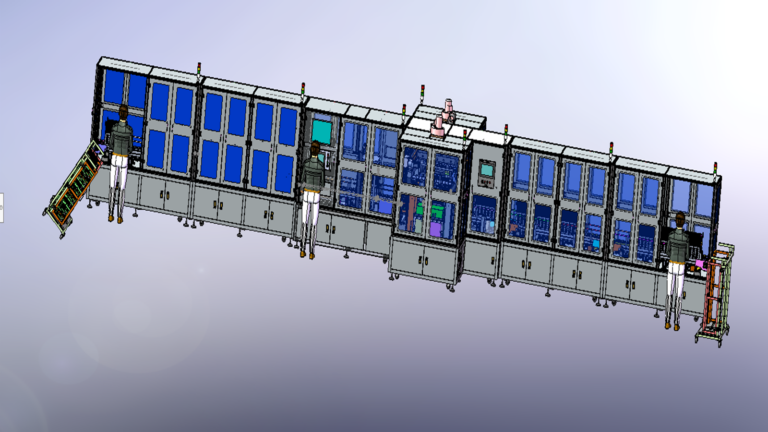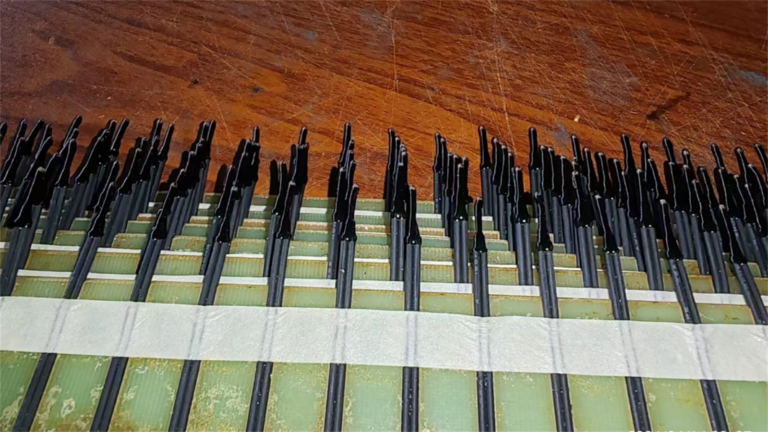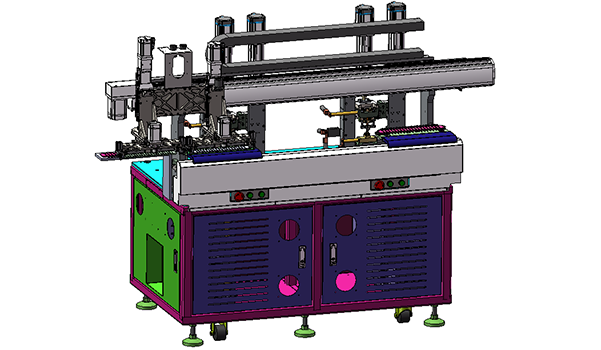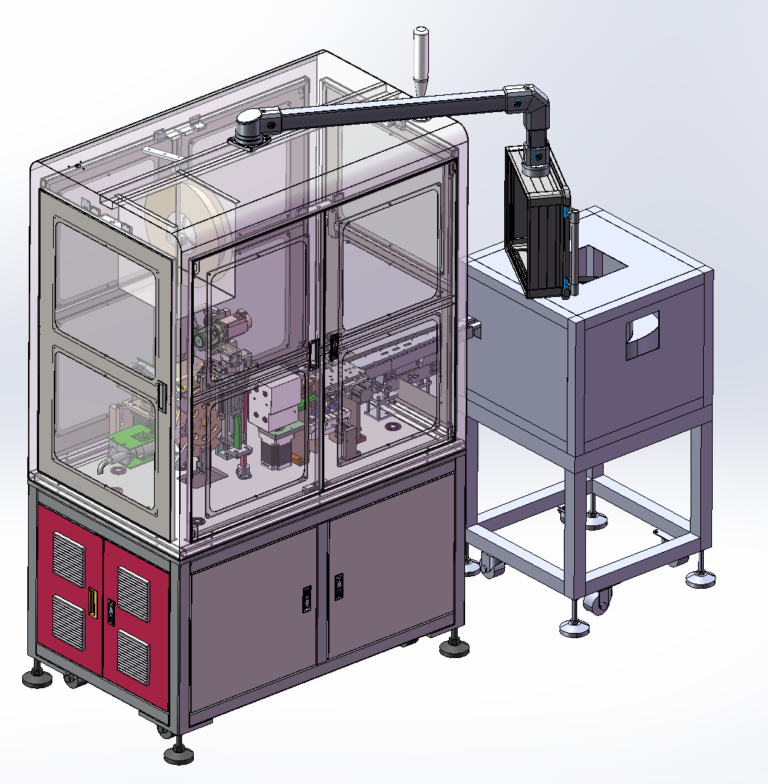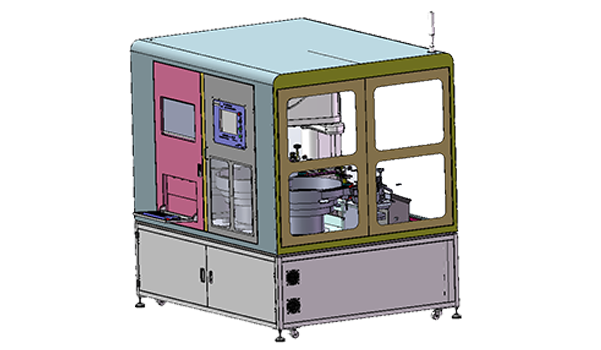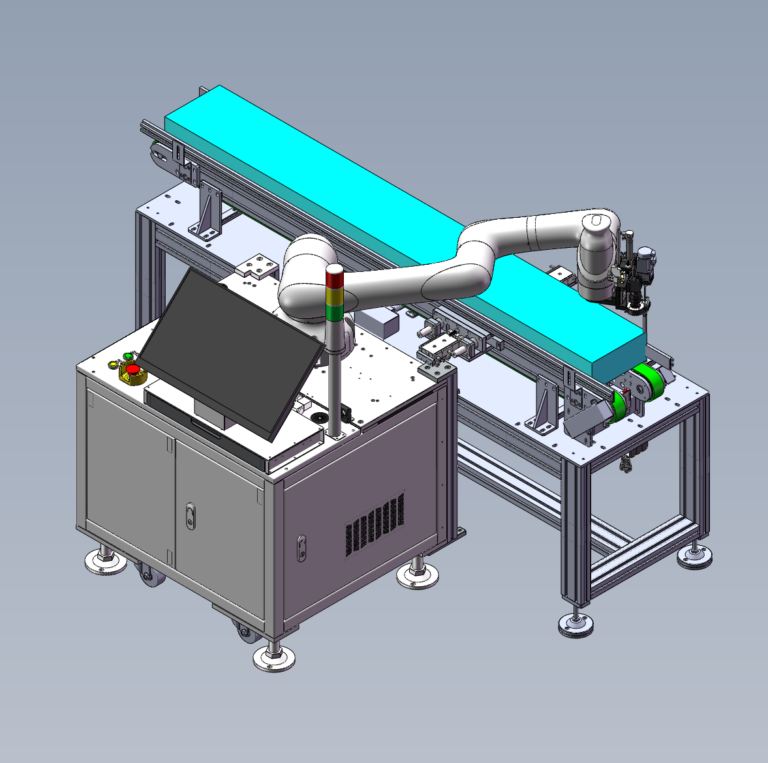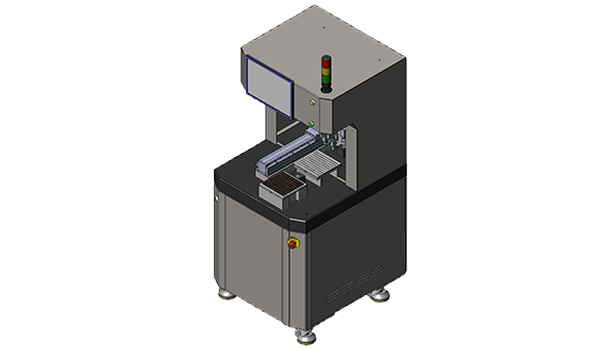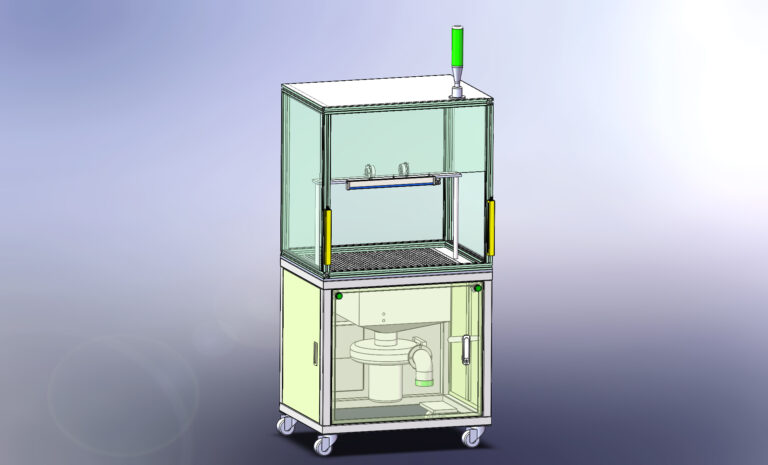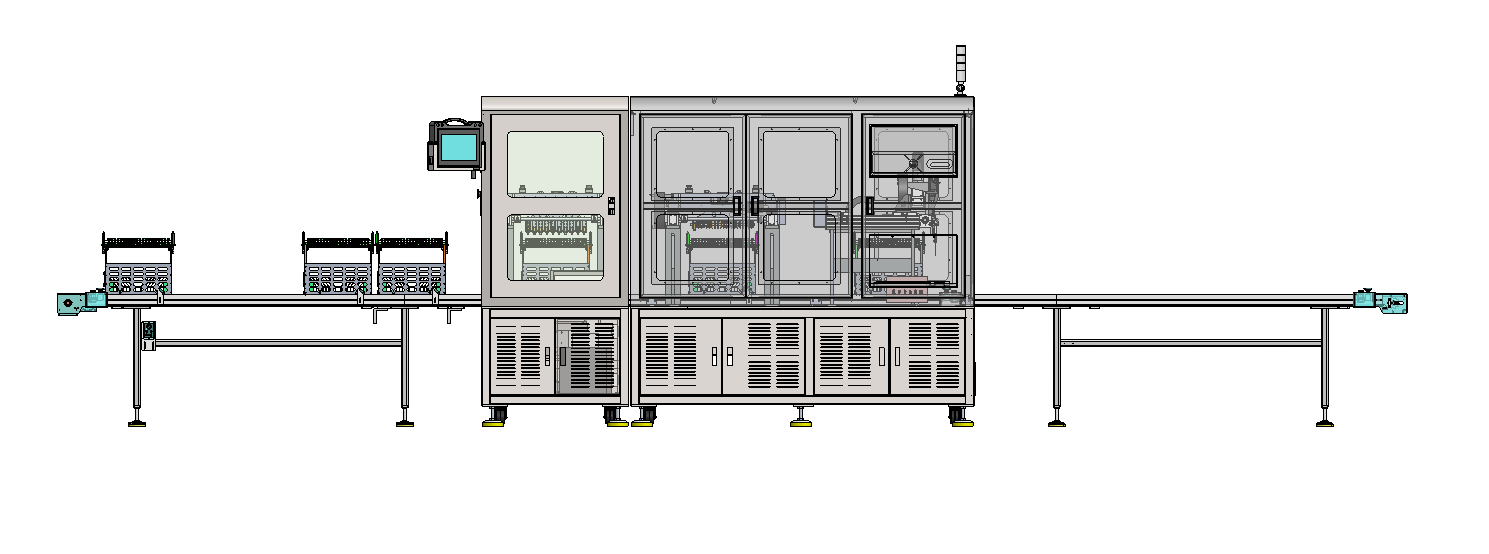
In Home Appliances sensor manufacturing, the backend testing section of a Fully Automated Assembly Line does not always need to remove Finished Sensors from production tooling one by one and feed them again into separate electrical-test fixtures. In this Single-End Finished Product Air-Test Line project, Robotlyne keeps the completed Single-End Finished Products inside the Fixture Frame and Wire-Card Plates and moves the complete frame through Conveyor Transfer, Hipot Testing, Resistance Testing, and NG Cutting. Each Fixture Frame holds 3 Wire-Card Plates, each Plate holds 20 products, so one full frame carries 60 Finished Products. The planned line efficiency is 3,000–4,000 pcs/hour.
With this arrangement, the testing section handles a pre-positioned Fixture Frame rather than loose individual sensors. Robotlyne can make the Hipot Test Head, Resistance Probes, and NG Cutting Mechanism work around the same positional reference, without rebuilding loose-part feeding and orientation before every test.
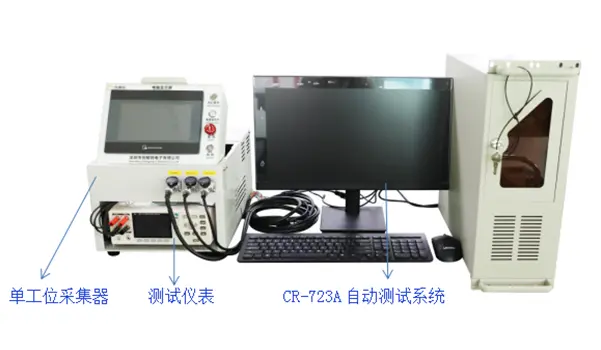
Robotlyne’s NTC Sensor Production Automation covers Wire Processing, Assembly, Hipot Testing, 25°C / 85°C Resistance Testing, and Data Collection for NTC Sensors, including assembly and test automation for refrigerator, HVAC, and other Home Appliances temperature-sensor applications.
Finished Products Enter the Test Line Without Being Broken Down into Loose Parts
The line does not begin with a Vibratory Bowl or a single-piece conveyor pocket.
The operator first loads a completed Wire Frame onto the Infeed Conveyor.
Each Fixture Frame contains:
3 Wire-Card Plates
Each Plate holds:
20 Products
One complete Frame therefore carries:
60 Finished Products
The products continue through the equipment in this state:
Manual Frame Loading
↓
Infeed Conveyor
↓
Hipot Test
↓
Resistance Test
↓
Discharge / NG Handling
↓
Manual Frame Removal
Robotlyne keeps the positional arrangement that has already been established upstream.
This is very different from removing all 60 products and feeding them again as loose parts.
Loose-part handling would require the front end of the test line to re-establish Product Separation, Orientation, Positioning, Test-Point Alignment, and tested / untested product tracking.
The Wire-Card Plate has already assigned a fixed position to every Finished Product.
The Fixture Frame then groups three Wire-Card Plates into one transfer unit.
The Conveyor therefore needs to move the Frame reliably.
The Electrical Test Stations only need to access the fixed product positions within that Frame.
The products do not need to be reorganized between Hipot and Resistance Testing.
This is especially useful for Single-End Sensor Wires several hundred millimeters long.
Loose wire can change posture during handling, while the Fixture Frame constrains that freedom within a defined plate layout.
The Hipot and Resistance Stations Move the Test Heads, Not the Product Orientation
When the product reaches the Hipot Station, Robotlyne does not pick each Sensor out of the Fixture.
The Fixture Frame is first located in position.
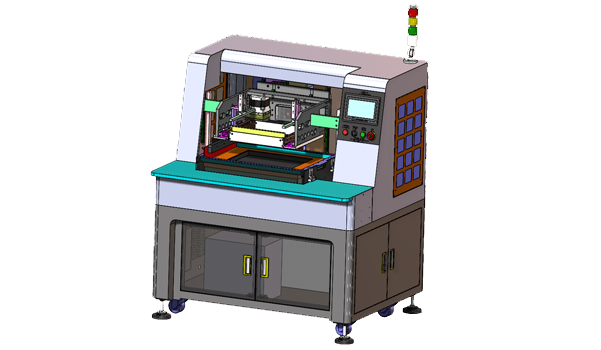
The Hipot Test Station uses:
Locating Cylinder
Lift Motor
Y-Axis Module
Support Frame
and:
Test Head
The Resistance Test Station uses a similar mechanical architecture, with Resistance Test Probes at the working end.
The testing movement therefore follows a clear sequence:
Frame arrives
→ Frame is located
→ Test head / probe moves to product positions
→ Measurement is completed
→ Frame moves to the next station
The products remain in their original Fixture Positions throughout the test process.
The test mechanisms perform the repeated motion.
This architecture is well suited to high-density testing.
With 60 products in one frame, the machine does not need to remove each product, place it into another test fixture, complete the test, and then return it.
Robotlyne instead moves the Test Mechanism to the product positions that are already defined inside the Fixture.
The Hipot Station performs insulation withstand-voltage verification.
The following Resistance Station performs room-temperature air-state resistance testing.
Although the two electrical tests measure different characteristics, they share the same Fixture-Frame Flow.
The mechanical positioning, probe access, and frame transfer therefore use one consistent Product Layout.
NG Products Are Cut Directly at the Backend Instead of Being Found Manually in the Frame
After Hipot and Resistance Testing, the frame continues into the NG Reject Section.
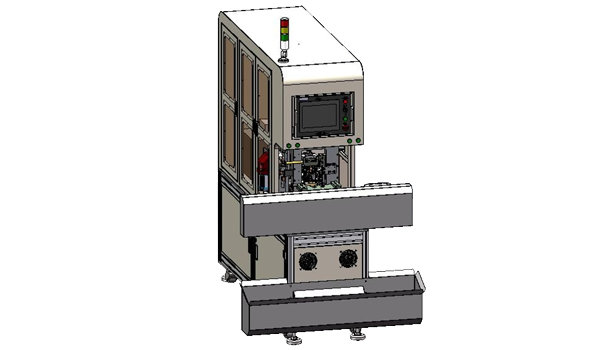
This station also uses:
Locating Cylinder
Lift Motor
Y-Axis Module
Support Frame
and:
Cutting / Test-Probe Mechanism
The first two stations determine whether each product passes the Electrical Test.
The NG Station then turns the test result into a physical handling action.
Robotlyne places NG Cutting directly inside the Fixture-Frame Flow.
A failed product does not have to wait until the entire frame reaches the line end, where an operator would then search through 60 positions to match the test result with the actual part.
The Reject Station can act at the known Fixture Position associated with the previous test status.
The relationship becomes:
Hipot / Resistance Result
↓
Product Position in Fixture Frame
↓
NG Cutting
The product stays in the same Wire-Card Position from test entry through NG handling.
The test system knows where the failed unit is, and the cutting mechanism works within the same positional system.
The continuity of the line therefore depends on more than the Conveyor.
The same product position is preserved from Testing through NG Handling.
Three Product-Length Ranges Use Fixture Changeover Within the Same Test Architecture
The line is designed for more than one Finished Product length.
Robotlyne divides the product range into:
50–200 mm
200–400 mm
400–600 mm
Different Fixture Frames and Wire-Card Plates are used for changeover between these length ranges.
The primary change therefore occurs at the Product Holding Interface.
Shorter and longer Wire Sensors require different holding and arrangement conditions.
The main test architecture remains:
Infeed
→ Hipot
→ Resistance
→ NG Cutting
→ Discharge
Robotlyne therefore does not need three completely separate Electrical Test Lines for 50–200 mm, 200–400 mm, and 400–600 mm products.
The variation is concentrated in how the Fixture Frame and Wire-Card Plate hold the product.
The Hipot Head, Resistance Probe, Transfer Module, and Reject Station continue to work around the same station architecture.
Product-length variation is absorbed first at the Fixture Interface.
The reference line layout is approximately 7,400 mm long. The main machine section is approximately 2,500 mm long, with a reference width of about 1,600 mm and a height of about 1,900 mm. The Infeed and Discharge Conveyors can be adjusted to suit the available floor space.
In Robotlyne’s Fully Automated Assembly Line backend, the test flow is therefore built around one clear production relationship:
60 Finished Products stay in one Fixture Frame
↓
The Frame moves along the Conveyor
↓
The Hipot Test Head accesses fixed product positions
↓
Resistance Probes use the same positional system
↓
NG Cutting acts on the corresponding failed product
↓
The tested Fixture Frame reaches the manual unloading end
The products do not need to become loose parts again for every test.
The Fixture Frame therefore serves not only as a Material Handling Tool, but also as the Testing Position Reference and NG Handling Reference.
For Refrigerator NTC Sensors, Temperature Sensors, or other Single-End Finished Components used in Home Appliances, where final production still relies on manual Hipot Testing, Resistance Testing, and NG Separation one product at a time, contact Robotlyne to plan the corresponding Fully Automated Assembly Line around the actual Product Length, Fixture Capacity, Test Method, Probe Layout, and Reject Process.