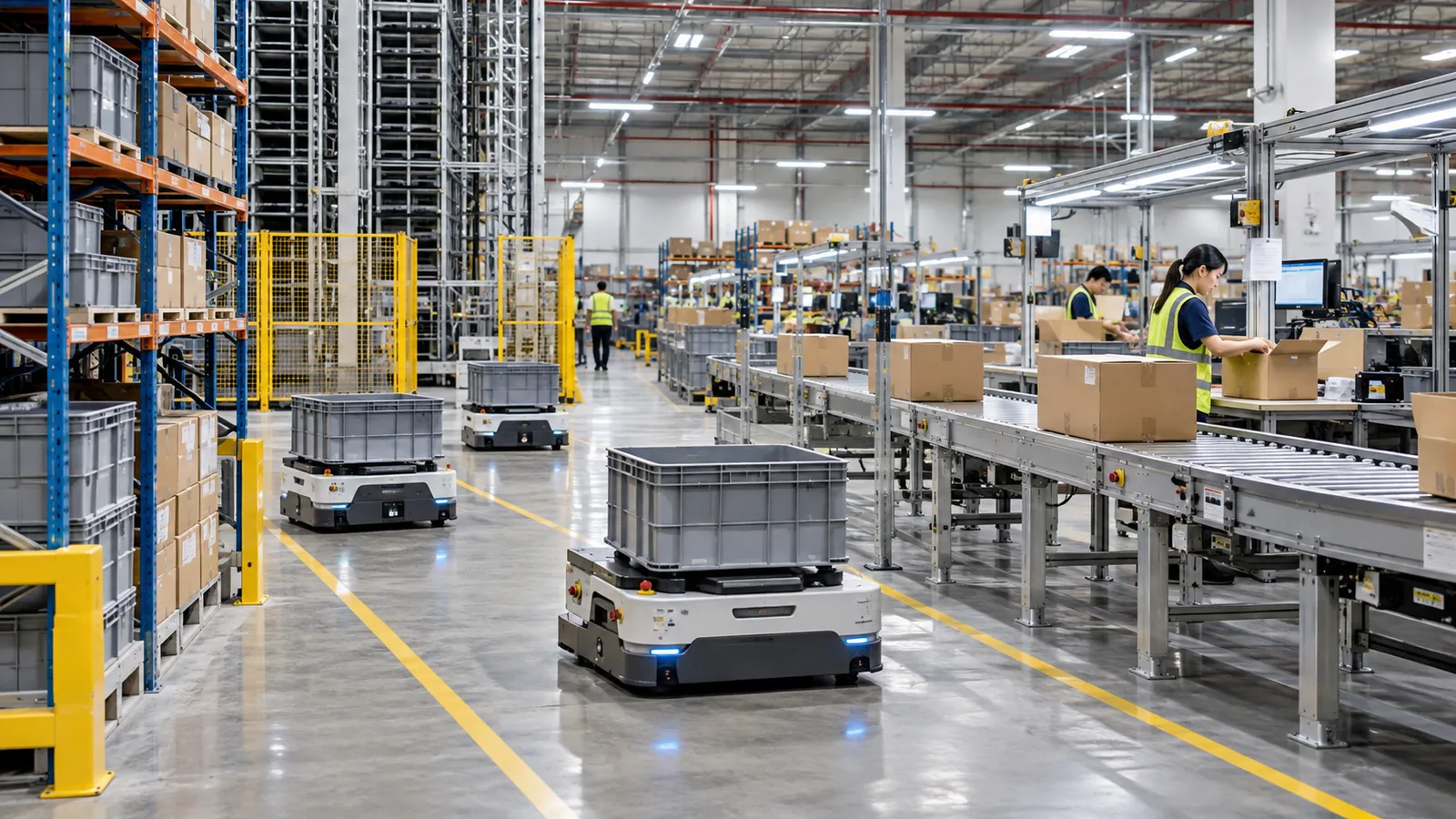
Ecommerce warehouses handle large numbers of orders every day. Some contain just one item, while others include several SKUs that may be stored in different parts of the facility. Each order must also move through picking, packing, sorting, and shipping before it can be handed over to a carrier.
As a business grows, managing all these tasks manually becomes more difficult. Pickers travel between storage locations, packing stations can become congested when orders arrive in waves, and shipping teams must route parcels to different carriers and destinations.
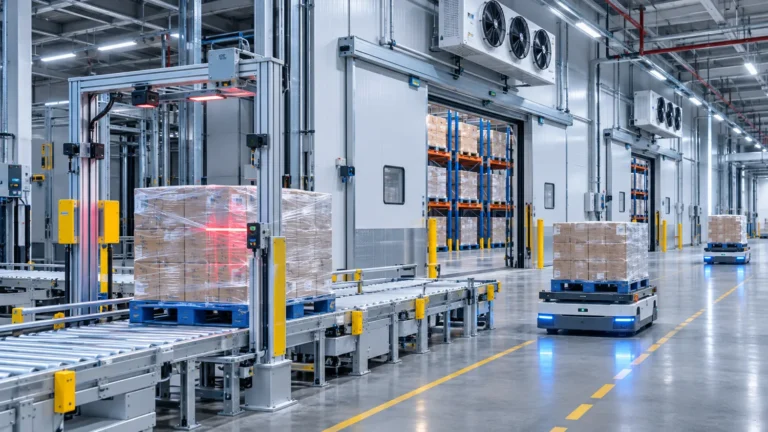
Ecommerce fulfillment automation brings together order management software, automated storage equipment, AGVs and AMRs, picking systems, and packaging machinery. These technologies help warehouses process orders more efficiently while reducing repetitive manual work.
What Is Ecommerce Fulfillment Automation?
Ecommerce fulfillment automation uses software, automated equipment, and robots to handle order processing, inventory management, picking, packing, and shipping.
In an automated fulfillment center, order information is connected to warehouse equipment. An order management system (OMS) receives and manages orders, a warehouse management system (WMS) organizes inventory and warehouse tasks, and automated equipment handles activities such as storage, transport, and sorting.
Warehouses do not need to automate every operation at once. Some businesses start with order management software and barcode scanners, then introduce automated storage, goods-to-person picking, or parcel sortation as order volumes, SKU counts, and operational bottlenecks change.
For high-volume fulfillment centers with diverse product ranges, connecting several automated processes is often more valuable than increasing the speed of a single workstation.
Types Of Ecommerce Fulfillment Automation
Order Processing And Warehouse Management Automation
Ecommerce businesses may receive orders through their own websites, Amazon, eBay, and other sales channels. Downloading, organizing, and entering those orders into a warehouse system by hand takes time and increases the risk of missing information.
Automated order processing can consolidate orders from different channels and automate parts of order validation, inventory allocation, and fulfillment task creation.
For businesses operating multiple warehouses, an OMS with order-routing capabilities can also select an appropriate fulfillment location based on inventory availability, warehouse capacity, and delivery requirements.
Once an order reaches the warehouse, the warehouse management system (WMS) generates picking, replenishment, and other operational tasks. Where AS/RS, AGVs, or automated sorters are installed, the WMS can communicate with the equipment through a warehouse control system (WCS) and related scheduling systems.
Automated Storage And Order Picking
Traditional ecommerce warehouses generally rely on person-to-goods picking. Workers follow a pick list, travel between shelves, and bring items to an order consolidation or packing area.
As the number of SKUs increases and storage locations spread across a larger area, walking can take up a substantial share of picking time.
Automated storage and picking systems change how that work is carried out.
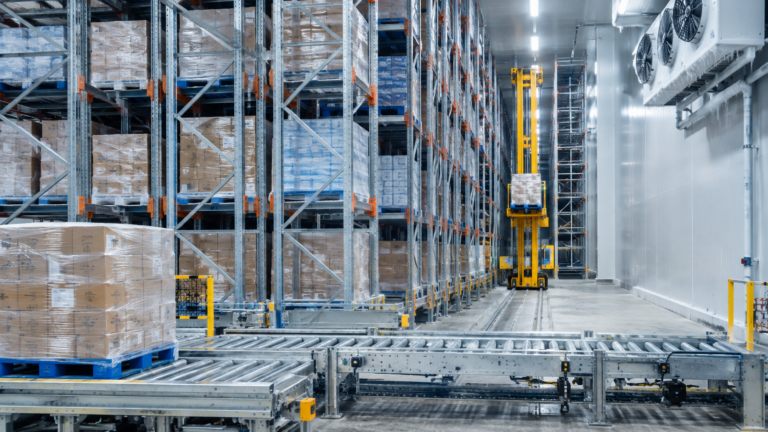
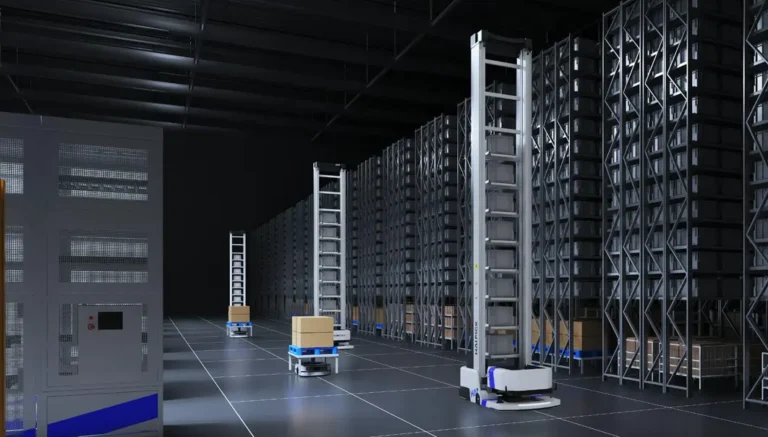
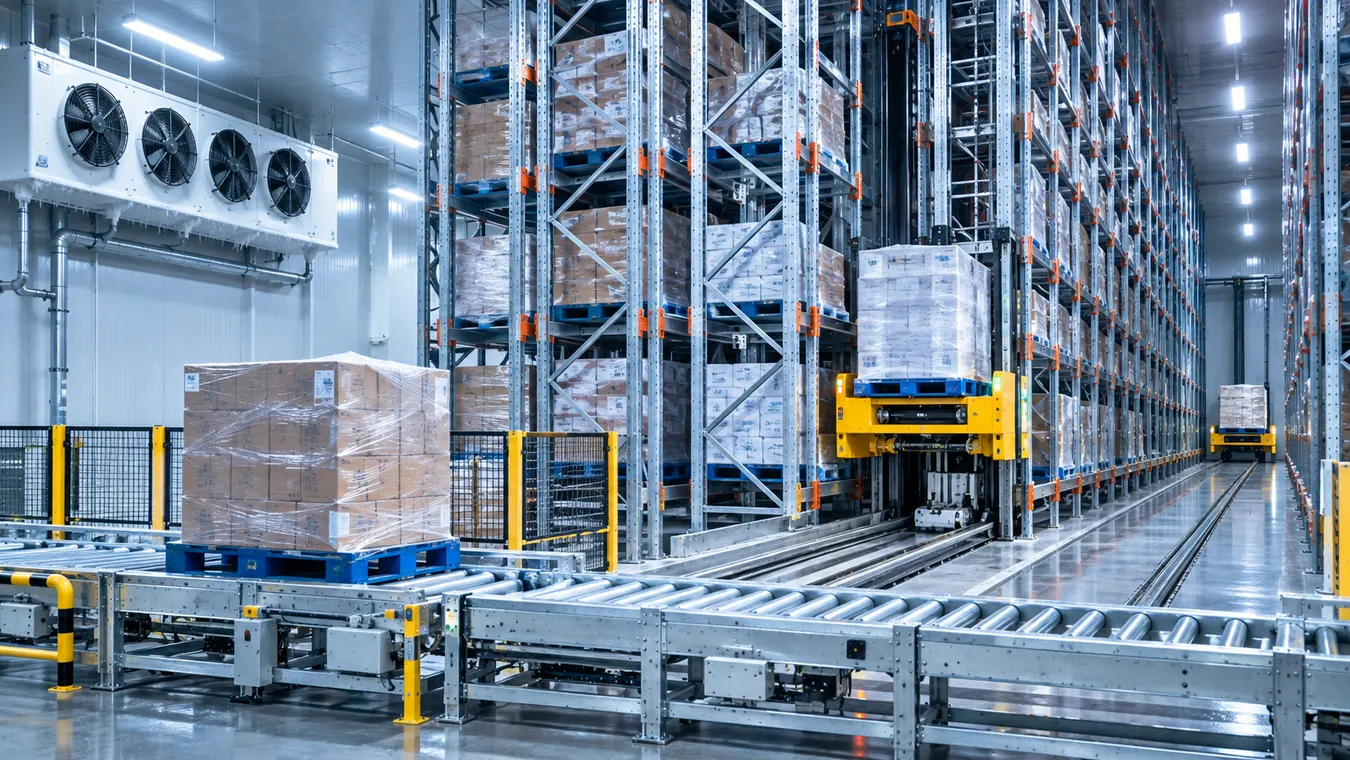
For example, an automated storage and retrieval system (AS/RS) stores and retrieves totes or pallets according to system instructions. Goods-to-person systems bring storage totes or shelves to fixed picking stations so operators can focus on picking and order confirmation.
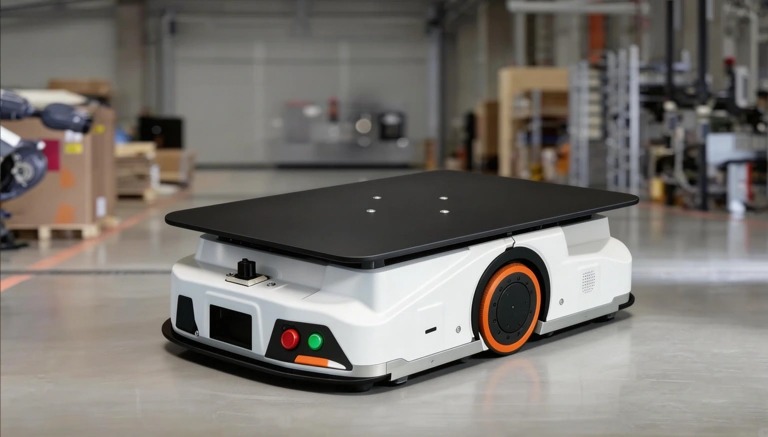
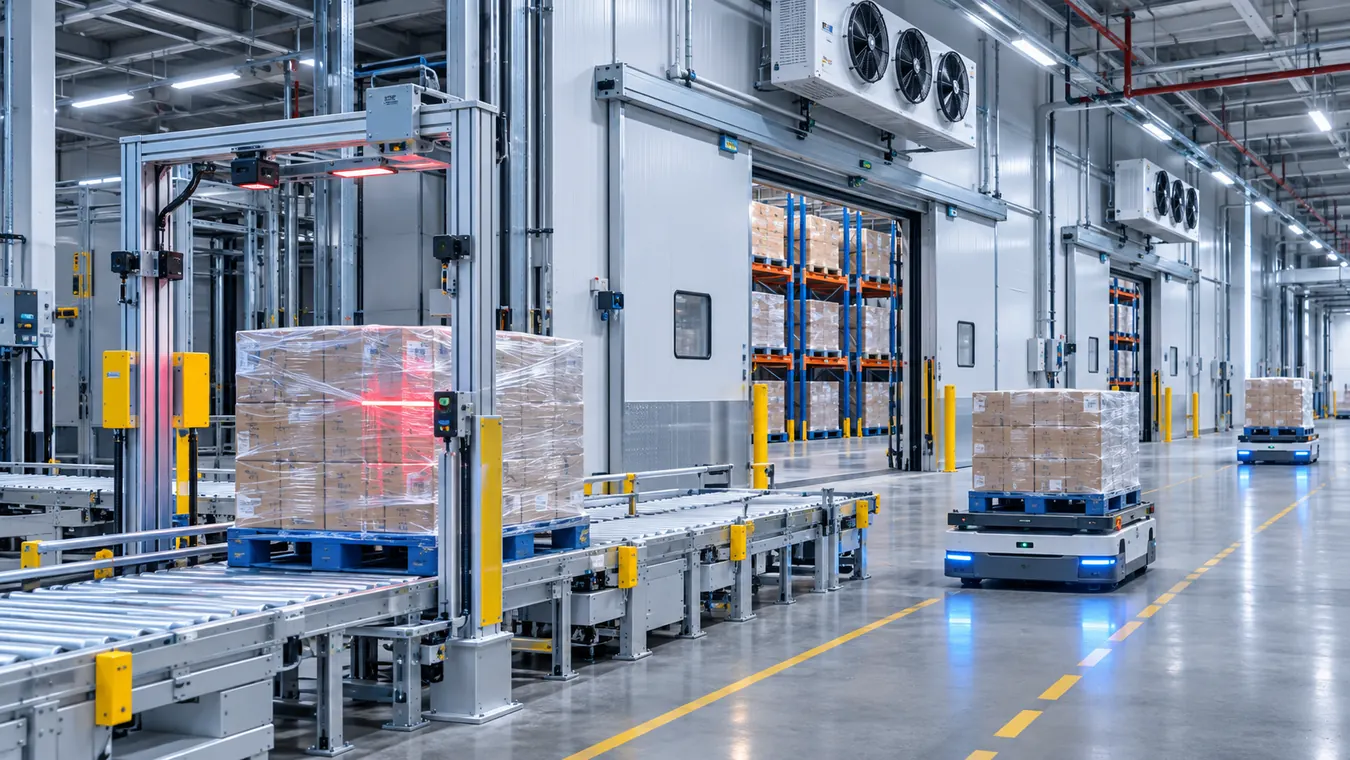
AGVs and AMRs can transport totes, shelves, and pallets between storage, picking, and other work areas.
The right system depends on product dimensions, SKU count, order profiles, and the frequency of inbound and outbound movements.
Ecommerce Packaging Automation
Ecommerce packaging differs from a production line that packs large quantities of the same item. One order may contain a single product, while the next may have several items of different sizes, so packaging equipment must accommodate different carton sizes and product combinations.
Packaging Automation for E-commerce includes automatic case erecting, box-size adjustment, void-fill dispensing, case sealing, and labeling.
Some equipment can select or produce appropriately sized boxes based on product dimensions, reducing empty space inside the package. Fragile goods and products requiring extra protection still need packaging methods suited to their characteristics.
After picking and order verification, products can move by conveyor to a packing station, where automated packaging equipment performs the required packaging operations.
Automated Shipping And Sortation
Once products have been packed, they still need to be weighed, verified, labeled, and sorted before reaching the appropriate shipping area.
In warehouses handling large parcel volumes, checking labels, identifying destinations, and moving parcels one by one takes considerable time.
Barcode scanning, in-motion weighing, dimensioning, and automatic labeling equipment can capture parcel information and check it against order and shipping records.
Cross-belt sorters, sliding-shoe sorters, and similar systems can then direct parcels to the correct exits according to carrier, delivery zone, or other sortation rules.
Shipping systems also commonly exchange data with transportation management systems or carrier platforms to support label creation, tracking updates, and parcel handover.
Benefits Of Ecommerce Fulfillment Automation Systems
Higher Order Fulfillment Capacity
In a manually picked warehouse, fulfillment speed is often limited by the distance workers walk, the time spent locating products, and the ability to move items between work areas.
Goods-to-person systems reduce travel between storage locations, while automated conveyors and sorters can process products and parcels continuously. When picking, packing, and shipping capacity is properly balanced, the warehouse can fulfill more orders per hour.
Fewer Picking And Shipping Errors
Picking the wrong product, shipping the wrong quantity, or applying an incorrect parcel label can all affect fulfillment quality.
Automated systems can verify information through scanning and confirmation checks during picking, packing, and shipping. If the physical item, order record, or parcel information does not match, the system can alert an operator or divert the affected item or package to a designated area.
Less Repetitive Work And Better Space Utilization
Ecommerce warehouses involve a large amount of repetitive handling, including picking items from shelves, moving totes, transporting parcels, and sorting shipments.
With AGVs, AMRs, goods-to-person systems, and automated sorters taking on part of this work, employees can spend more time on order verification, exception handling, and equipment management.
Warehouse space may also be used more efficiently. Some AS/RS solutions use vertical or high-density storage to hold more inventory within a limited footprint. Actual results depend on product dimensions, rack layout, and the space required for equipment operation.
Better Performance During Order Peaks
Promotions, holidays, and seasonal demand can produce a sudden surge in orders.
Automated equipment takes on some of the repetitive, high-frequency tasks, reducing the need to bring in extra picking and handling staff at short notice. Warehouses can also adjust task priorities according to shipping deadlines, giving time-sensitive orders priority.
Peak throughput still depends on the capacity of picking, packing, and sortation operations, so those processes must be sized and balanced accordingly.
Greater Inventory And Order Traceability
In a connected warehouse, inventory movements, picking confirmations, completed packing operations, and parcel handovers can all generate operational records.
Managers can see which stage an order has reached and identify inventory discrepancies, backlogged orders, or equipment failures without manually checking each order.
How Automation Changes The Warehouse Order Fulfillment Process
Automation changes more than how goods are stored and moved. It also changes how warehouses schedule order-related tasks.
For example, a picking station may work quickly while the packing area is already running at full capacity. Releasing more orders into picking at that point only creates a larger queue of items waiting to be packed.
Automated fulfillment centers therefore need to schedule work around order progress, inventory status, and the processing capacity of each station.
Order Prioritization And Task Release
When orders enter the warehouse system, they can be sequenced according to promised shipping times, order types, and the storage areas where the items are located.
For example, when several orders contain the same SKU, the WMS can organize batch picking and then allocate the picked items to their respective orders. Orders approaching their shipping cutoff can be assigned higher priority.
Task release also needs to account for downstream capacity. If the packing area already has a backlog, the system can slow the release of new picking work to prevent items from accumulating on conveyors or in order consolidation areas.
Consolidating Multi-SKU Orders And Handling Exceptions
The items in a multi-SKU order may come from an AS/RS, conventional shelving, or other picking zones.
For example, small electronic accessories might be retrieved from an automated tote store while a bulky item is picked manually from a standard rack.
The system tracks the picking status of each item and arranges consolidation according to the order requirements.
If an item is out of stock, cannot be picked, or fails an inspection, the system can flag the affected item or order and arrange replenishment, a new pick, or manual intervention under the fulfillment rules. Warehouses that allow split shipments can also process items that are already ready to ship separately.
Handing Orders From Picking To Packing
Items still need to pass the required order checks before moving from picking to packing.
For a single-item order, packing can usually be scheduled once the item and quantity have been verified. For a multi-item order, the warehouse needs to confirm that all items intended for the current parcel are present. Where split shipments are allowed, separate packing tasks can be scheduled for different parcels.
An automated system can track goods using order numbers, tote IDs, or other identifiers and direct orders that are ready for packing to the appropriate stations.
If a packing line supports multiple carton sizes, the system can also provide box-size or packaging-method information based on the order data. Items that need special protection can be routed to manual or dedicated packing stations.
Shipping Verification And Exception Parcels
Once a parcel has been packed, the warehouse must verify that its shipping label, order information, and physical contents are correctly matched.
During Ecommerce Shipping Automation, scanning and inspection stations can check a parcel’s identity, weight, and shipping details.
For example, if the barcode on a parcel cannot be read or its actual weight differs from the expected value beyond an allowed tolerance, the sortation system can divert it to an exception lane for review.
Warehouses using several carriers must also route parcels according to carrier, delivery zone, and pickup schedule.
Packing completed, awaiting carrier pickup, and accepted by the carrier are different fulfillment stages. The system can update order or parcel status using the corresponding operational and handover records.
Robotlyne provides warehouse automation equipment and system integration solutions. Based on order volumes, SKU profiles, and warehouse layouts, we can help assess automated storage, AGVs and AMRs, picking, and conveyor systems for your facility. Contact us to discuss your ecommerce warehouse automation project.