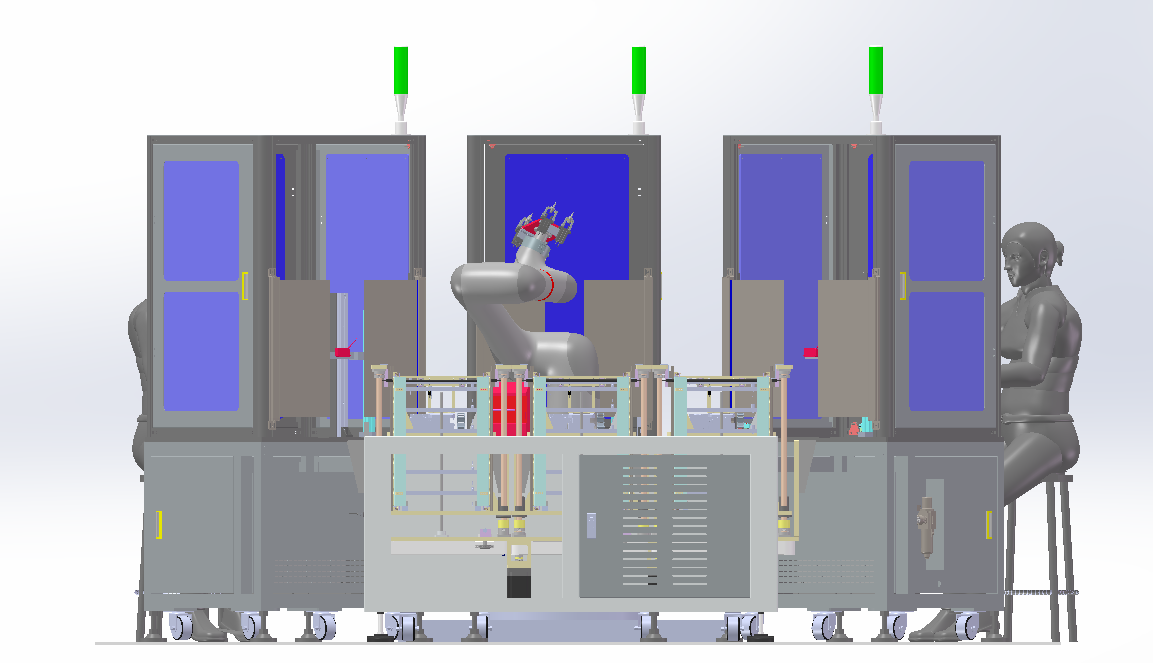
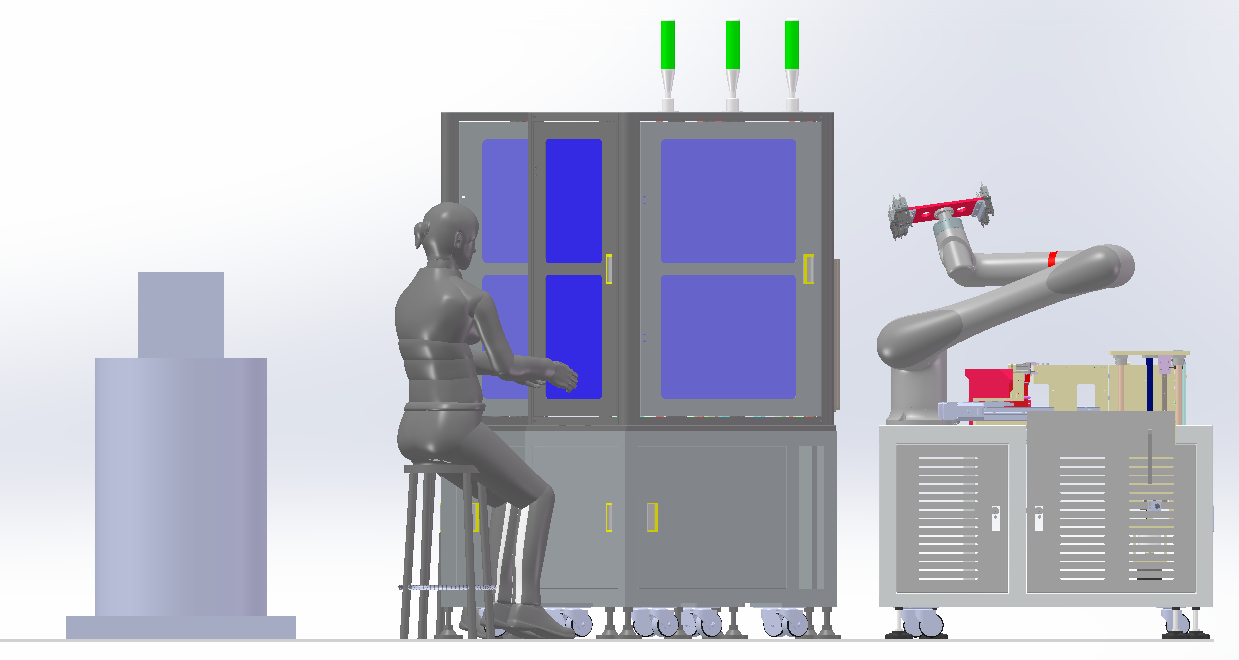
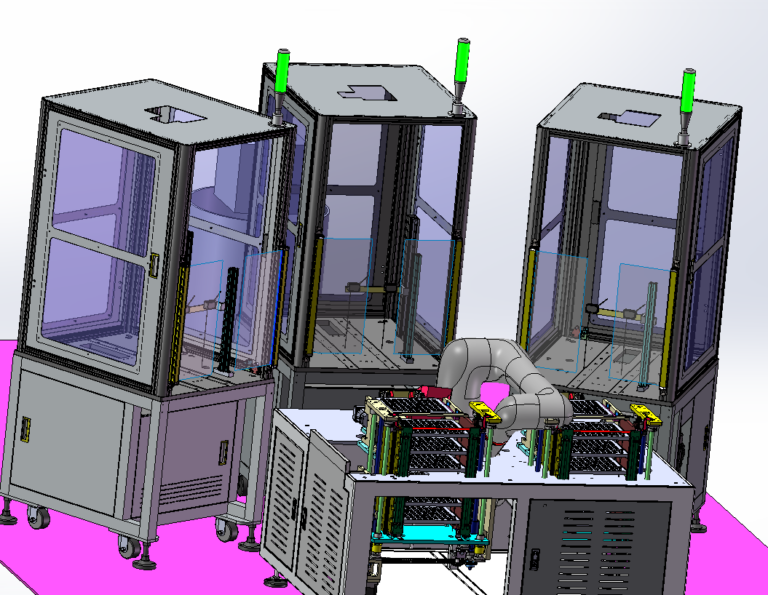
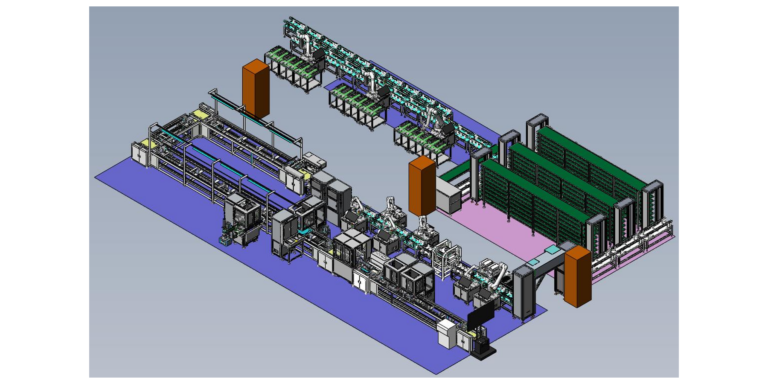
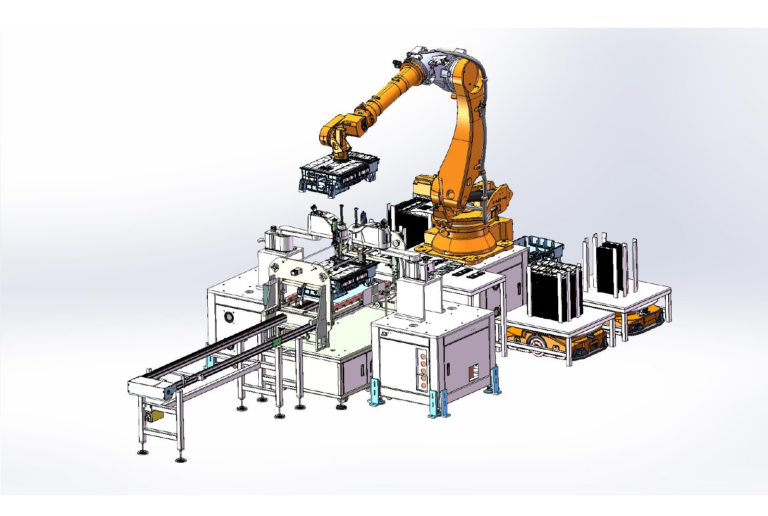
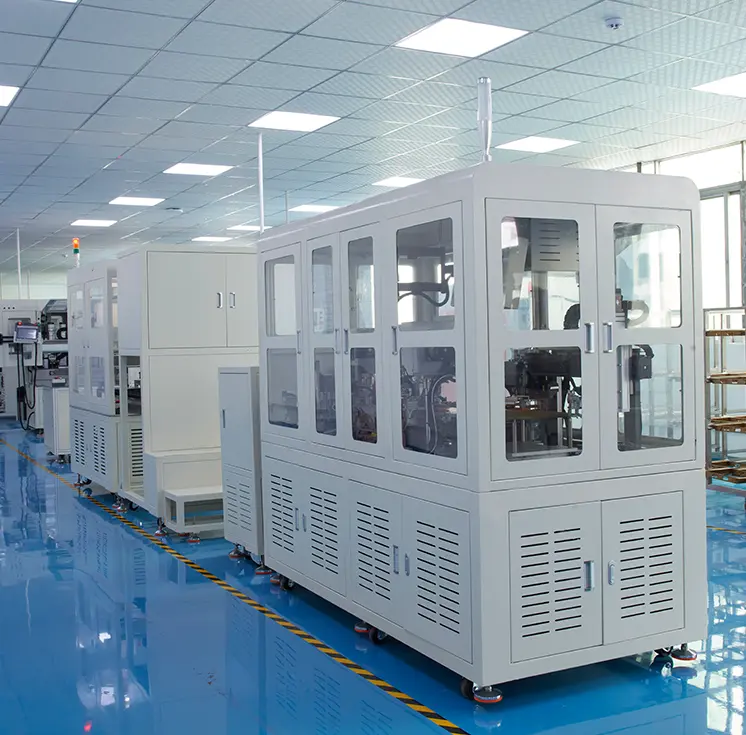
A robotic cell that automatically transfers multiple product types between storage and three dispensing stations, with vision-guided picking, recipe-based error prevention, and laser inspection of dispensing results.
The project aimed to automate repetitive material transfer between storage and three dispensing machines while preserving flexibility for multiple product variants. The system also needed to prevent material/recipe mismatches and verify dispensing results before parts were returned to storage.
| Step | Process | Description |
| 1 | Fixture Loading | Operators load products into the corresponding dedicated tray fixtures. |
| 2 | Storage Loading | Loaded tray fixtures are placed into one of the three material storage units. |
| 3 | Identification and Recipe Matching | The system verifies fixture positioning, scans the fixture ID, and calls the corresponding process recipe. |
| 4 | Vision-Guided Loading | The robot uses vision guidance to pick parts from storage and load Dispensing Station A. |
| 5 | Multi-Station Dispensing | Processed parts are retrieved and transferred sequentially through Dispensing Stations B and C. |
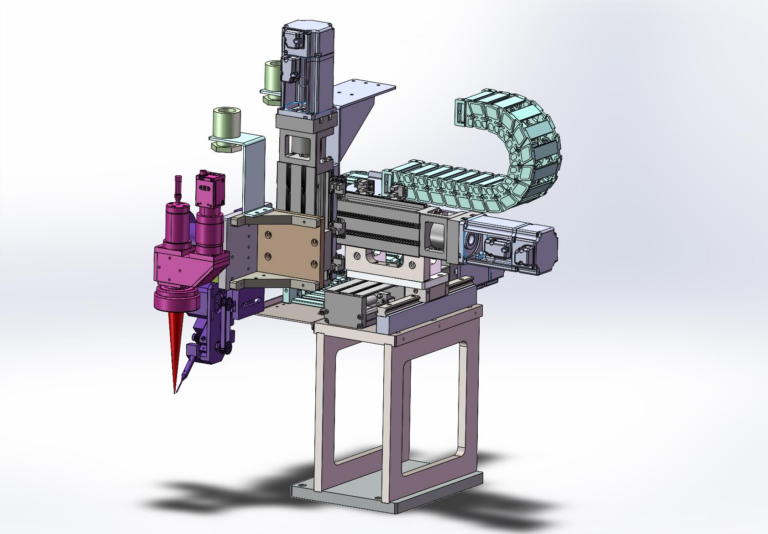
| 6 | Dispensing Inspection | Laser displacement sensing checks dispensing height or confirms the presence of applied material. |
| 7 | Return to Storage | Completed parts are automatically returned to their corresponding storage fixtures. |
| 8 | Product Unloading | Operators remove completed products from the storage system. |
| Zone | Functional Area | Main Function |
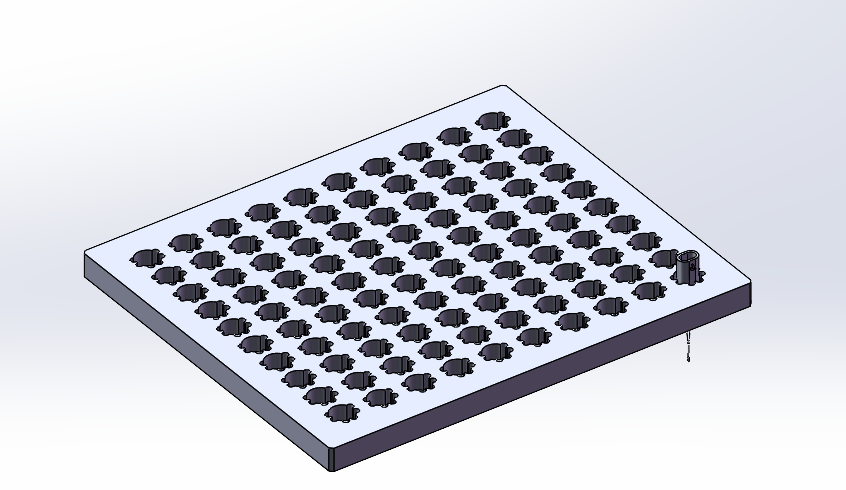
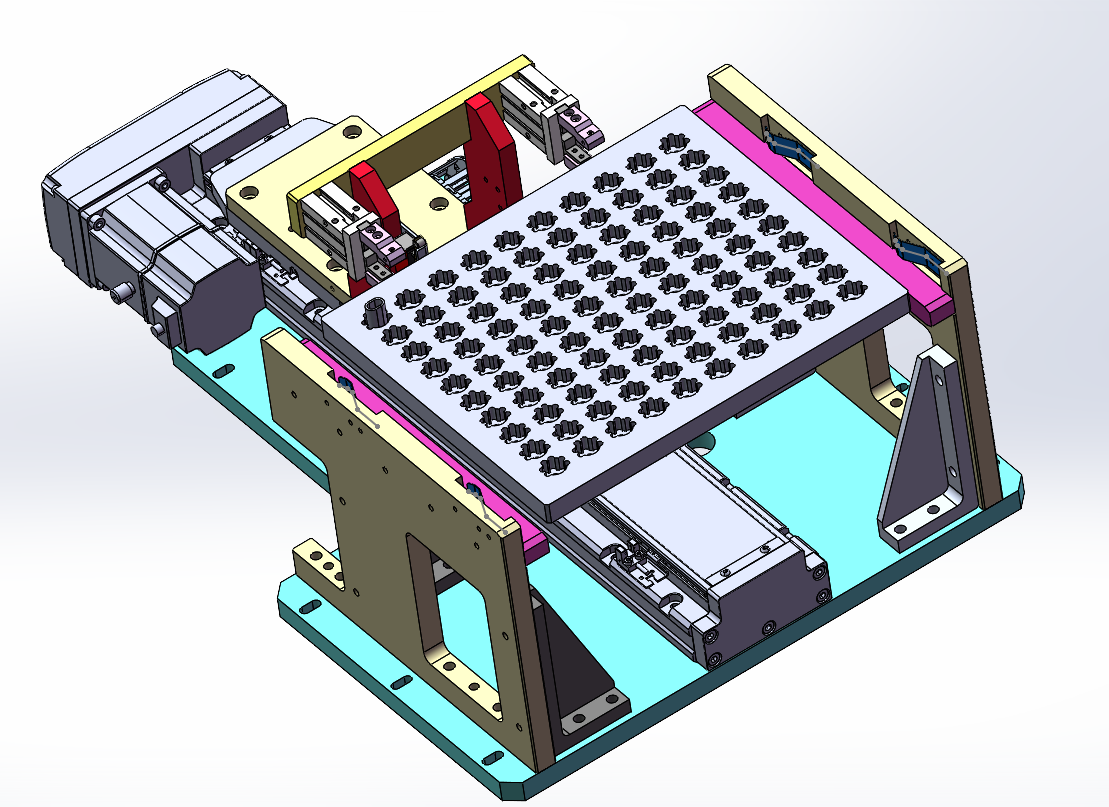
| 1 | Material Storage | Three storage units provide centralized buffering, with six trays in each unit and up to 100 parts per tray. |
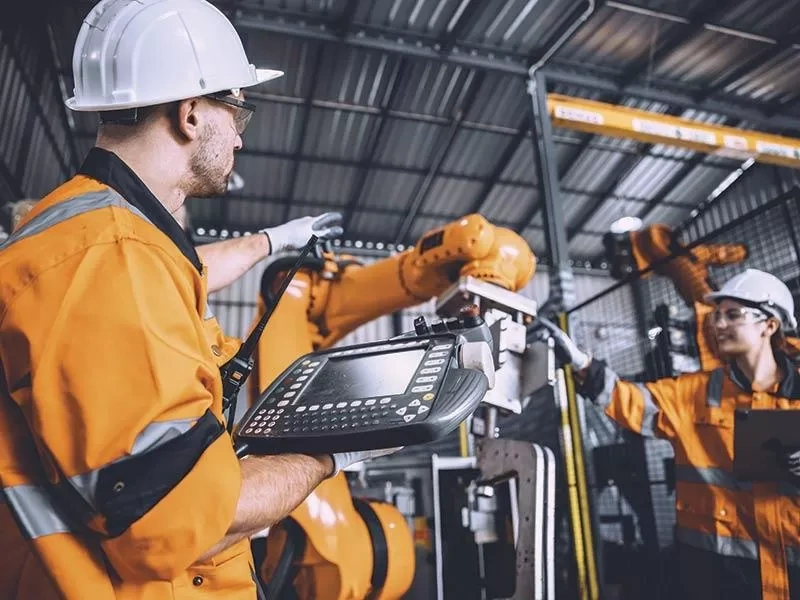
| 2 | Robot Handling | A vision-guided robot transfers products between the storage system and the three dispensing stations. |
| 3 | Dispensing Stations A / B / C | Three dispensing machines process products sequentially according to the selected recipe. |
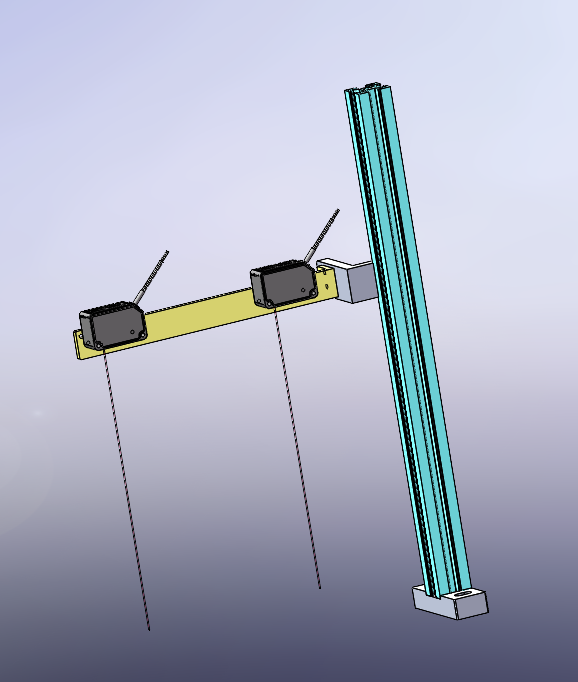
| 4 | Inspection Area | Laser displacement sensors check dispensing height and confirm whether dispensing has been completed. |
| 5 | Operator and Safety Area | Supports manual loading and unloading, manual operating mode, safety light curtains, and fixture-position interlocks. |
| No. | Equipment Solution | Role in the System |
| 1 | Three Material Storage Units | Provide centralized buffering for multiple product types and tray fixtures. |
| 2 | Vision-Guided Robot Handling | Automatically picks and returns parts between the storage units and three dispensing stations. |
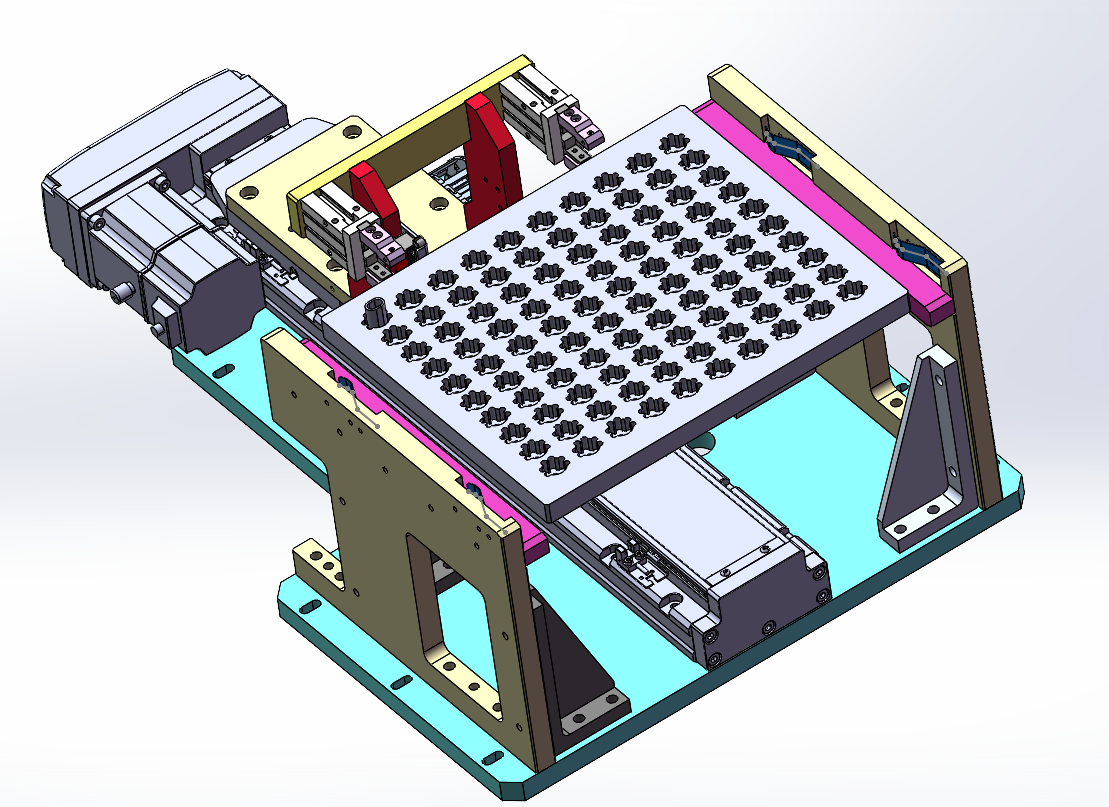
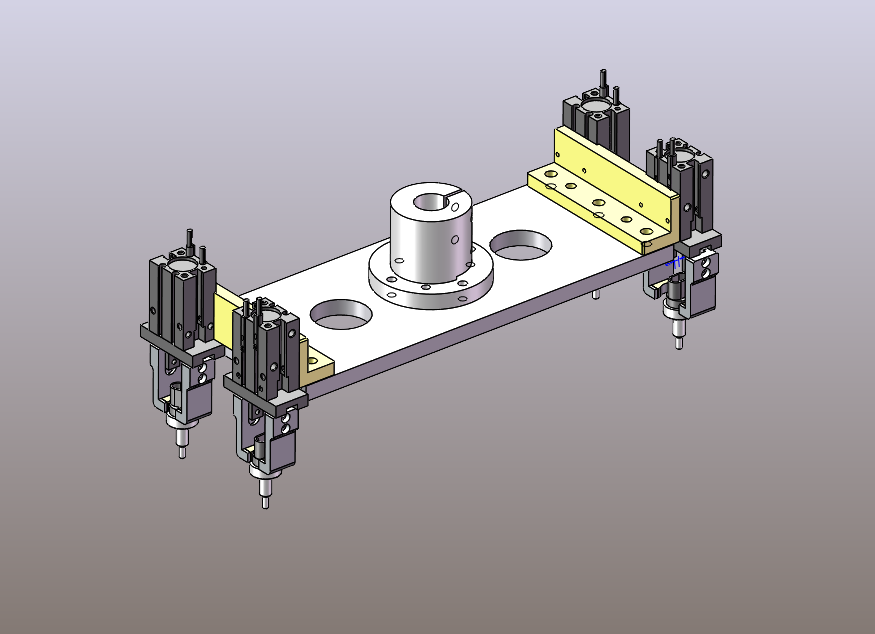
| 3 | Universal Electric Gripper | Handles the existing tube-type products without requiring gripper replacement between supported models. |
| 4 | Dispensing Stations A / B / C | Perform sequential dispensing operations according to the selected product recipe. |
| 5 | Alternating Loading Mechanism | Presents tray fixtures to the robot and supports a continuous material-loading sequence. |
| 6 | Laser Displacement Sensors | Check dispensing height, position, or presence after the dispensing process. |
| 7 | Barcode and Recipe Interlock | Links fixture identification with the corresponding process recipe to reduce wrong-material and wrong-recipe errors. |
| 8 | Safety and Fixture Detection | Uses safety light curtains and fixture-position sensors to support safe manual access and correct fixture loading. |
| Specification | Value / Configuration | Notes |
| Application | Multi-Station Robotic Dispensing | Automated material handling between storage and multiple dispensing stations. |
| Dispensing Stations | 3 | Dispensing Stations A, B, and C. |
| Material Storage Units | 3 | Centralized storage for multiple product types and fixtures. |
| Trays per Storage Unit | 6 trays | Each material storage unit accommodates six trays. |
| Capacity per Tray | 100 pcs | Reference capacity based on the proposed tray configuration. |
| Total Buffer Capacity | Approx. 1,800 pcs | Three storage units × six trays × 100 parts. |
| Supported Material Types | 6 types | Six product/material types are included in the current proposal. |
| Current Fixture Types | 5 types | Additional product types may require new dedicated fixtures. |
| Recipe Storage | Approx. 500 recipes | Supports stored process settings for multiple product configurations. |
| Estimated Handling Cycle | Approx. 20 s | Estimated handling cycle across three stations at 85% equipment efficiency. |
| Operator Requirement | 1 operator | The proposal considers one operator for loading and unloading. |
| Reference Dimensions | 6230 / 2200 / 4000 mm | Reference dimensions shown in the proposal; final dimensions are subject to the completed equipment design. |
| Control System | Integrated Control System | One control system coordinates robot handling, recipes, interlocks, and dispensing-station operation. |
| Product Changeover | Fixture Change + Recipe Selection | New product configurations may require new fixtures and corresponding process adjustments. |
AUTOMATE YOUR DISPENSING AND MATERIAL HANDLING PROCESS
Robotlyne develops integrated automation cells that combine robotic handling, dispensing, inspection, product changeover, and error prevention. Contact us to discuss your product variants, cycle-time requirements, and current process.
Got questions? Ideas? Fill out the form below & our specialist will contact you.
Got questions? Ideas? Fill out the form below & our specialist will contact you.