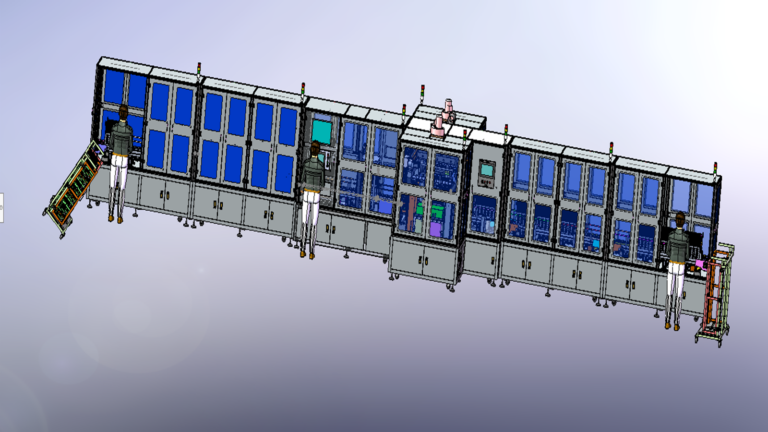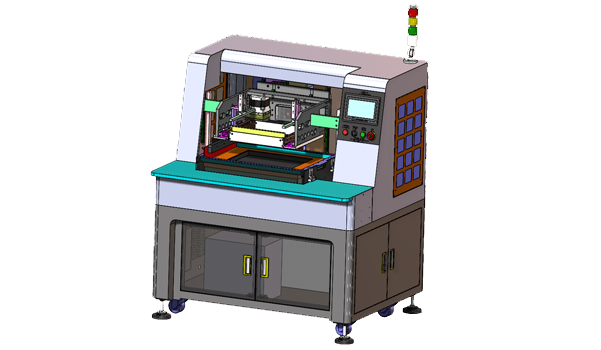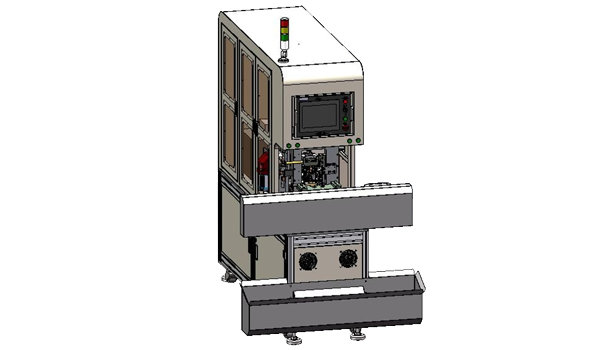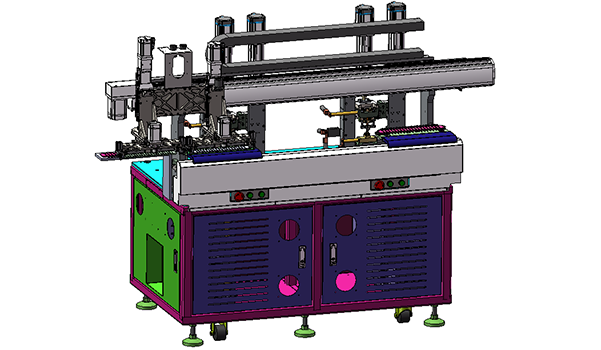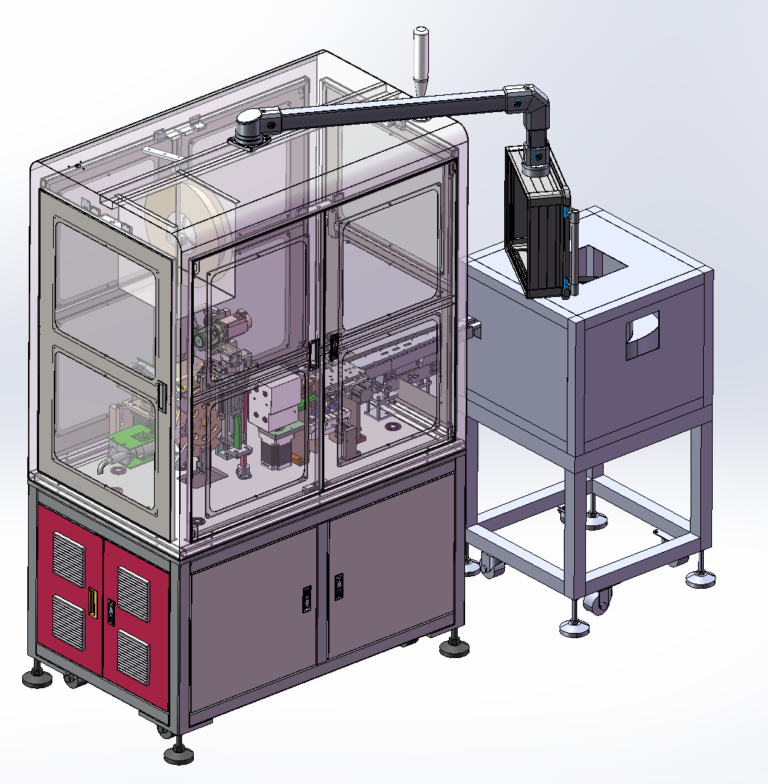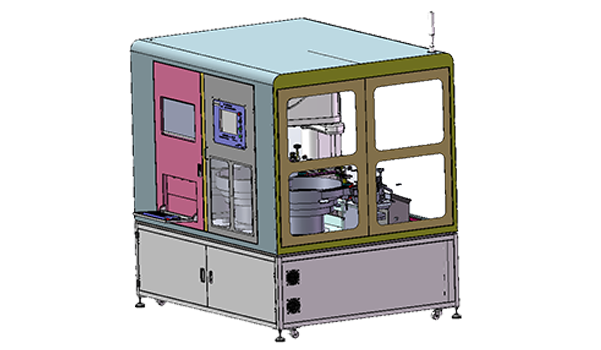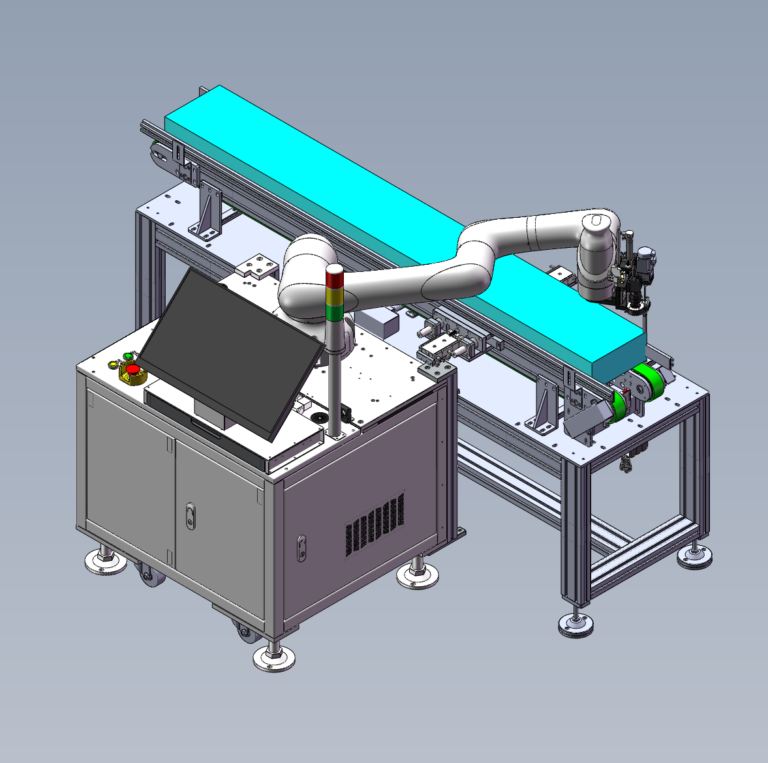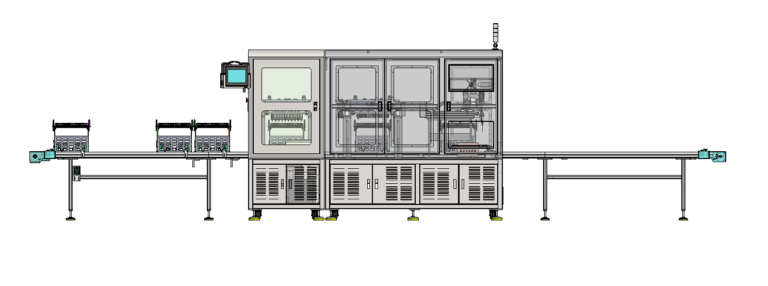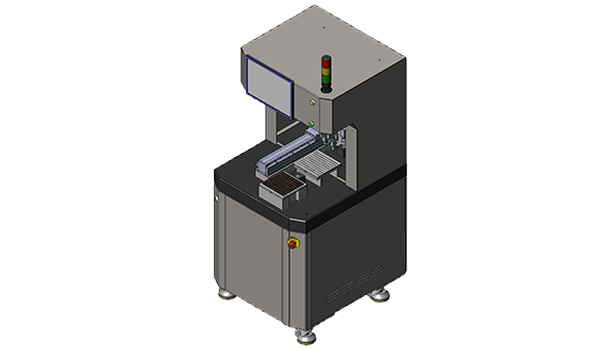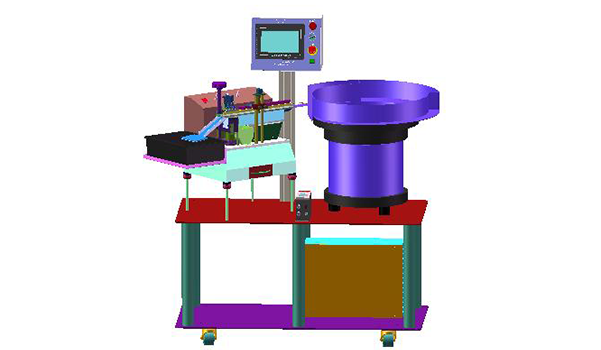
In Electronics manufacturing, the stability of a Lead Forming and Feeding Machine does not always depend on redesigning the entire machine. In this Film Capacitor Lead-Trimming Machine Feeder Improvement project, Robotlyne upgraded an existing Film Capacitor Lead-Trimming Machine by adding Full-Material / Shortage Optical Fiber Detection, an Extended Receiving Hopper, a Buffer Area, Anti-Flip Pressing, Receiving Tray Fixation, and timing and electrical control for the Vibratory Bowl. The retrofit focused on Feeder Reliability and Receiving Stability while retaining the original core machine.
This project reflects a common equipment-upgrade scenario: the Lead Trimming process itself can continue to operate, while the material flow before and after the cutting operation still depends heavily on operator observation and experience. Robotlyne therefore converted the relatively open Feeding / Receiving Section into a controlled area that could detect shortages, identify full-material conditions, control the Vibratory Bowl, and restrict part flipping and tray movement.
Robotlyne’s Electronics Assembly Automation covers Automated Part Handling, Loading / Unloading, Standalone Machines, and Semi-Automated Workstations, making it relevant to retrofits that add Feeding, Handling, and Process-Control functions to existing electronic-component equipment.
The First Change Was Deciding When the Machine Should Continue Feeding
The original Feeding Section had to manage two opposite conditions.
One was:
The Direct-Vibration Feed is running short of material.
The other was:
The downstream receiving area is already full.
Robotlyne added Optical Fiber Detection at both positions.
The control logic was set as follows:
Shortage Detection Fiber detects no material continuously for 2 seconds
→ Vibratory Bowl Start
and:
Full-Material Fiber detects material continuously for 2 seconds
→ Vibratory Bowl Stop
These two 2-second conditions connect the operating state of the Vibratory Bowl directly to Material Status.
The machine no longer relies only on an operator noticing that material is running low before starting the Bowl, and it does not need to wait until downstream accumulation becomes obvious before stopping the feed.
When the upstream section is short of material, the system replenishes it.
When enough material has accumulated downstream, feeding stops.
The Vibratory Bowl, Direct-Vibration Feed, and Receiving Area therefore form a simple but complete feedback loop:
Material Shortage
→ Start Feeding
→ Material Accumulation
→ Full-Material Detection
→ Stop Feeding
Robotlyne also added a Touch Screen because the Bowl Start / Stop logic requires adjustable Time Parameters rather than a fixed Manual Switch Logic. The Electrical Box was updated with 24 V power for the Optical Fibers, Vibratory Bowl Start / Stop Relays, and PLC Control-Board Placement.
From a retrofit perspective, these are relatively small changes, but they directly alter how the machine is operated.
Tasks that previously required an operator to keep watching the material level are converted into Sensor Input and Timing Logic.
The operator still manages production, but the Feeding Section now determines for itself when material needs to be replenished and when feeding should stop.
Once Feeding Is Stable, the Next Question Is Where the Parts Land
After the Feeding Section becomes stable, the Film Capacitors still have to pass through Lead Trimming and enter the Receiving Area.
At this point, the condition of the product has changed.
The front end needs to answer:
Is there enough material?
The back end needs to answer:
Can the trimmed parts enter the Receiving Tray in the intended orientation?
Robotlyne therefore made several mechanical changes to the Receiving Section.
The first was an Extended Receiving Hopper.
The longer receiving area provides a more complete discharge path from the processing position to the Tray and adds Buffer Area.
The receiving area also uses Anti-Static Lining.
For Electronics Components, parts continuously sliding, contacting, and accumulating inside the Hopper and Tray makes the treatment of contact surfaces part of the actual Material Handling condition.
The next addition was an Anti-Flip Pressing Block.
After Film Capacitors complete Lead Trimming, uncontrolled flipping during discharge or movement can cause parts with different orientations to mix in the Tray.
The Pressing Block limits this free flipping so that parts maintain a more stable Orientation as they move from the processing area into the receiving section.
Finally, Robotlyne added a Receiving Tray Fixed Bracket.
If the Tray itself shifts during continuous receiving, the final landing position will still change even when the Hopper and Anti-Flip Structure are working correctly.
The fixed bracket stabilizes the receiving endpoint.
The Receiving Section therefore follows this sequence:
Lead Trimming
→ Extended Hopper
→ Buffer Area
→ Anti-Flip Control
→ Fixed Receiving Tray
No complex Robot was added, and the receiving area was not replaced by an entirely new automated Transfer System.
Robotlyne instead tightened the positions where random variation was occurring in the existing process.
The Retrofit Turned a “Watch-It-Continuously” Area into a Machine Section with Defined States
Looking at the Feeding and Receiving sections together, the retrofit addresses four different shop-floor conditions.
Upstream material availability is handled by the Shortage Optical Fiber.
Downstream full-material status is handled by the Full-Material Optical Fiber.
Part flipping after trimming is limited by the Anti-Flip Pressing Block.
Receiving Tray movement is controlled by the Fixed Bracket.
Together with the Frequency Controller, Touch Screen, 24 V Control Power, Relays, and PLC Placement, the existing Film Capacitor Lead-Trimming Machine gains a defined Feeding / Receiving Control Section.
This is what makes the retrofit representative of a practical machine-improvement project.
Robotlyne did not treat the existing Lead-Trimming Machine as a complete replacement project. The modifications were concentrated around the points where instability was occurring in production:
Material Status
Bowl Timing
Receiving Distance
Part Orientation
Tray Position
All of these conditions sit before or after the main cutting action, yet they directly affect whether the machine can continue running steadily over time.
For an Electronics Manufacturer, this type of retrofit also allows the existing machine body, established process, and current floor layout to remain in use while new mechanical parts, Sensors, and Control Components are concentrated in the problem areas.
The retrofit package in this project includes:
- Two groups of Full-Material / Shortage Optical Fibers
- Extended Receiving Hopper and Buffer Area
- Anti-Flip Pressing Block
- Receiving Tray Fixed Bracket
- Vibratory Bowl Frequency Controller
- Touch Screen
- 24 V Control Power
- Start / Stop Relays
- PLC Control-Board Placement
If an existing Film Capacitor, Resistor, or other Electronic Component Lead Forming and Feeding Machine can already perform its primary process but still requires extensive manual intervention for Feeding, Material Accumulation, Part Orientation, or Receiving, contact Robotlyne to evaluate targeted improvements to Feeding, Sensing, Control Logic, and Receiving Structure based on the existing Machine Layout and actual Material Flow.