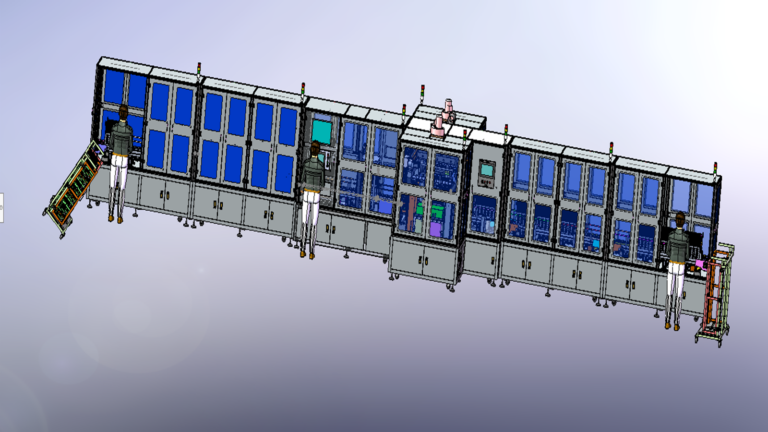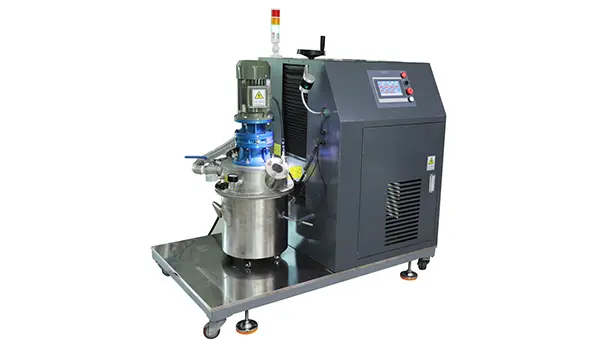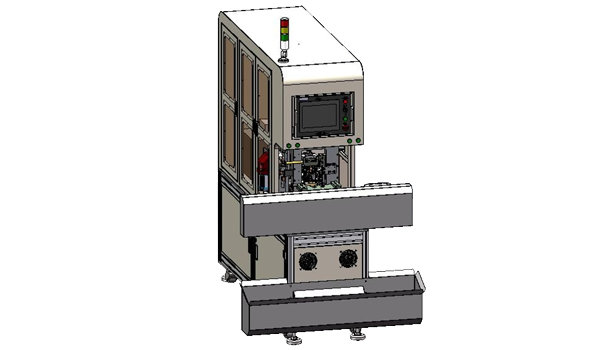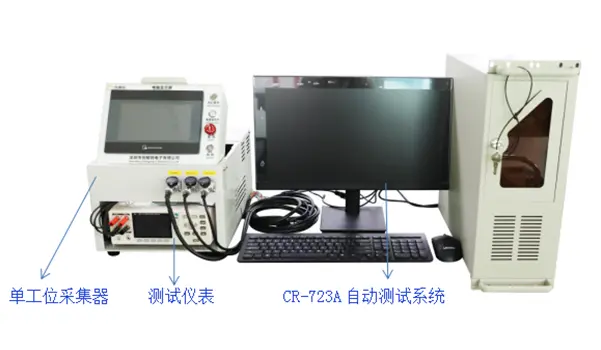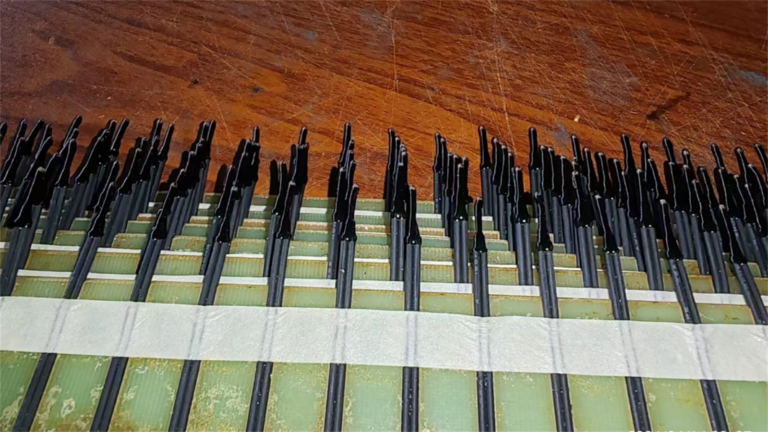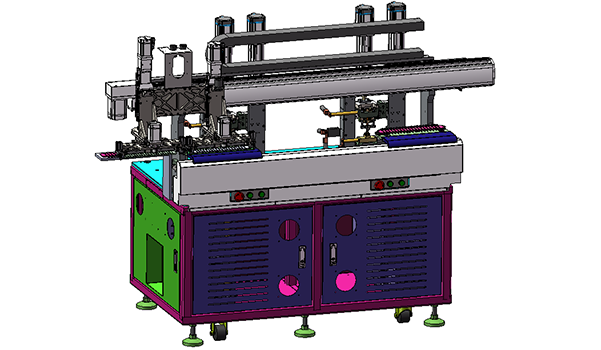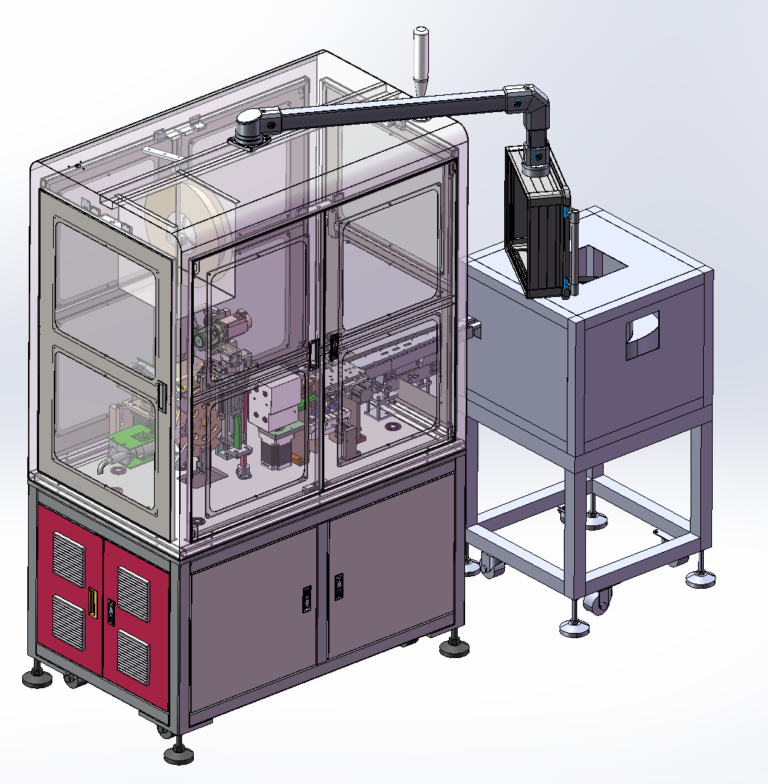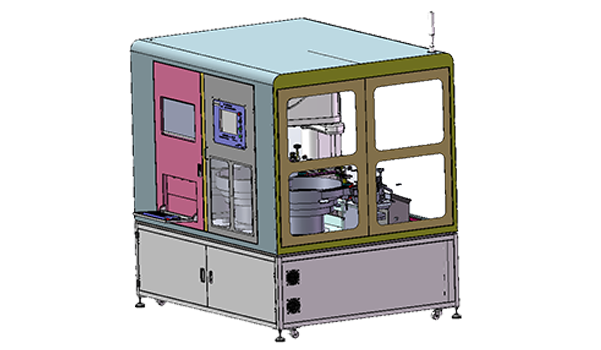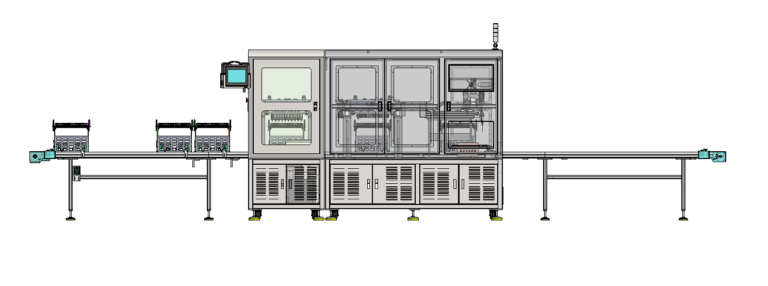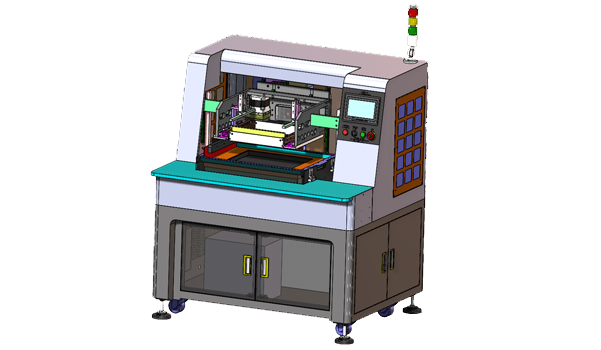
In Automotive Electronics NTC sensor manufacturing, a fully automated assembly line does not mean that operators disappear from the production floor. In this 58-Ohm NTC Sensor Finishing Line project, we organized Boarding, 58-ohm Resistor Welding, Encapsulation, Shell Insertion, Dispensing, Resistance Testing, and Hipot Testing into one complete finishing route. At the same time, we planned 60 Encapsulation Frames, 5 Turnover Carts, 150 Potting Fixtures, and 40 Test Turnover Fixtures. After automation, the project model still retained 6 online operators, while reducing staffing by 13 people compared with the manual production model.
Those two numbers need to be read together. We did not define the project goal as “reduce headcount to zero.” What we needed to decide was which high-frequency, repetitive, cycle-sensitive operations should be performed continuously by equipment, and which material-handling, fixture-handling, and remaining manual tasks still needed operator involvement. The final line is not an unattended black box. It is a production system in which a smaller team manages a larger number of automated processes.
Robotlyne’s NTC Sensor Production Automation covers Wire Processing, Soldering, Encapsulation, Curing, and Electrical Testing. We can combine standalone machines, fixture circulation, and test stations into a complete NTC production line according to the actual product and output requirement.
“Fully Automated” Applies to the Process, Not to Removing Every Human Interaction
If we look only at the equipment name, it is easy to imagine a Fully Automated Assembly Line as:
Raw Material In
→
Machines do everything
→
Finished Product Out
That is not how this project was configured.
We concentrated automation on the main production processes:
Area | Project Configuration | Planning Capacity |
Boarding | One four-wire boarding machine | 2,000 pcs/hour |
Resistor Welding | One dual-station 58-ohm resistor welding machine | 1,800-2,000 pcs/hour |
Encapsulation | One encapsulation machine | 6,000-7,000 pcs/hour |
Shell Potting | One potting machine | 4,000-5,000 pcs/hour |
Resistance + Hipot Test | One automatic tester | 3,000-4,000 pcs/hour |
These core actions are handled by equipment.
But the product does not move from the first machine to the last on one continuous conveyor.
A large number of physical carriers still circulate through the line:
60 Encapsulation Frames
5 Turnover Carts
150 Potting Fixtures
40 Test Turnover Fixtures
These quantities tell us a great deal about how the line actually runs.
After leaving one automated station, products may move with a Frame or Fixture into the next Process Area. Some carriers are in Encapsulation, others are in downstream turnover, and the Test Area uses its own dedicated fixtures.
The project flow also retains Manual Sleeve Work.
So what we automated in this line was:
Boarding Process
Resistor Welding Process
Encapsulation Process
Shell Insertion / Dispensing Process
Resistance / Hipot Testing Process
We did not try to mechanize every Material Loading, Fixture Movement, and human touchpoint.
That is why a Fully Automated Assembly Line should not be treated as the same thing as a Lights-Out Factory.
For this project, “Fully Automated” describes the fact that the main manufacturing and test processes are handled continuously by automated equipment, while operators still support the operation of the full production system.
If we had tried to reduce the six online operators all the way to zero, we would have needed to add more layers of automation:
Automatic Fixture Loading
Automatic Cart Transfer
Automatic Fixture Return
Automatic Replacement of Remaining Manual Processes
That would also have increased the Equipment Count, Floor Space, Interlocks, Changeover Work, and Control Scope.
Those additions would not have changed the already-defined Boarding, Welding, Encapsulation, and Testing processes themselves.
So we did not use “zero operators” as the completion standard for the line.
Six People Managing an Automated Line Is a Very Different Staffing Model from Nineteen People Doing the Production Work Directly
The labor model for this project gave us a direct comparison:
Planned online staffing after automation:
6 people
Labor reduction compared with manual production:
13 people
In other words, the manual baseline was approximately 19 people, while the automated plan reduced the online team to six.
The important change is not whether people are still present.
Their role in production changes.
In manual production, a large number of operators participate directly in repetitive manufacturing actions.
After automation:
Boarding Machine: 2,000 pcs/hour
Dual-Station Welding Machine: 1,800-2,000 pcs/hour
Encapsulation Machine: 6,000-7,000 pcs/hour
Shell Potting: 4,000-5,000 pcs/hour
Automatic Resistance + Hipot Tester: 3,000-4,000 pcs/hour
Operators no longer have to reproduce these Machine Cycles manually, piece by piece.
We transfer a large amount of repetitive production work to the equipment and keep a smaller team to support the overall production system.
That is why simply asking “how many people are still needed on the line?” does not fully describe the automation level.
A more useful comparison is:
How many people directly performed repetitive processing before automation
vs.
How many people are needed to operate the complete line after automation
For this project, the answer was a 13-person labor reduction while retaining six online operators.
The corresponding investment model was:
Tooling: approx. CNY 151,300
Equipment: approx. CNY 1.73 million
Total Investment: approx. CNY 1.8813 million
Payback: approx. 14 months
We therefore did not keep expanding the Equipment Scope simply to turn “6 people” into “0 people.” The current plan had already transferred the repetitive production work previously performed by 13 people to automated equipment, while retaining six online operators to support Fixtures, Turnover, and the remaining human-machine interaction points.
That is the practical automation boundary of this fully automated assembly line.
For Automotive Electronics NTC Sensor projects that still rely on a large number of operators for Boarding, Welding, Encapsulation, or Electrical Testing, contact Robotlyne. We can compare the current staffing structure with the target output and determine which manual operations are worth transferring to automated equipment, rather than treating “zero operators” as the design goal.