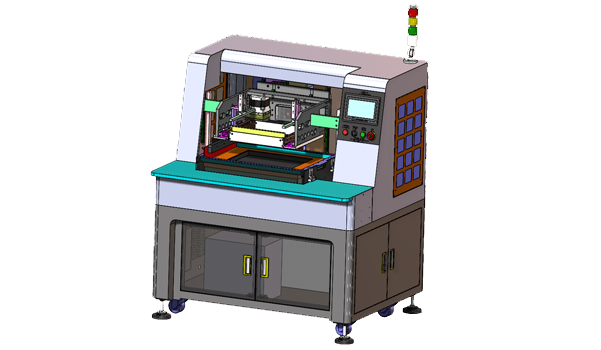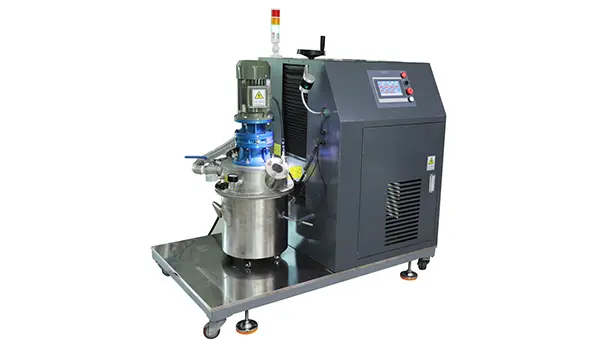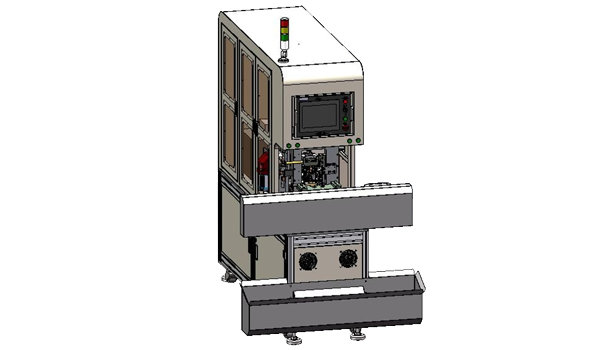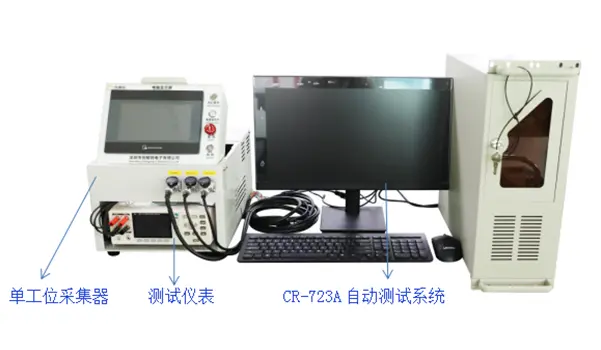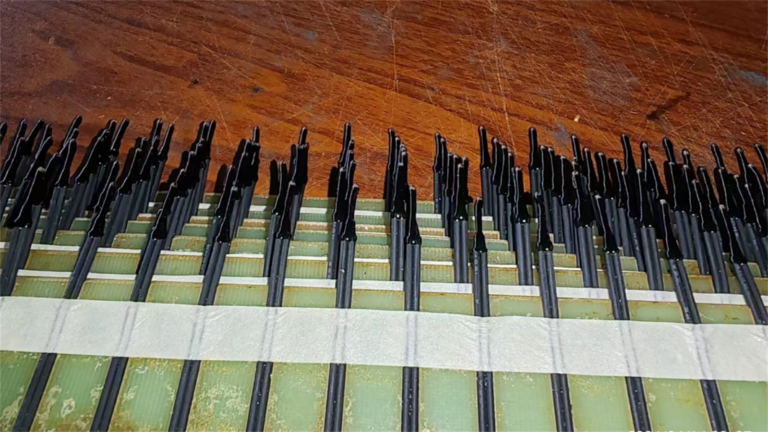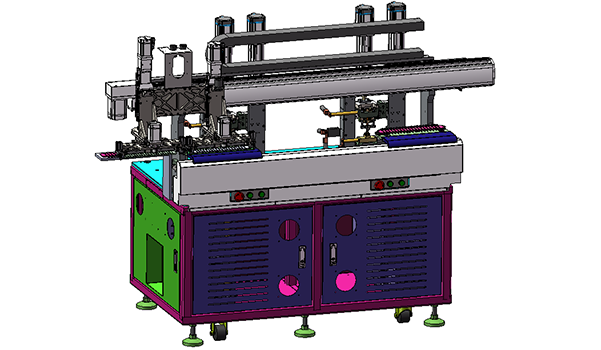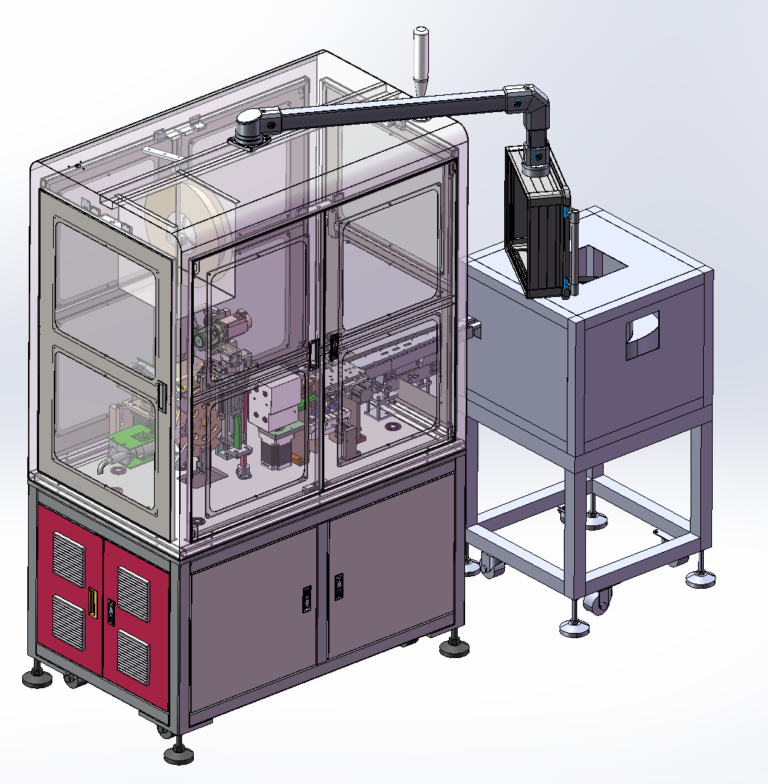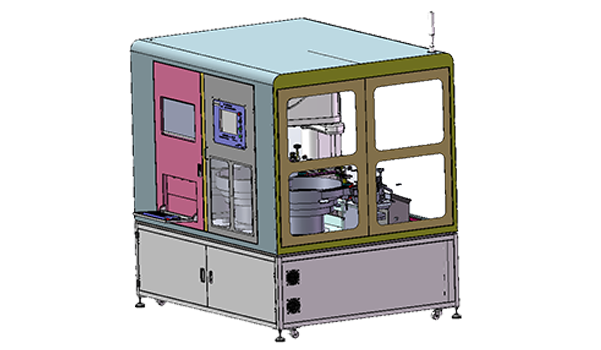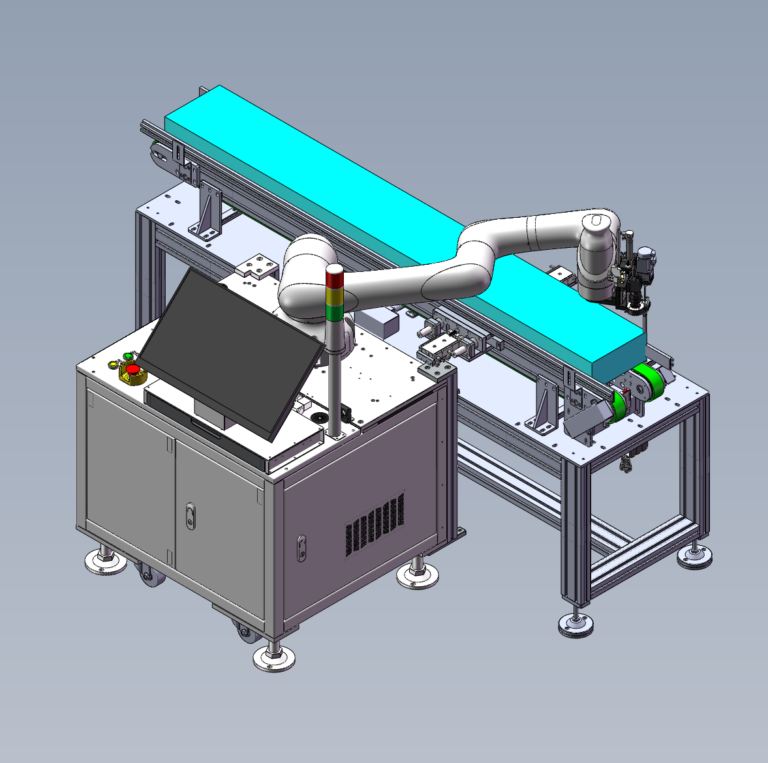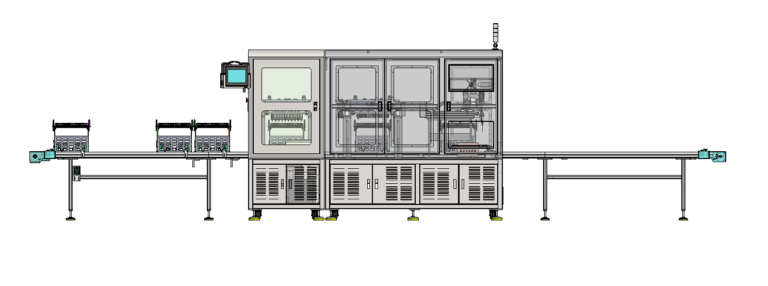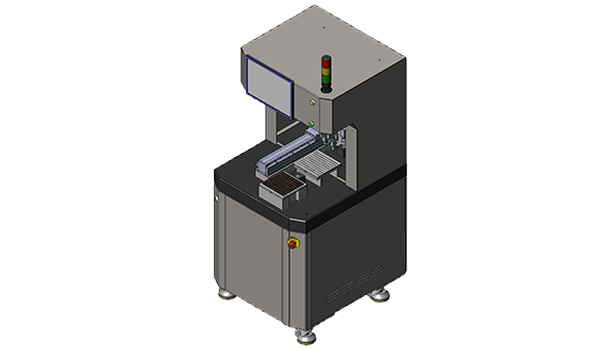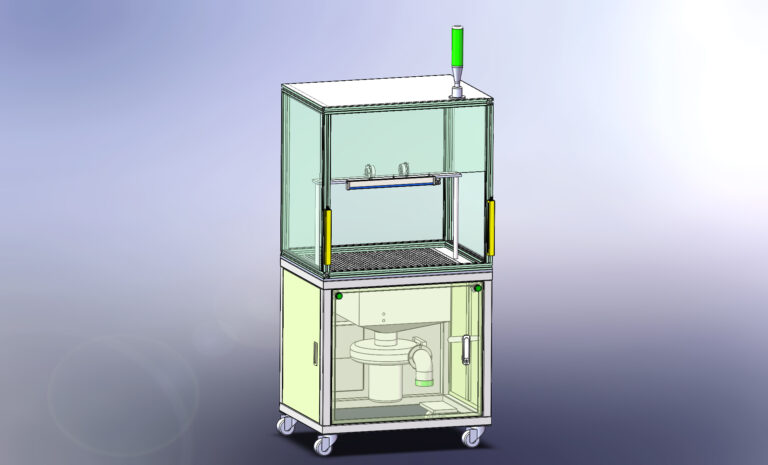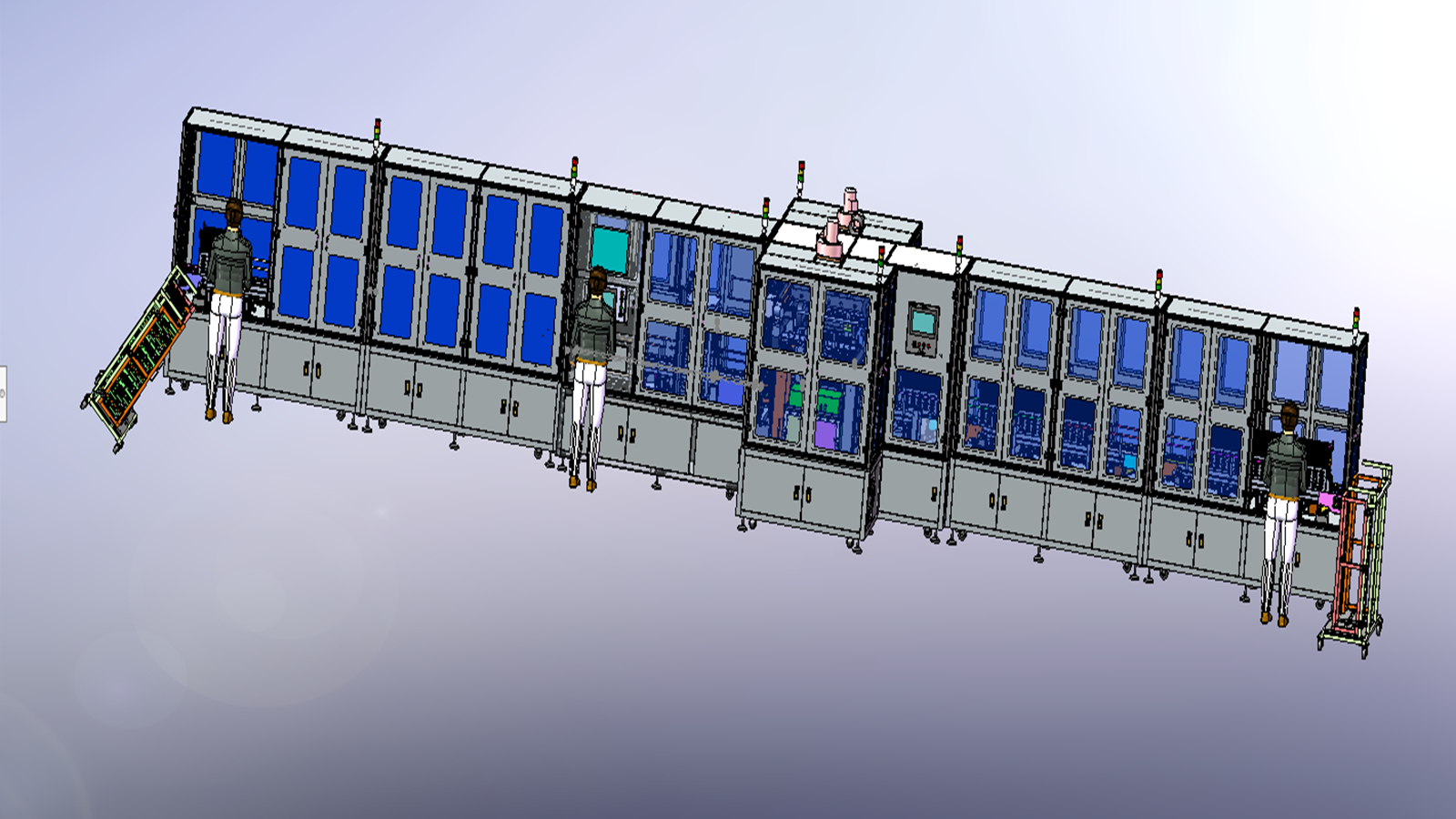
In Industrial Automation NTC sensor projects, when we design a fully automated assembly line solution, we do not require every process from Wire Cutting through final Plastic-Seat Assembly to use the same equipment architecture. In this Single-End NTC Finishing Line project, we planned Cutting / Boarding, Single-End Welding, Encapsulation, Shell Potting, Resistance + Hipot Testing, and then extended the production scope through Terminal Crimping and Plastic-Seat Assembly for a target of 30,000 pcs/day.
For the main upstream processes, we relied primarily on dedicated machines to establish the target production rate. For the final Terminal / Plastic-Seat operations, however, we used semi-automatic equipment rated at 1,200-1,500 pcs/hour per unit. In other words, downstream capacity was not concentrated in one large dedicated machine; it could be expanded by adding identical work units.
The line also included 5,000 Line Boards, 120 Encapsulation Frames, 10 Turnover Carts, 150 Potting Fixtures, and 40 sets of Test Turnover Fixtures. These carriers connected continuous front-end processing, downstream batch turnover, Electrical Testing, and final mechanical assembly within one production plan.
Robotlyne’s NTC Sensor Production Automation covers Wire Feeding, Cutting, Soldering, Encapsulation, Potting, Curing, Testing, and Terminal Crimping. For similar projects, we can combine high-capacity dedicated machines with repeatable modular workstations in the same production line.
The First 30,000 pcs/day Is Built Mainly Through Single-Machine Capacity
The capacity structure in the first half of the line is relatively concentrated.
Cutting and Boarding:
1 machine – 3,000 pcs/hour
Single-End Welding:
1 machine – 3,000 pcs/hour
Encapsulation:
1 machine – 6,000-7,000 pcs/hour
Shell Potting:
1 machine – 4,000-5,000 pcs/hour
Resistance + Hipot Testing:
1 automatic tester – 3,000-4,000 pcs/hour
If we use a 10-hour production window to interpret the 30,000 pcs/day target, the average requirement is approximately 3,000 pcs/hour.
That is why we planned the single-machine capacity of Cutting / Boarding and Single-End Welding at around 3,000 pcs/hour.
We did not need to run two or three identical machines in parallel to create the main line rate.
One Boarding Machine and one Single-End Welding Machine each carried the main output requirement for their process area.
Encapsulation then increased to 6,000-7,000 pcs/hour.
Shell Potting reached 4,000-5,000 pcs/hour.
Resistance + Hipot Testing remained at 3,000-4,000 pcs/hour.
So the front half of the production architecture was straightforward:
One main process area
→
One main dedicated machine
The machine itself carried the core capacity of that process area.
Here, our priority was a stable line rate rather than building capacity by running many identical workstations in parallel.
But once Resistance / Hipot Testing was complete, production was still not finished.
Terminal and Plastic Seat assembly still remained.
From this point onward, we changed how we organized the equipment
At Terminal and Plastic Seat Assembly, We Changed the Expansion Unit from Machine Speed to Number of Units
The downstream scope included:
Sleeve Cutting
Terminal Insertion / Crimping
Plastic-Seat Assembly
These operations were still part of the production steps required before the Finished Sensor could be delivered.
But we did not continue by designing one large dedicated machine that had to reach 3,000 pcs/hour.
The Terminal / Plastic-Seat equipment was planned as:
1,200-1,500 pcs/hour per unit
The words “per unit” were deliberate.
If actual production required more throughput, we could add a second or third identical work unit.
The upstream Cutting, Welding, Encapsulation, and Testing route would not need to be redesigned simply because the final mechanical assembly section needed more capacity.
This approach is well suited to Terminal and Plastic-Seat Assembly.
Upstream Welding and Electrical Testing are relatively standardized.
At Terminal Crimping and Plastic-Seat Assembly, the equipment must handle more physical component conditions, including:
Terminal Feeding
Component Orientation
Mechanical Insertion
Crimping Tooling
Plastic-Part Feeding
Product Variant Changeover
If all of those actions were concentrated into one high-speed dedicated machine, the machine scope would increase substantially.
The Feeding Systems, Tooling, Changeover, Interlocks, and Maintenance burden would also be concentrated in that one machine.
We therefore did not keep pushing all downstream throughput into one main machine.
Instead, we designed the final section as repeatable semi-automatic units.
That creates two different expansion models in the same production line:
Upstream capacity expansion mainly depends on:
Machine Capacity
Downstream capacity expansion can depend on:
Number of Units
From 5,000 Line Boards to Final Terminal Assembly, the Production Unit Keeps Changing
We planned:
5,000 Line Boards
The Line Boards mainly support Cutting / Boarding, Welding, and the subsequent board-based processing stages.
As the product moves downstream, we do not require it to remain on the same carrier.
At the Encapsulation area, we use:
120 Encapsulation Frames
10 Turnover Carts
At Shell Potting:
150 Potting Fixtures
At Electrical Testing:
40 Test Turnover Fixtures
When the product finally reaches Terminal / Plastic-Seat Assembly, it enters a Semi-Automatic Assembly Unit.
So from the front end to the Finished Product, the effective production unit changes several times.
At the front end:
Products on Line Boards
Then:
Products grouped in Encapsulation Frames
Then:
Potting Fixtures
Then:
Test Turnover Fixtures
Finally:
Terminal / Plastic-Seat Assembly Unit
We did not try to create one universal fixture that would carry the product from Wire Cutting all the way to final Plastic Seat assembly.
The product state keeps changing.
The front end mainly handles the Wire and Sensor Body.
The middle section moves into Encapsulation and Potting.
The downstream section completes Electrical Verification.
Only then does the product enter Terminal and Plastic Seat mechanical assembly.
Because each stage controls a different product state, the carrier and equipment architecture are allowed to change with the process.
This also allows the final semi-automatic units to remain independent of the upstream board-based processing architecture.
We Included Terminal and Plastic Seat in the Line Scope Without Forcing Them into One Large Fully Automatic Machine
In some NTC projects, the production line ends after Welding, Encapsulation, and Testing.
Terminal Crimping, Connector Assembly, or Plastic Seat assembly may then be handled later in a separate manual area.
We did not leave those steps outside the Production Plan in this project.
Terminal Crimping and Plastic-Seat Assembly were included in the line scope from the project-planning stage.
The difference is that we did not require them to use the same automation architecture as the upstream dedicated machines.
Upstream:
High-Capacity Dedicated Machines
Downstream:
Repeatable Semi-Automatic Units
The upstream section establishes the main production rate.
The downstream section completes final mechanical finishing and allows us to increase capacity by adding more units.
For us, both equipment types can belong to the same fully automated assembly line solution.
A complete production line does not require every machine to have the same size, the same automation level, the same 3,000 pcs/hour rating, or the same material-handling architecture.
What matters more is that every required process from Wire Cutting through Terminal and Plastic Seat has a defined place, processing capacity, and turnover method in the overall Production Plan.
The overall project planning also included approximately:
CNY 262,700 Tooling
CNY 2.516 million Equipment
CNY 2.7787 million Total Investment
The staffing model retained approximately:
6.2 online operators
Compared with manual production, the model reduced approximately:
22 positions
Estimated payback:
Approx. 16 months
Those figures correspond to the complete production configuration.
But one of our important design decisions on this line was that a 30,000 pcs/day target did not force every process into one large 3,000 pcs/hour dedicated machine.
For Industrial Automation NTC Sensor projects where the main production process is already automated but Terminal, Connector, Plastic Seat, or other final mechanical assembly still needs to be integrated into the line, contact Robotlyne. We can evaluate the actual assembly actions and target throughput to determine whether the final processes are better suited to a dedicated machine or scalable modular finishing units.