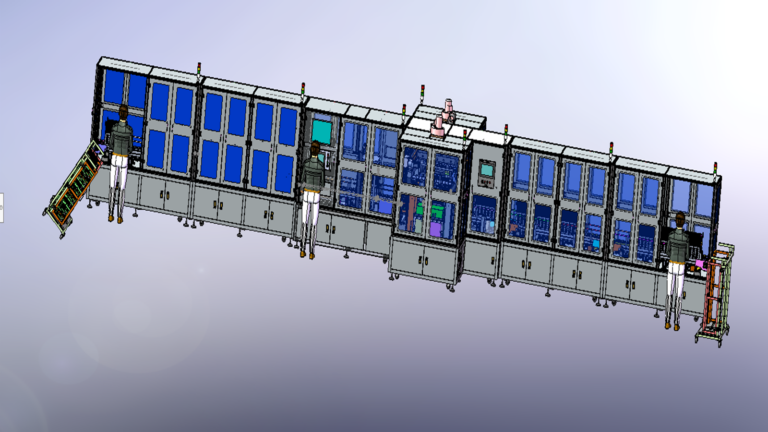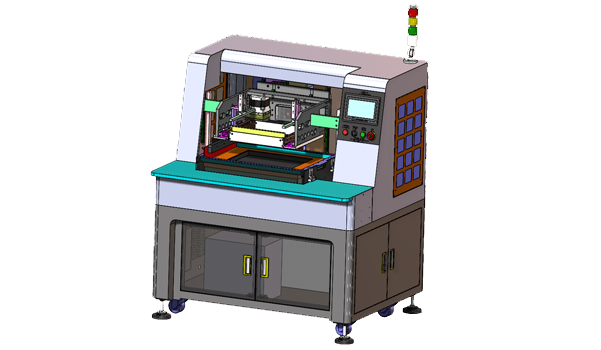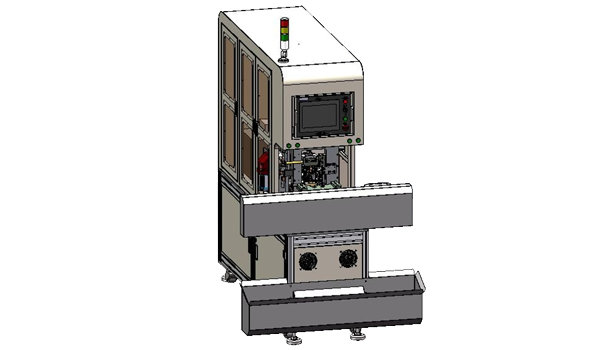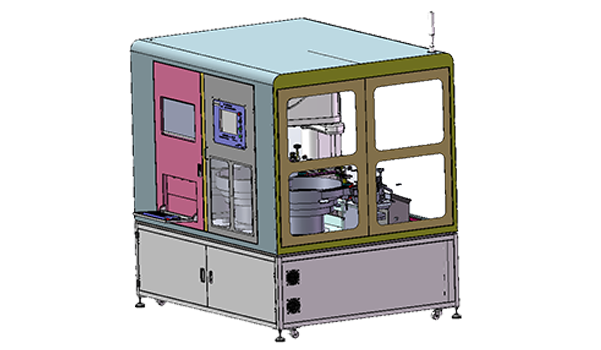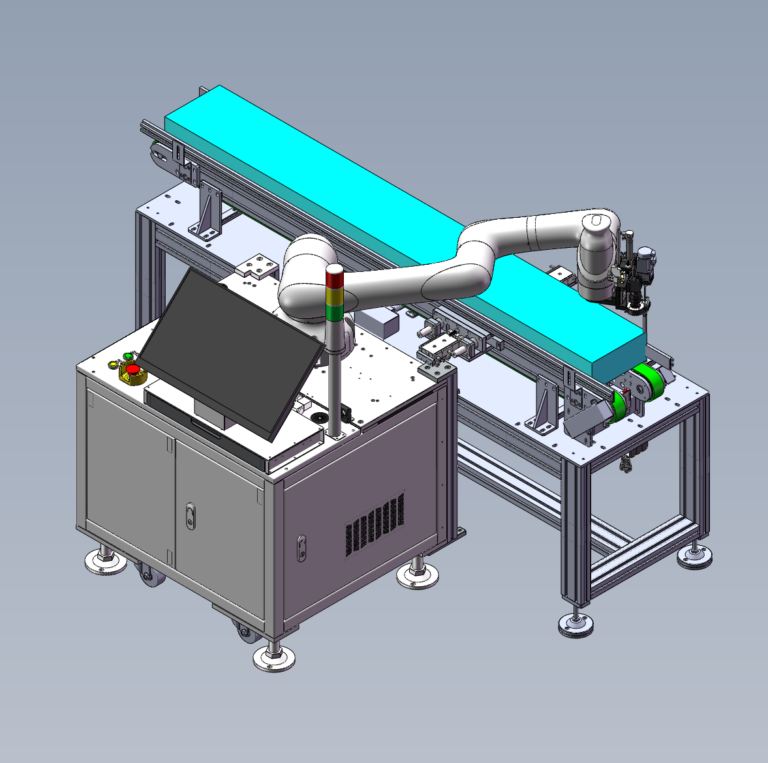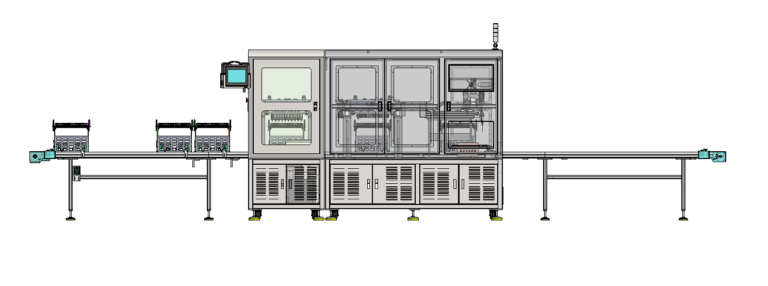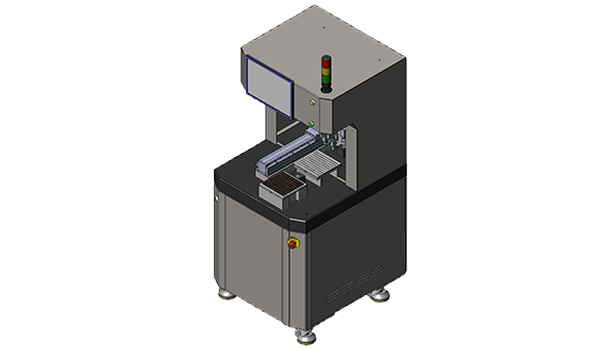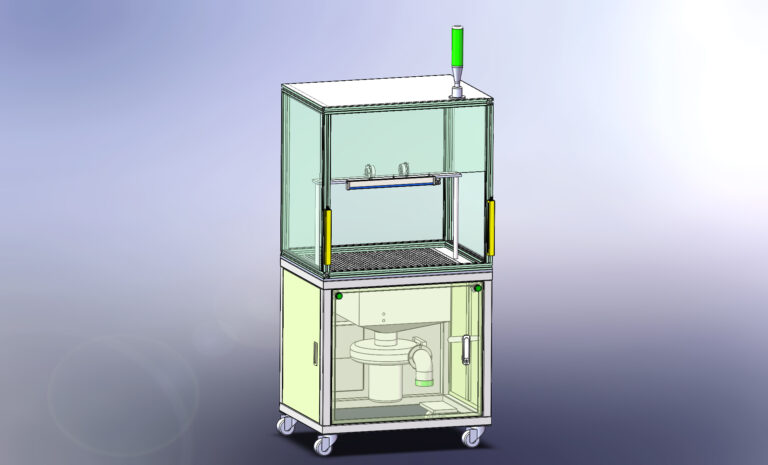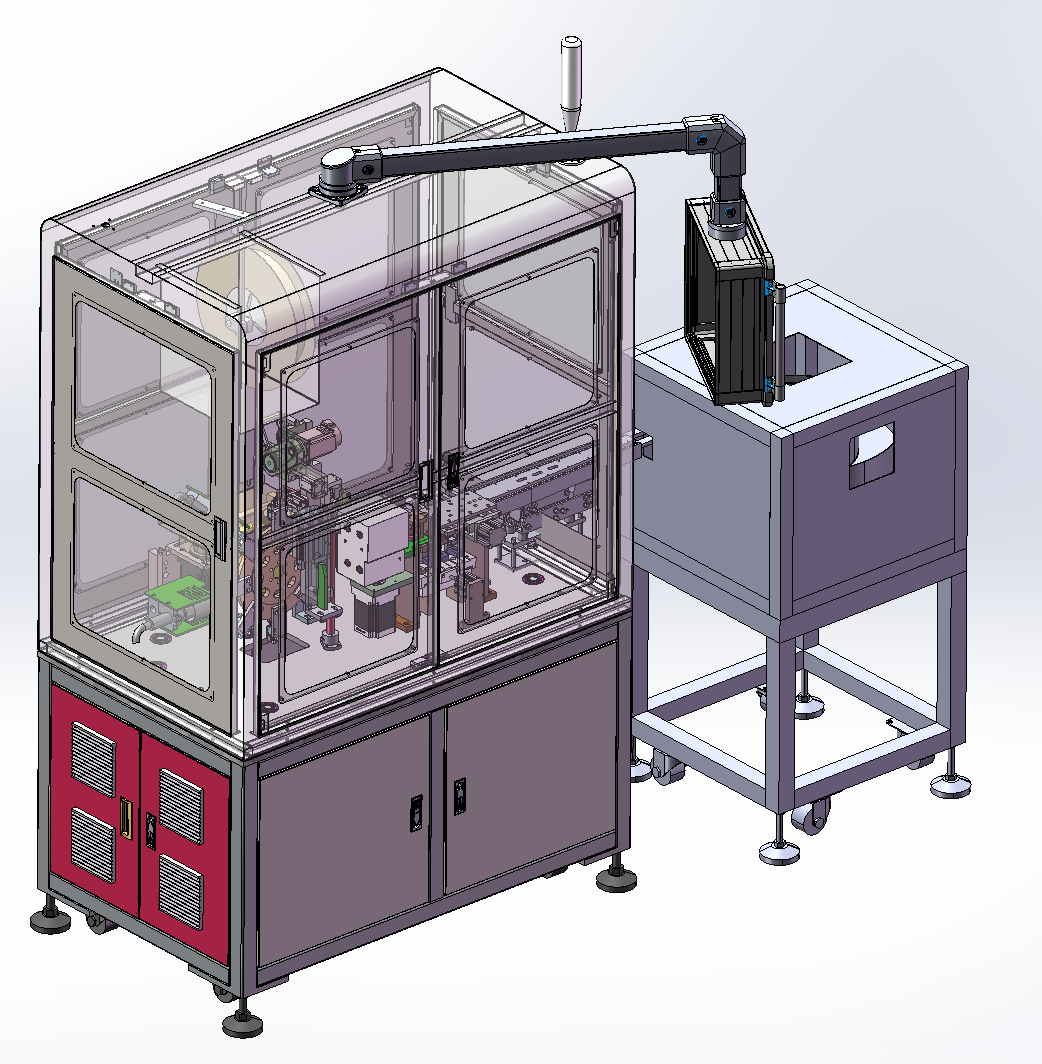
In NTC Sensor and similar leaded-component manufacturing, Automated Lead Forming Equipment starts to operate on more than one type of cycle once sleeving and heat shrinking are integrated downstream. Mechanical actions such as clamping, lead correction, cutting, and transfer can move on as soon as each action is complete. Thermal processing has a different time structure. In Robotlyne’s Varistor Sleeve Heat-Shrink Forming Machine project, bulk varistors pass through Lead Correction and Lead Cutting before entering an Eight-Station Turntable. After Sleeve Insertion, the product moves through two consecutive Hot-Air Heat-Shrink Stations before Air Cooling and Finished-Part Unloading. The reference output is 800–1,200 pcs/hour, with one operator replenishing Bulk Material and the Sleeve Roll.
This station arrangement creates two different time relationships inside one machine. Lead Correction, Lead Cutting, and Transfer are completed through discrete mechanical motions. Sleeve Heat Shrinking is spread across consecutive turntable positions. While the Four-Station Manipulator prepares the next component upstream, the turntable can already hold several products at different stages of Sleeving, Heating, Cooling, and Unloading.
Robotlyne’s NTC Sensor Production Automation covers Feeding, Straightening, Forming, Lead Cutting, Soldering, Encapsulation, and Testing for NTC Sensor manufacturing, and can connect standalone workstations with upstream and downstream processes into a complete production flow.
Why Does Heat Shrinking Occupy Two Consecutive Turntable Stations?
Looking at the middle of the machine first reveals a very specific station distribution:
Sleeve Insertion
↓
Hot-Air Heat Shrink
↓
Hot-Air Heat Shrink
↓
Air Cooling
↓
Finished-Part Unloading
The fourth and fifth positions are both assigned to Hot-Air Heat Shrinking. The sixth position is used for Air Cooling, and the seventh position handles Finished-Product Unloading.
The turntable can be viewed as a group of process positions working at the same time. After each indexing movement, the products on the table are not all performing the same operation.
At one moment in the cycle:
one component may have just completed Sleeve Insertion;
the previous component may be at the first Hot-Air position;
an earlier component may already be at the second Hot-Air position;
another component may be entering Air Cooling;
and the component ahead of it may be ready for Unloading.
At the next index, all of these products advance by one station. The Heat-Shrink Process therefore does not require the entire machine to stop and wait for one product to finish. Thermal processing is distributed across consecutive fixed positions while other stations continue working on other parts.
Lead Cutting has a different time structure. Once the Cutting Tool completes the cut, that mechanical action is finished. Heat shrinking continues through a second Hot-Air stage and then Cooling. From the machine-cycle perspective, the thermal process consumes not only an actuator, but also several consecutive Turntable Positions.
The Eight-Station Turntable turns Sleeve Insertion, Heating, Cooling, and Unloading into parallel positions within one indexed sequence: products move forward, while each process condition stays fixed at its own station.
Turntable Positions Are Already Occupied by Thermal Processing, So Lead Preparation Stays Upstream
Tracing the machine backward from the Hot-Air Stations also clarifies the role of the Four-Station Manipulator.
After leaving the Vibratory Bowl, the bulk varistor passes through:
Clamping
↓
Lead Correction
↓
Lead Cutting
↓
Transfer to Rotary Clamping Position
Only after these steps are complete does the prepared component enter the Eight-Station Turntable.
Lead Correction and Lead Cutting change the geometry of the component before the Sleeve Process begins. Robotlyne places these operations in the separate Four-Station Manipulator route so the Turntable Positions can be used for the downstream sequence: Product Detection, Sleeve Insertion, two Hot-Air stages, Cooling, and Unloading. A Fiber Sensor confirms product presence on the rotary section.
Seen this way, the Turntable Positions themselves are a limited machine resource. A position assigned to Hot-Air Processing cannot also perform Lead Correction. A second Hot-Air stage consumes another position, and Cooling requires the next one. Completing Mechanical Preparation before the rotary section allows each component to enter the Turntable with the lead geometry already prepared for sleeving.
The product state therefore changes in a clear sequence:
Bulk Component
↓
Lead Geometry Prepared
↓
Rotary Clamping
↓
Sleeve Applied
↓
Heat Shrunk
↓
Cooled
↓
Finished Product
The waste path separates earlier. The machine includes a dedicated Waste-Bin Section for Lead-Cutting scrap, while components that complete the Heat-Shrink Process leave from the downstream Unloading Position.
This naturally separates the two areas by product state. The upstream section performs geometry preparation and generates cutting waste. The downstream section converts the prepared component into a finished part with a heat-shrunk sleeve.
800–1,200 pcs/hour Comes from Two Cycle Structures Advancing at the Same Time
The reference machine capacity is 800–1,200 pcs/hour. The machine is approximately 1,250 × 770 × 1,950 mm, uses PLC + Industrial Computer control, and requires one operator.
Inside the machine, however, throughput is not produced by one Robot or one Station running in isolation.
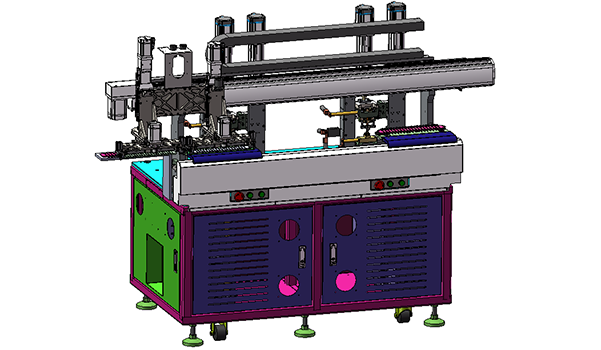
The upstream Four-Station Manipulator must continue preparing new components:
Clamp
→ Correct Leads
→ Cut Leads
→ Transfer
At the same time, several products are already occupying different stages on the Eight-Station Turntable:
Sleeve
Hot Air 1
Hot Air 2
Cooling
Unload
When one product reaches Cooling, other products are still moving through the two Hot-Air Stations, while a newly prepared component can continue entering the rotary section.
A single product may take a relatively long path from Bulk Feeding to Finished Product, but the machine does not wait for that one product to complete the entire route before starting the next. Multiple components occupy different Process Positions at the same time.
A single operating moment can be simplified as follows:
Machine Position | Current Product State |
Four-Station Manipulator | Next product in Lead Preparation |
Sleeve Station | One product in Sleeve Insertion |
Hot-Air Station 1 | One product entering first Heat-Shrink stage |
Hot-Air Station 2 | Previous product continuing Heat Shrink |
Cooling Station | Earlier product in Cooling |
Unloading Station | Finished Product being discharged |
The machine therefore behaves like a continuously advancing process pipeline. The Mechanical Cycle determines how quickly the next component can be prepared. Turntable Indexing determines when each product moves to the next station. The Hot-Air and Cooling positions distribute the Thermal Process across that pipeline.
Robotlyne integrates Bulk Feeding, Lead Preparation, Sleeve Application, two-stage Hot-Air Heat Shrinking, Cooling, Finished-Product Unloading, and Waste Separation into one vertical machine.
For NTC Sensor and similar leaded-component automation, Lead Cutting may take only one mechanical action while Sleeve Shrinking continues through heating and cooling. Connecting these operations in one machine requires Cycle Design to accommodate both Mechanical Motion and Thermal Process time. If your product also needs Lead Forming, Sleeve Insertion, and Heat Shrinking in one continuous process, contact Robotlyne to discuss the actual component and process cycle.