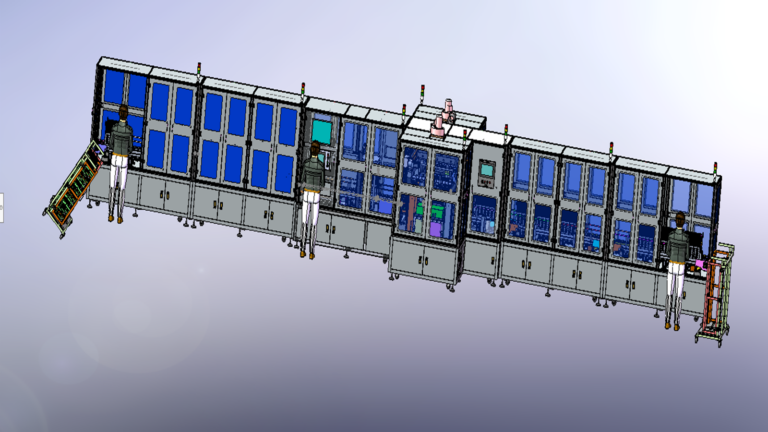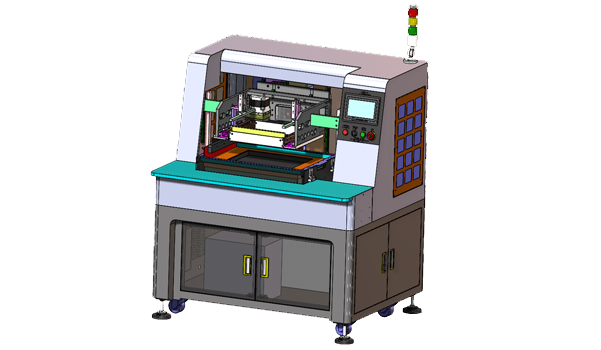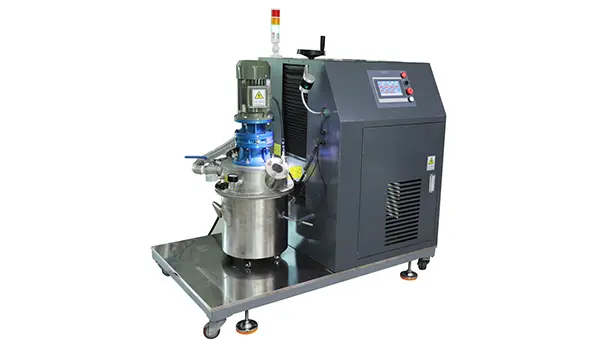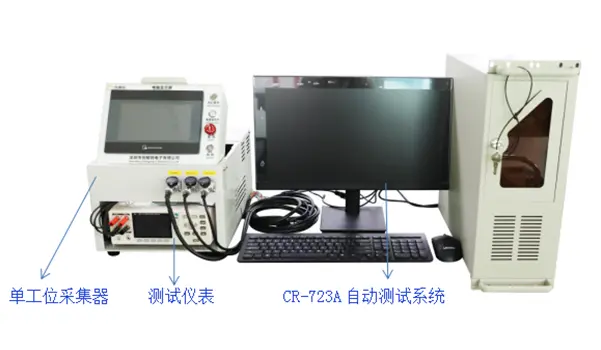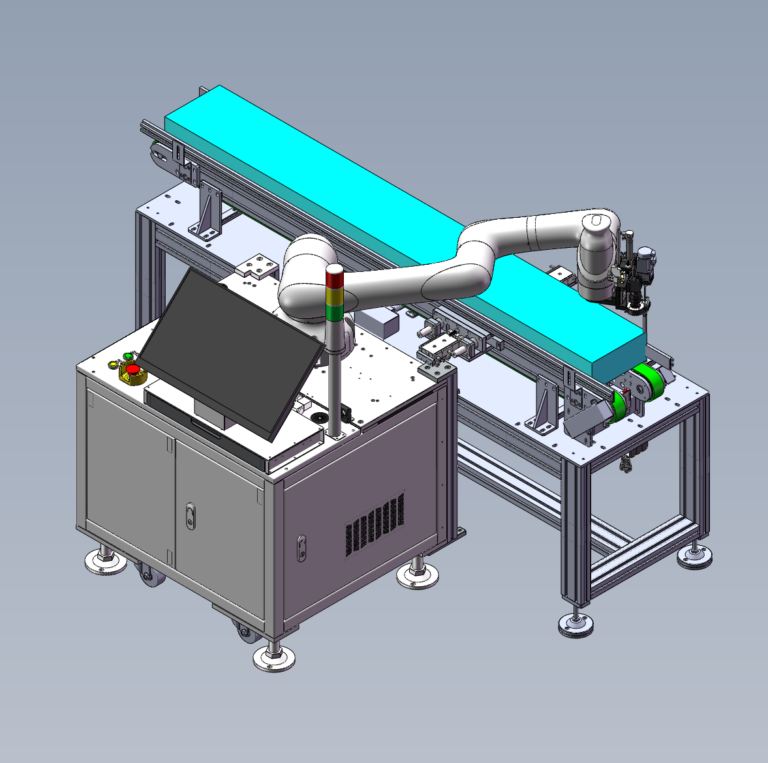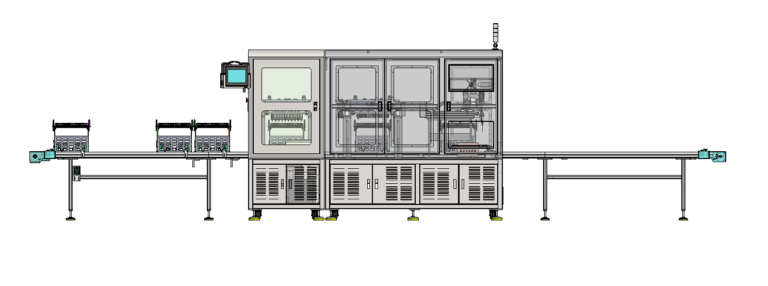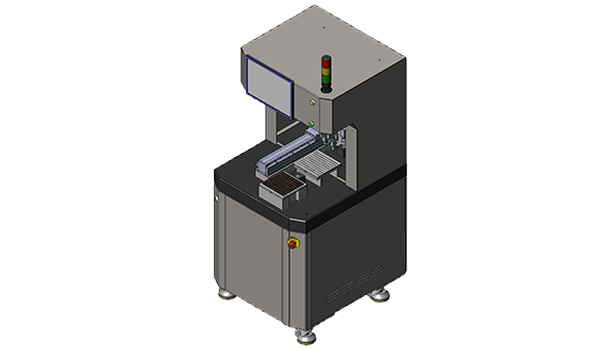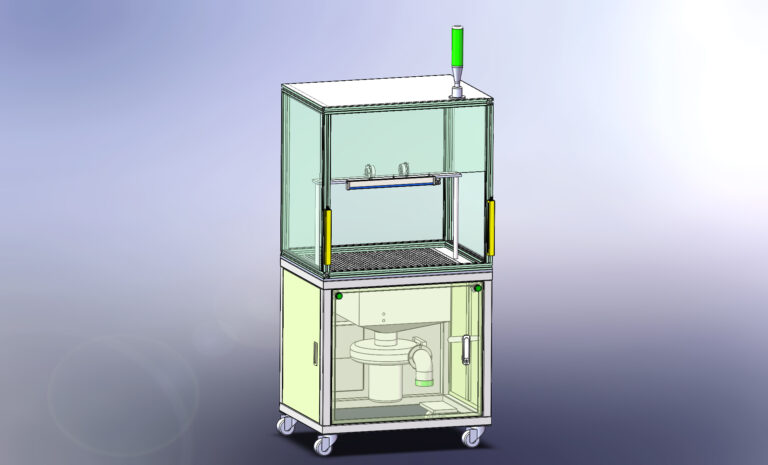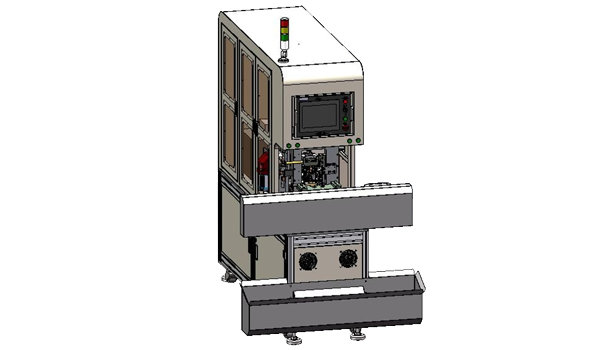
In Industrial Automation projects, increasing the output of a Fully Automated Production Line does not mean replacing every machine with a faster model. In Robotlyne’s NTC Resistor Welding and Finishing Production Line project, we connected Wire Cutting, Tin Dipping, Boarding, DO35 Resistor Welding, Ultrasonic Cleaning, Wire Straightening, Encapsulation, and Aging Testing into one complete NTC manufacturing route. Once the full line was planned, we were dealing with several very different capacity constraints: front-end processing depended on Machine Cycle, long-wire turnover depended on the number of Wire Boards, Encapsulation and Curing depended on Frame / Cart circulation, while Aging Testing was controlled by both Batch Size and Test Time.
The same project also shows why line expansion cannot be reduced to one question such as ‘how many pcs/hour do we need?’ Wire Cutting / Boarding was planned at 1,600-2,000 pcs/hour, while Single-Channel Welding was only 900-1,200 pcs/hour. Encapsulation, by contrast, reached 6,000-7,000 pcs/hour. At the same time, the project required 2,000 Wire Boards, 120 Encapsulation Frames, and 10 Turnover Carts. Each number solves a different capacity problem, and one cannot substitute for another.
Robotlyne’s NTC Sensor Production Automation covers Wire Feeding, Cutting, Soldering, Encapsulation, Curing, and Electrical Testing, and can expand from standalone workstations into complete production lines. For this type of project, capacity expansion usually requires us to review Machine Cycle, Fixture Circulation, and Batch Processing separately rather than simply adding a faster machine.
The First Expansion Decision Appears at the 900-1,200 pcs/hour Welding Station
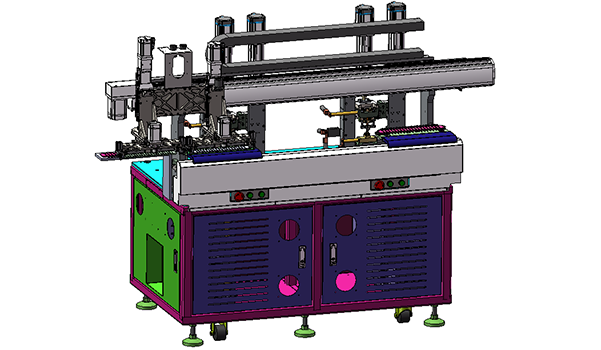
At the front end, the Wire Cutting, Tin Dipping, and Boarding Machine can reach 1,600-2,000 pcs/hour.
The equipment uses eight Wire-Feeding Wheels and can process eight Single Wires at the same time, or four groups of Paired Wires. For Paired-Wire Boarding, each cycle places four wire pairs.
The following DO35 Resistor Welding section is much slower:
900-1,200 pcs/hour
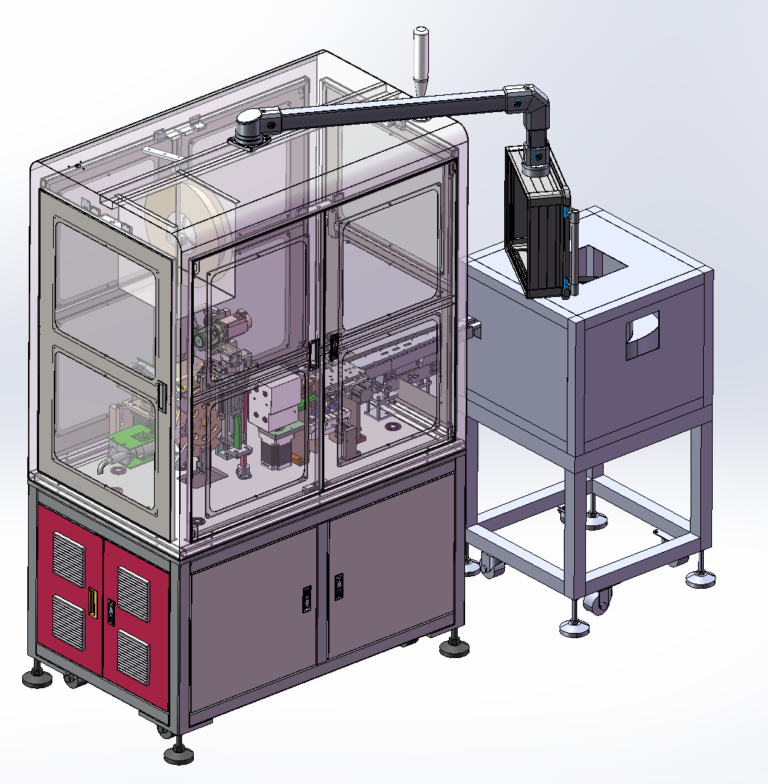
We use a Single-Channel Welding Machine here to join a 58-ohm DO35 Resistor to 24# / 26# Paired Wire. The Welding Station includes Magnetic-Box Feeding, Lead Straightening, Board Positioning, and Medium-Frequency Inverter Welding.
If we want to raise the daily output of the full line, Encapsulation is not the first place we need to look.
Welding reaches its capacity limit earlier.
If the front end keeps feeding close to 2,000 pcs/hour while Welding can only process around 1,000 pcs/hour for an extended period, increasing downstream Encapsulation speed does nothing to remove the upstream accumulation.
This type of expansion is a Machine Capacity Expansion problem.
We would need to increase Welding Capacity or redesign the number of Welding Stations / channel configuration.
This is the clearest example on the line of a process where the equipment itself becomes the capacity constraint.
The next constraint, however, cannot be solved in the same way.
Wire Boards Do Not Process the Product, but They Decide Whether the Front End Can Keep Running
For the Cutting / Boarding section, the project uses:
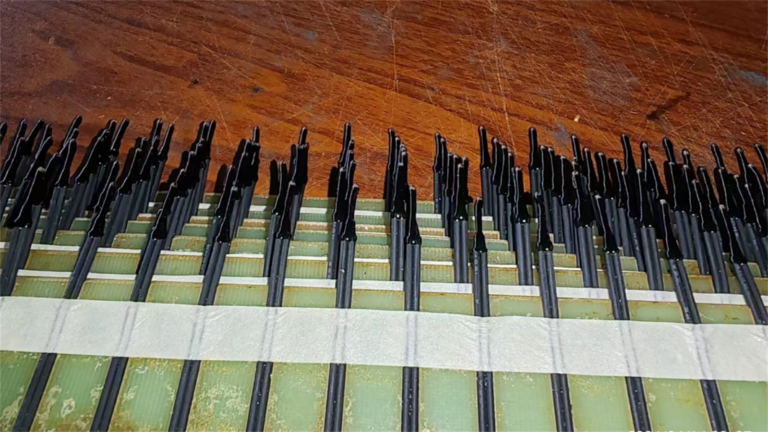
2,000 Wire Boards
The quantity is divided into:
1,000 Boards for 10-hour online production
and:
1,000 Boards circulating through downstream encapsulation baking
Each Wire Board holds 20 products.
This number is completely different from the 900-1,200 pcs/hour capacity of the Welding Machine.
A Wire Board does not make the Welding Head move faster.
It solves a different question:
When can the carrier return to the front end after the product has moved downstream?
If every Wire Board is occupied by products in Cleaning, Encapsulation, or Baking, the Cutting Machine and Welding Machine can be idle even when they still have available machine capacity.
In this part of the line, increasing output may therefore require more circulating carriers rather than another machine.
That is why we separated the 1,000 Boards used online from the 1,000 Boards circulating through the downstream process.
The Wire Board quantity determines how much work-in-process the front and back ends can hold at the same time.
Machine Cycle answers ‘how many products can be processed per hour.’
Board Circulation answers ‘how long the carrier remains occupied after processing.’
They are two different expansion variables.
In the Encapsulation Area, We Start Planning Logistics in Batches of 300 Products per Frame
Further downstream, the product handling unit changes again.
The Automatic Encapsulation Machine is planned for:
6,000-7,000 pcs/hour
The corresponding turnover plan uses:
10 Turnover Carts
120 Encapsulation Frames
Each Cart carries:
12 Frames
Each Frame carries:
300 Products
Each Frame contains:
15 Board Fixtures × 20 Products
At this point, the logistics can no longer be understood only in terms of individual pieces.
One Encapsulation Frame groups 300 products into a single turnover unit.
A Turnover Cart groups another 12 Frames together.
When we plan higher daily output in this section, the key variables become Products per Frame, Frames per Cart, Frame Circulation Time, and Cart Quantity.
The 120 Frames and 10 Carts in this project were planned around a 30,000-piece daily turnover target.
So if the production target rises beyond the front-end range of roughly 16,000-20,000 pcs/day, we do not simply increase the speed of the Encapsulation Machine.
The Encapsulation Machine already has a high hourly capacity.
The quantity that can rise first is the amount of work-in-process moving through Cleaning, Encapsulation, Curing, and turnover.
At this point, expansion becomes a WIP and Logistics Capacity problem rather than a Machine Speed problem.
Aging Test Uses a Different Formula Again: 300 Products per Batch × Test Time
At the Aging Test stage, the capacity model changes once more.
The project includes one NTC Aging Tester.
It uses two Test Boards with a total of:
300 Terminals
so one batch can test:
300 Products
The Test Time can be adjusted from:
10 seconds to 5 minutes
At this stage, pcs/hour alone is not enough to describe tester capacity.
The same 300 Test Positions can produce very different hourly throughput depending on the selected Test Time.
With a short test cycle, one 300-piece batch can be completed quickly.
If the actual Aging Requirement is close to several minutes, the same batch occupies the Test Positions for much longer.
The expansion logic for Aging Testing is therefore:
Batch Capacity × Test Duration
It is different from Welding, which is mainly controlled by single-piece cycle time, and different again from the Encapsulation area, which depends heavily on Frames and Carts.
When the testing requirement changes, we may need to adjust simultaneous test positions, tester quantity, batch organization, or test duration.
The Tester can also save test data, export spreadsheets, upload through the local network, and connect to MES. For Aging Testing, those data functions are part of the same equipment that handles the 300-piece batch structure.
For this NTC production line, we did not use one universal expansion formula.
When Welding reaches its limit, we deal with Machine Capacity.
When Wire Board circulation becomes insufficient, we increase Carrier Circulation.
When WIP grows in Encapsulation / Curing, we recalculate Frames and Turnover Carts.
When Aging Test becomes the constraint, we look at the 300-piece Batch Capacity together with the actual Test Time.
This is why we separate Machine Quantity, Fixture Quantity, Turnover Method, and Testing Capacity when planning a Fully Automated Production Line. They all serve the same daily-output target, but each section reaches its capacity limit in a different way.
For NTC Sensors, Temperature Sensors, or similar Industrial Automation components that need higher production capacity, contact Robotlyne to identify whether the real constraint is Machine Cycle, Board / Fixture Circulation, WIP, or Testing Batch Size before deciding where additional equipment should be added.